
More advertising will not repair a slow reply, an unclear price, unavailable stock or forgotten follow-up. Yet those leaks are easy to miss when the business can only see how many people noticed the campaign and how many eventually paid. A sales funnel puts the stages between those two points on paper. Many people may see an advert, signboard, social post or shop. Some will ask a question, and fewer will decide that the offer is right and buy. That fall is normal. The useful work is finding the avoidable loss.
For a Nigerian business deciding where to spend next, the funnel can show whether the problem needs more attention at the top or a repair further down.
Five stages are enough to expose the first leak
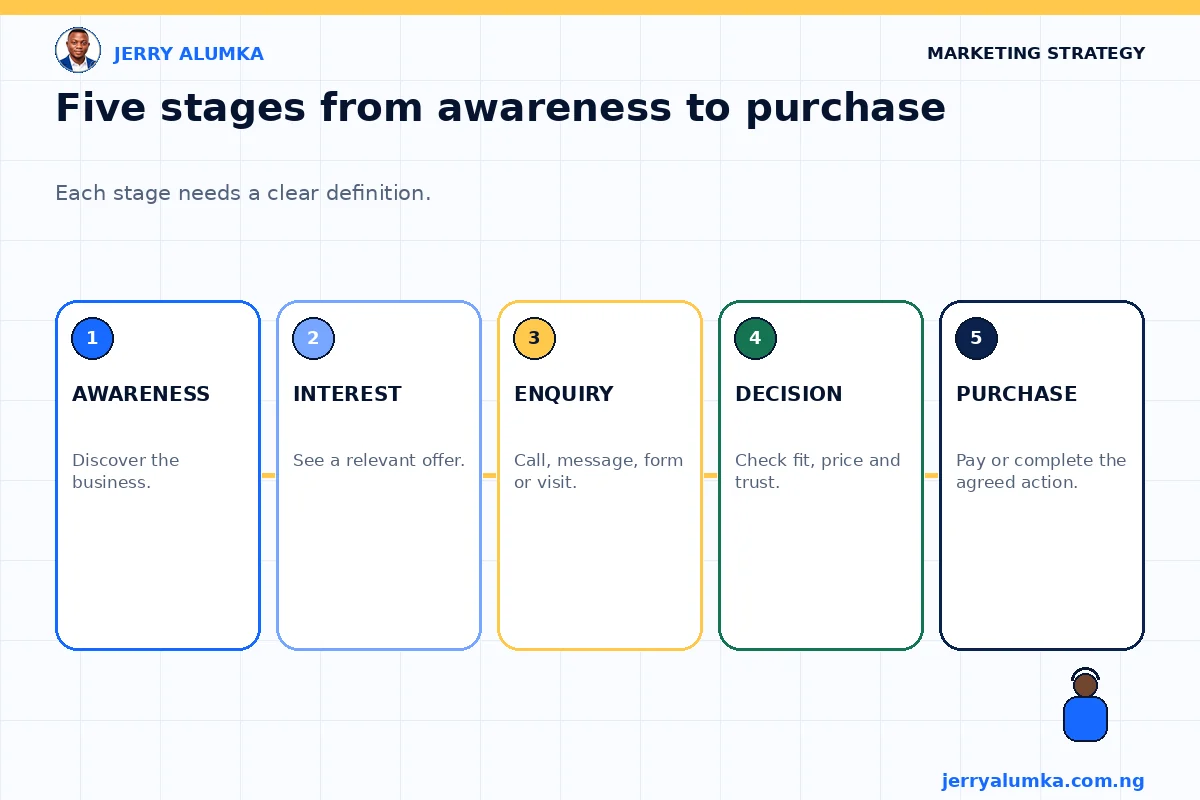
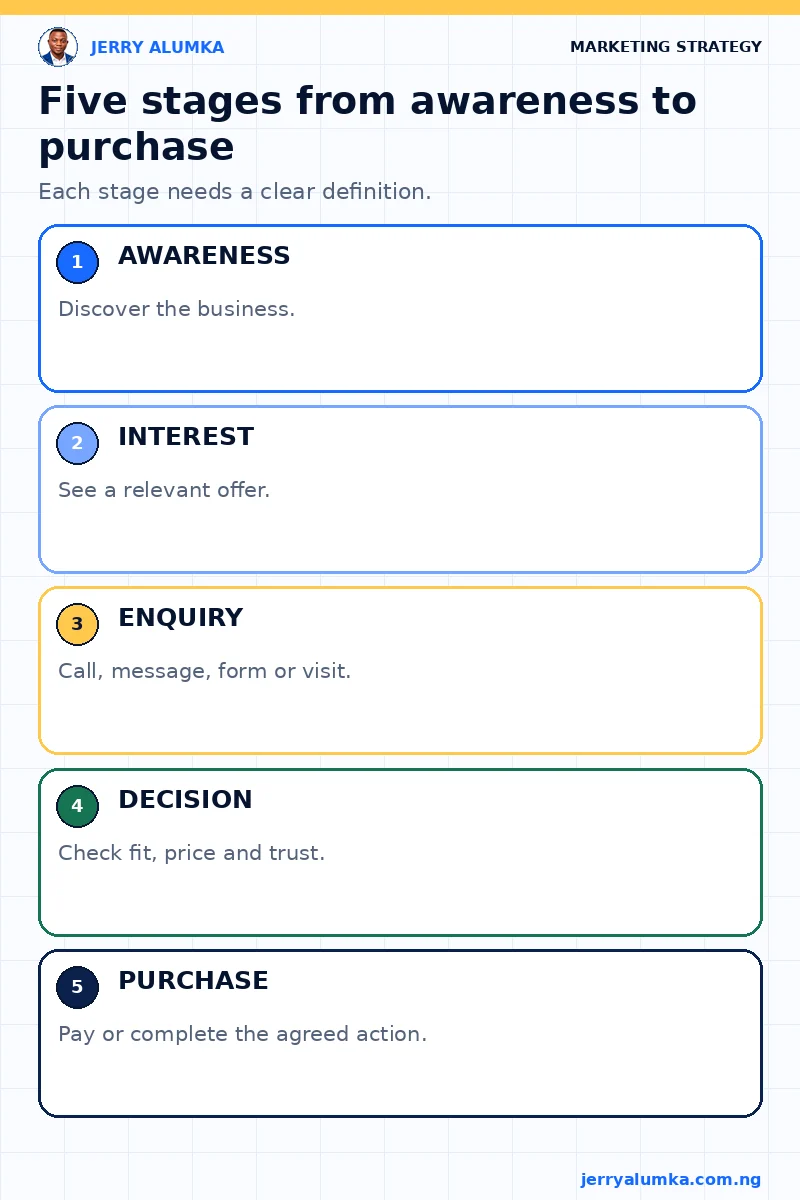
Salesforce describes a sales funnel as the journey from first awareness to purchase. The names can change, but a small business can begin with five stages.
- Awareness: The person discovers the business through an advert, search, social media, a referral or a shop visit.
- Interest: The person pays attention because the offer may solve a present need.
- Enquiry: The person calls, sends a WhatsApp message, fills a form or visits the shop.
- Decision: The person checks price, trust, availability, delivery and payment terms.
- Purchase: The person pays or completes the agreed action.
Your team must agree on what each stage means. If one person counts a “Nice product” comment as an enquiry while another counts only a phone call, the report won’t be reliable.
The offer may attract attention but not buyers
A campaign can get many views and clicks without bringing people closer to a sale.
This often happens when the message is too broad or hides an important condition. For instance, a training business may advertise “Learn a digital skill” without showing the level, schedule, location or fee range. Many people will ask for details. Most may never have been able to attend.
The answer isn’t always to change the audience settings. Check the message first. Say who the offer is for, what problem it solves and what the next step will be. Important conditions should not appear as a surprise during the sales call.
This begins with a clear marketing strategy. You need to know the customer you want and the value you are offering that person.
Good enquiries may wait too long
A person who sends you a message this morning may contact another business before evening.
This is common when the person needs something urgent, such as a delivery, a hotel room, a repair or a product that is running out. The first business to give a clear and useful answer may win the sale.
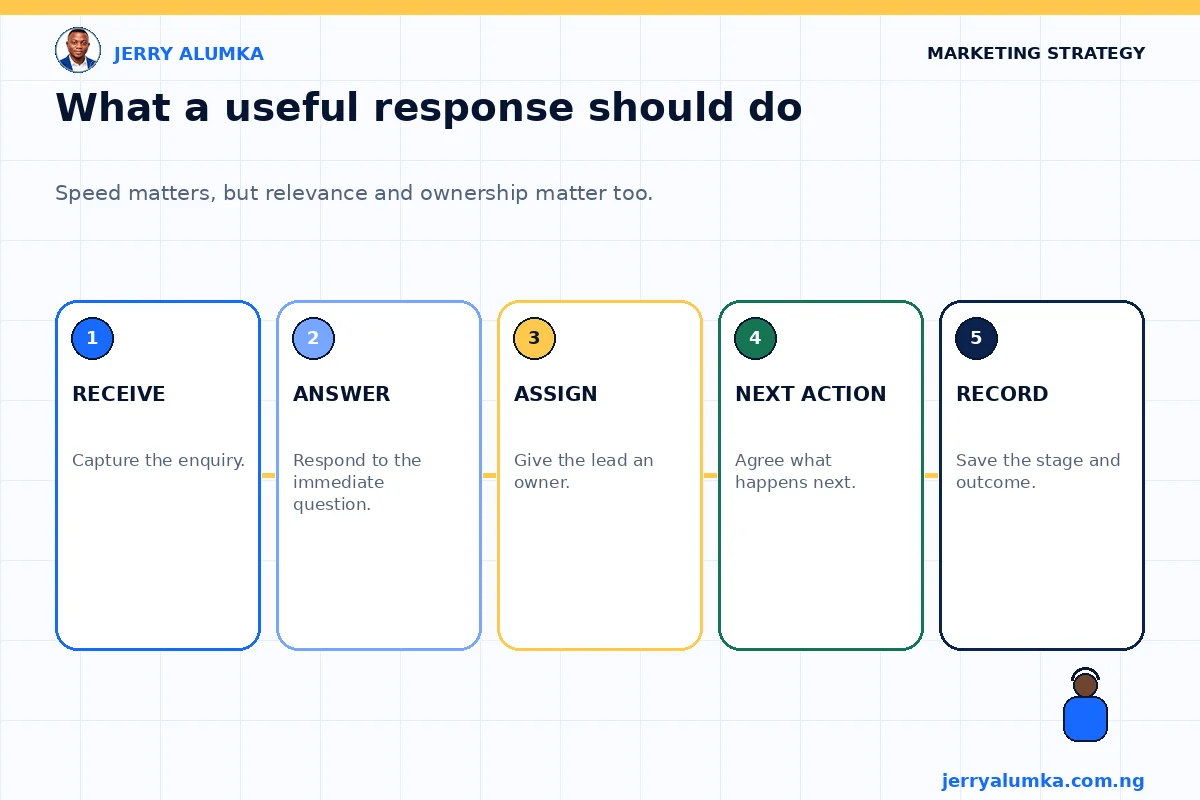
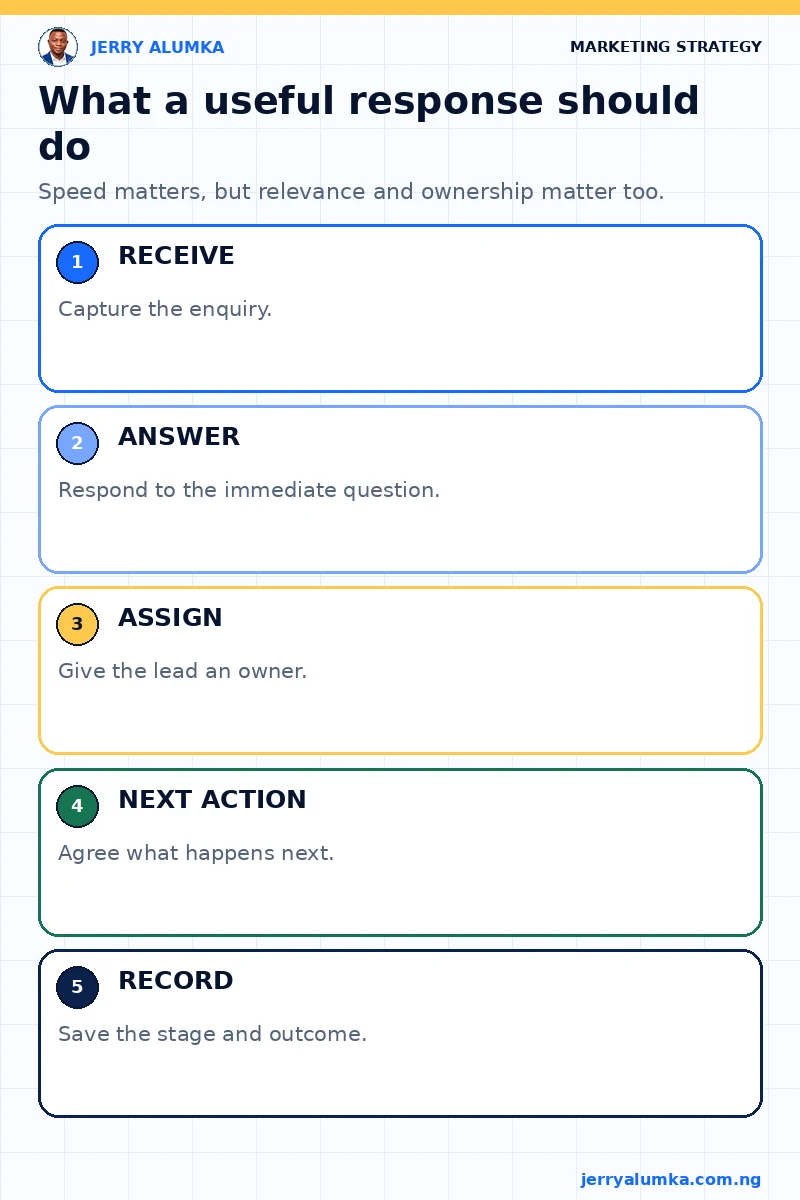
Speed matters, but the first reply must also be useful. If the person filled a form asking for a quotation, don’t reply with “How may we help you?” The customer should not have to repeat all the details.
Give every new enquiry an owner. Record when it arrived, who replied, the current stage and the next action. Set a response time your team can maintain.
That means follow-up should not depend on one staff member remembering every WhatsApp chat.
Not every lead needs the same conversation
One person may need delivery today. Another may be comparing prices for next month. A third person may be collecting information for a manager.
Your team should ask enough questions to understand the need, fit, timing and who will make the decision. This is called qualification. It doesn’t mean turning the call into an interview. It means learning enough to give the right next step.
Keep your stages simple. You may use new enquiry, contacted, qualified, quotation sent, awaiting decision, won and lost.
Don’t create fifteen stages that sound almost the same. Staff will stop updating them, and the report will become guesswork.
Record why real opportunities are lost
Many businesses record names and phone numbers but stop recording when follow-up becomes difficult.
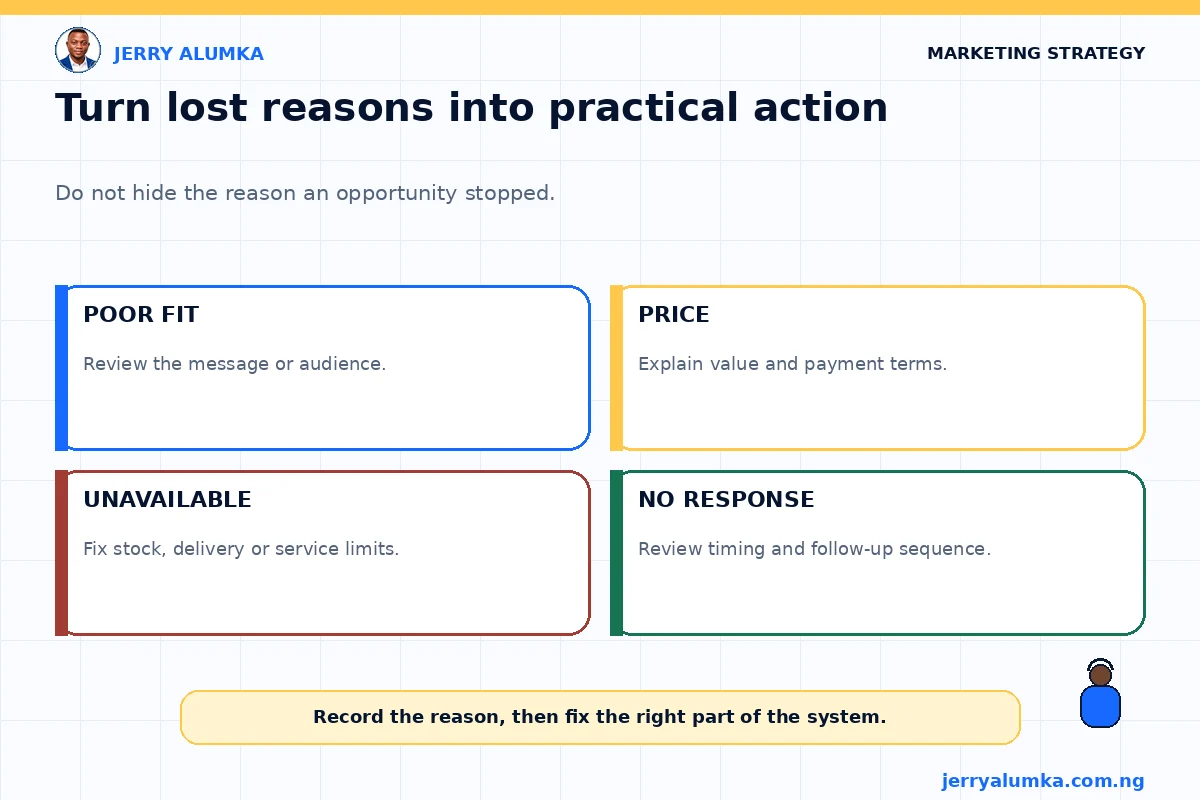
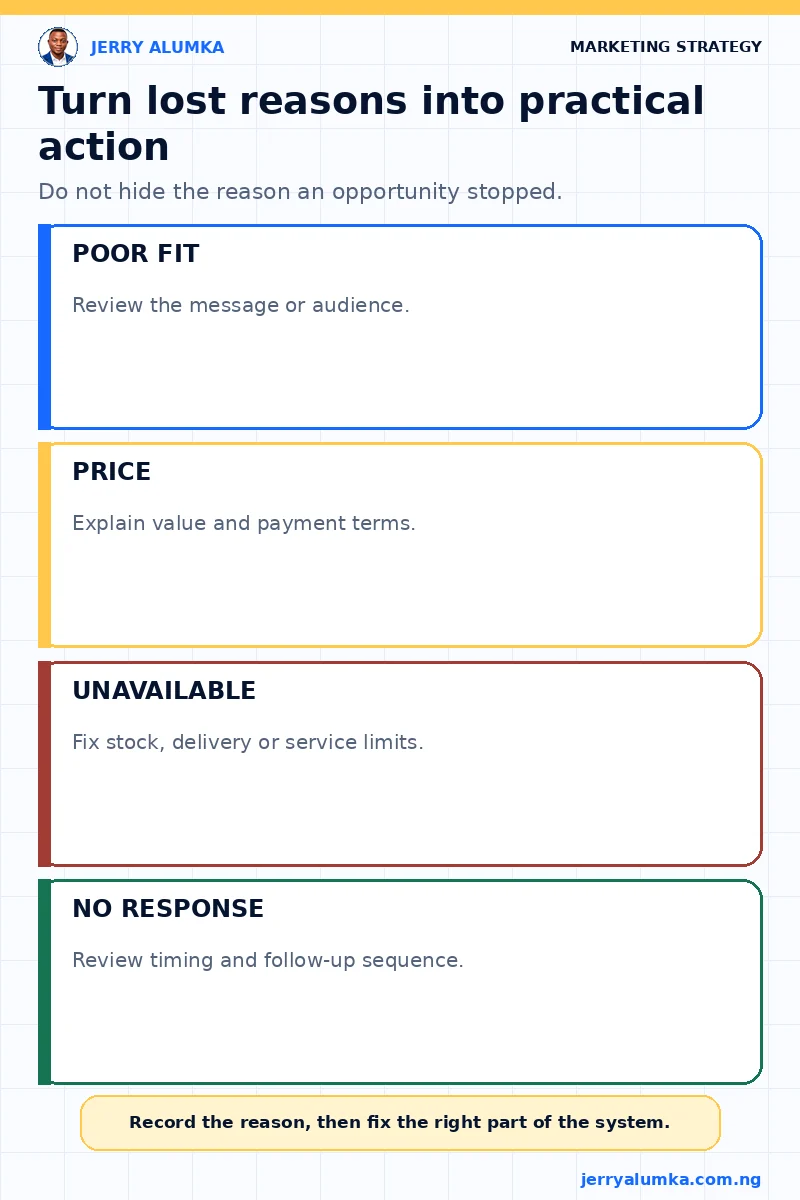
When a real opportunity doesn’t move forward, choose a short lost reason. It may be no response, wrong fit, price, no stock, delivery condition, timing or another supplier.
The reasons will show you where to act.
If many suitable people stop after a quotation, check how the team explains value, terms and the next step. If most enquiries aren’t suitable, check the advert and form. If people want a product you don’t have, more advertising won’t solve the stock problem.
Measure movement, not only final sales
Each week, count the number of people in every stage and how many moved forward.
A conversion rate is the percentage that moved from one stage to the next. For instance, if 20 suitable people received quotations and five bought, the quotation-to-purchase rate is 25 per cent.
Use the same stage definitions and the same time period when you compare results. Also check response time, overdue follow-ups and the most common lost reasons.
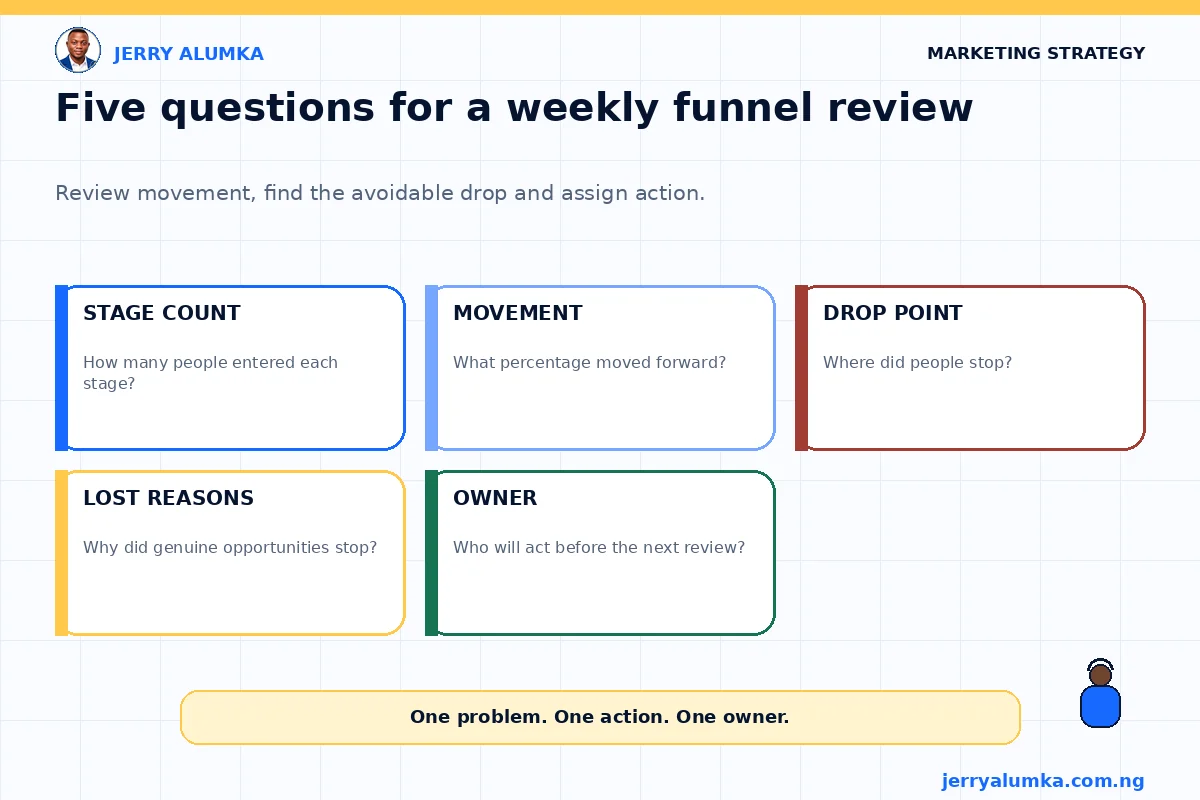
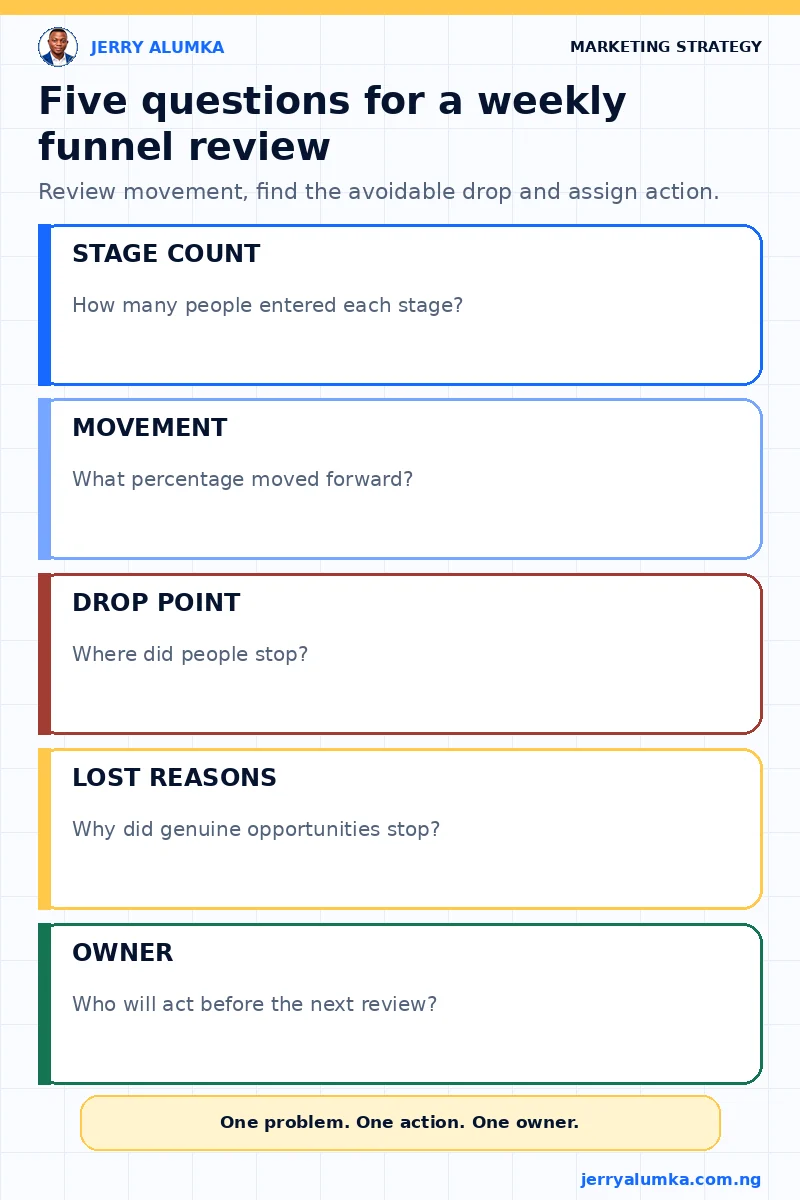
Ask these questions:
- How many people entered each stage?
- How many moved to the next stage?
- Where was the biggest avoidable loss?
- What reasons did the team record?
- Who will fix one problem before the next review?
A customer journey map can add more detail. The funnel shows the business stages. The journey map shows what the customer is trying to do and where the experience becomes difficult.
A spreadsheet may be enough at first
You don’t need expensive software to begin. A clear spreadsheet can work for a small team.
Write down your stages. Define the action that moves a person into each stage. Give every enquiry an owner. Record the next action and review the sheet every week.
A CRM becomes useful when the number of leads, staff members and reminders becomes hard to control in a spreadsheet.
After two or three weekly reviews, choose the stage with the clearest avoidable loss and fix it before you spend more money bringing people into the top of the funnel.
If scattered enquiries make the loss hard to see, contact me and bring one recent journey from first response to final outcome. That gives us something concrete to map.