
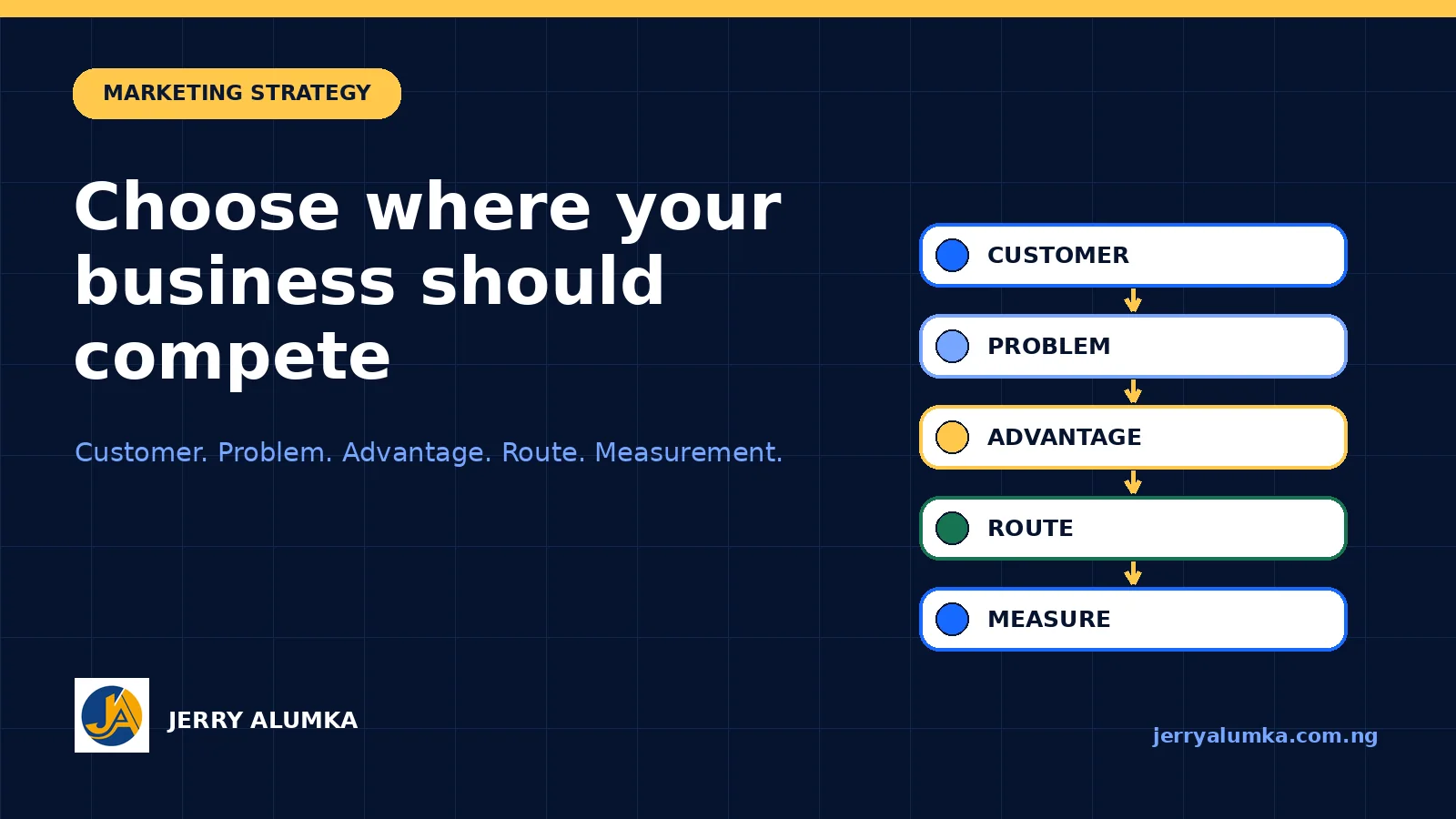
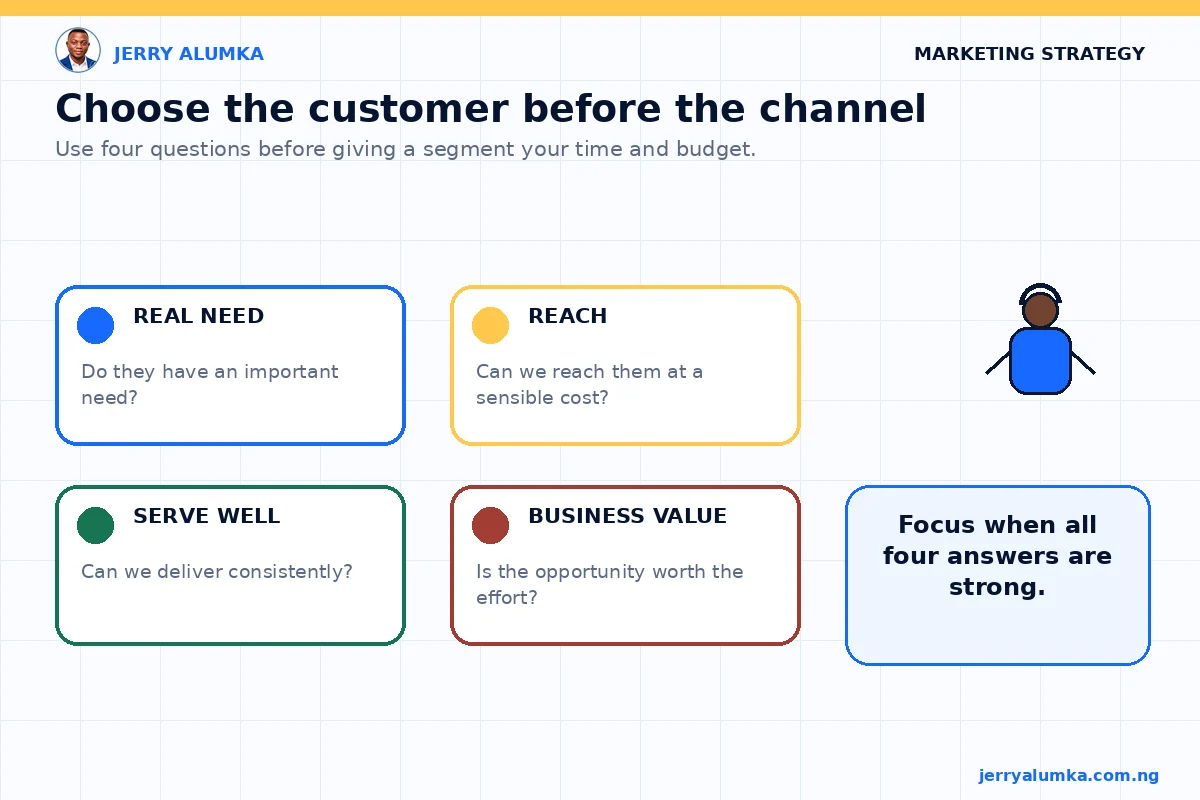
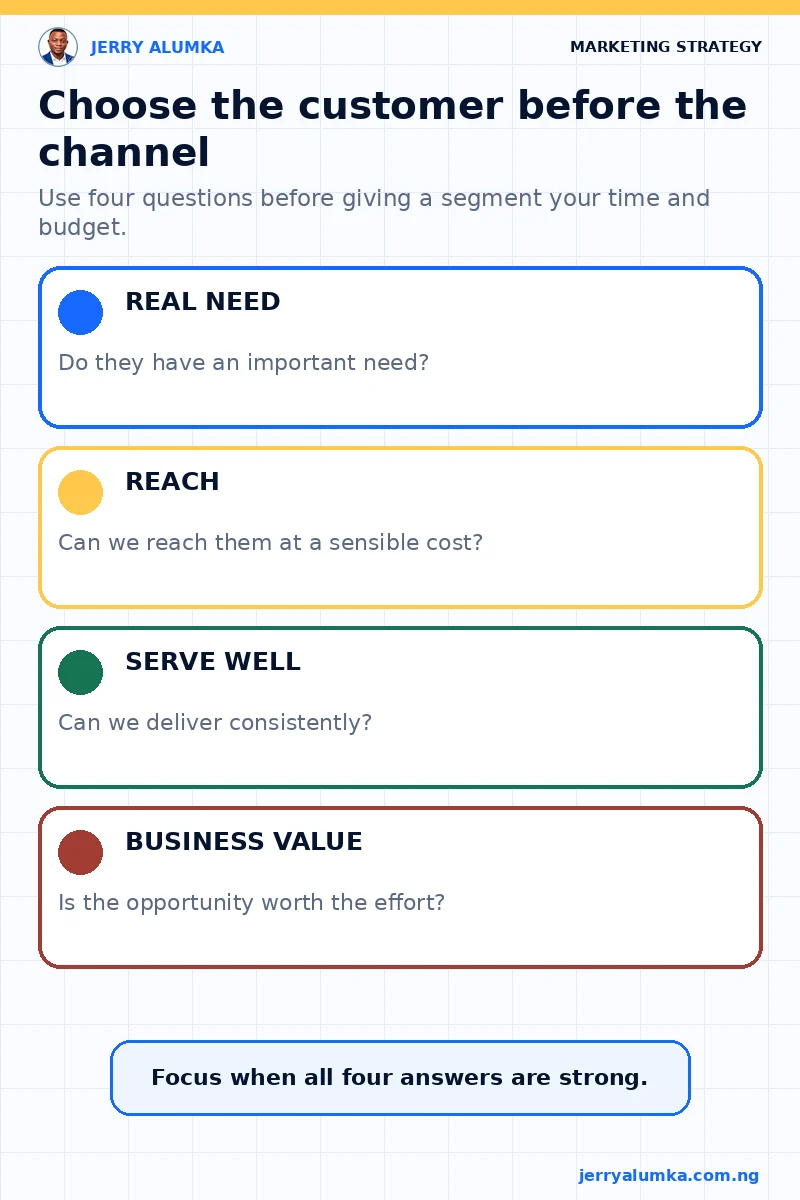
“People who eat lunch” sounds like a large market for a food business. It is also too broad to guide the menu, delivery promise or advert. An office administrator ordering for a meeting has a different problem from one person buying food on the way home. Choosing one does not stop the other from buying. It tells the business whom it is trying hardest to help.
That customer choice is where marketing strategy begins. It changes the offer, the route to market and the result the business counts.
What changes when the customer is specific?
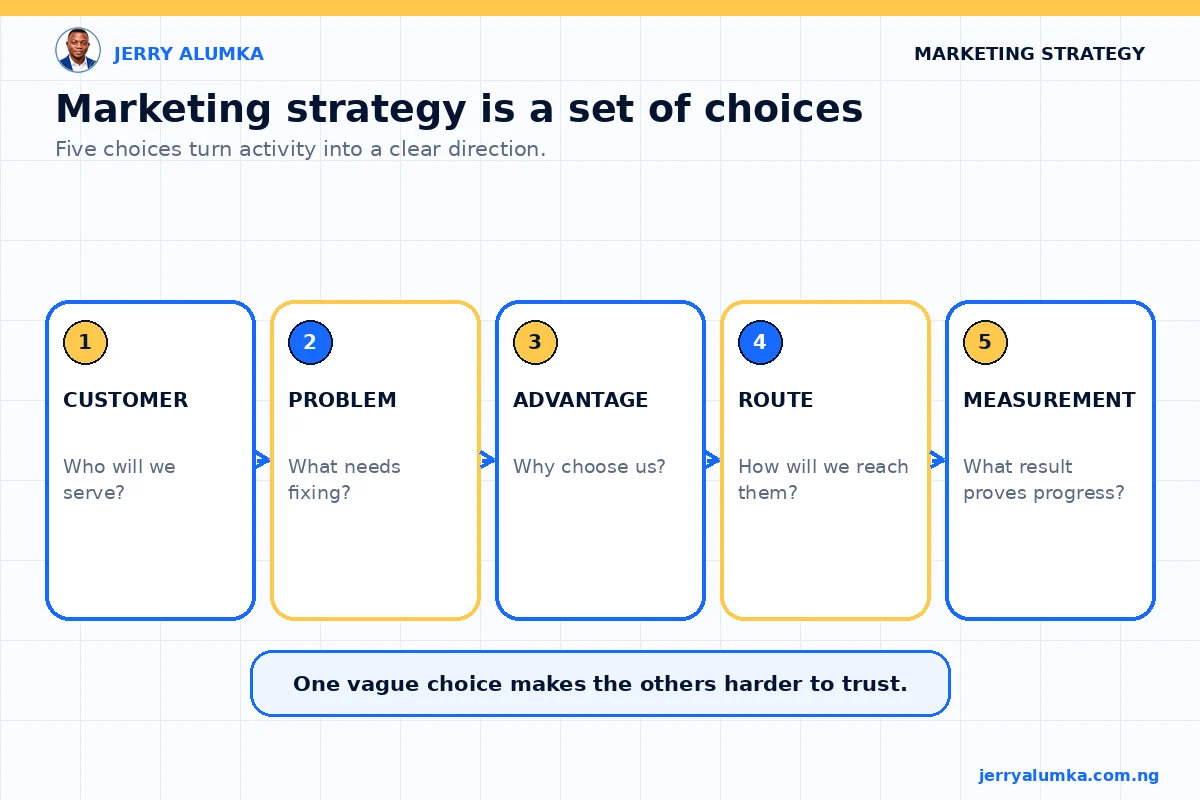
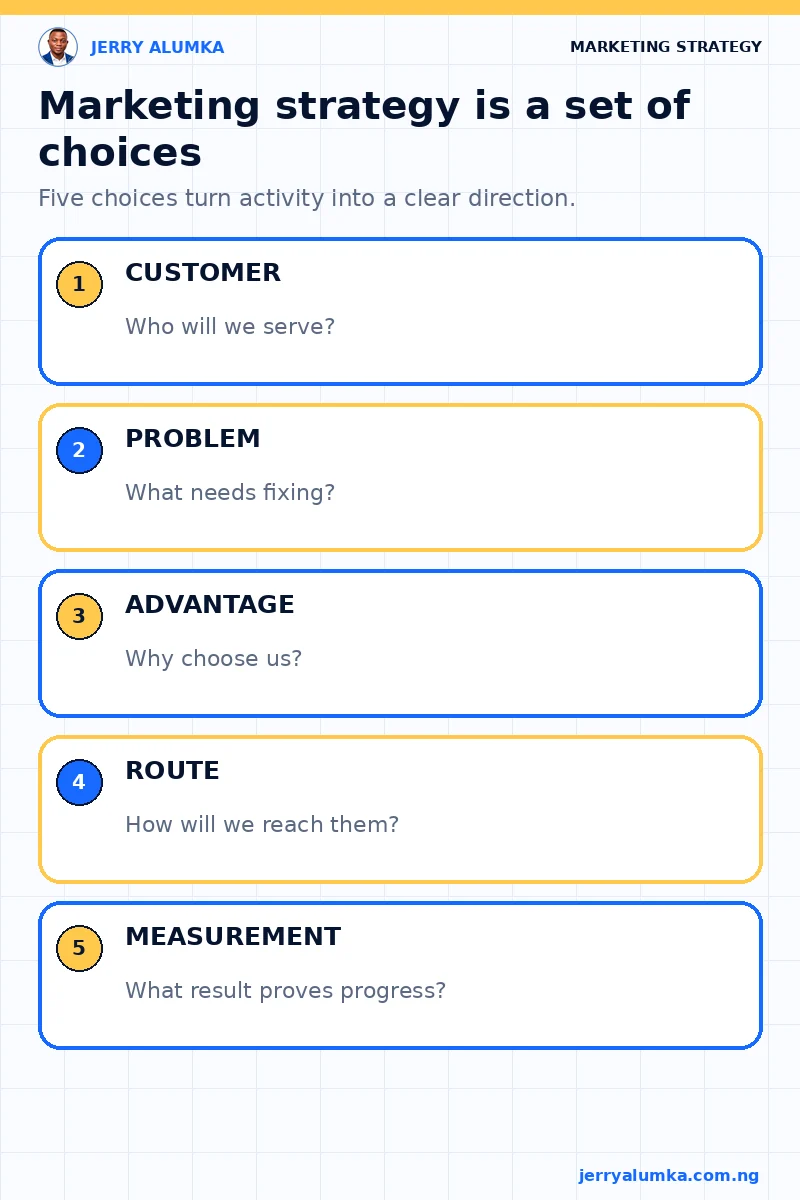
Suppose the business chooses office administrators arranging lunch for small teams. They need a clear menu, a price per person, a delivery area and an order process that does not require twenty messages. The food must arrive at the agreed time.
The offer can now be stated plainly: “We provide lunch packs for small office meetings in Ikeja, with a clear price per person and delivery at the agreed time.” This sentence helps the owner decide what belongs in the service.
The United States Small Business Administration advises businesses to use market research to find customers and compare their alternatives. A small business can begin with past enquiries, orders and complaints. Ask why people bought, why they stopped and which orders the team served well.
The offer now has boundaries
For office administrators, “good food” is not enough. Show the pack options, minimum order, delivery area and required notice. Explain what happens when the number of guests changes.
The business is choosing what it can be dependable at. If the kitchen cannot deliver across Lagos at lunchtime, it should not promise that. A smaller area may produce a clearer and more reliable service.
Price also belongs beside the full service. A person ordering for twelve may value a clear total and reliable delivery. Another seller may compete on low prices at a pickup point, while another handles private events. The office lunch business does not need to copy both.
Instagram may open the sale, not complete it
Instagram can show the food, but it does not have to carry the whole sale. An advert can lead to a page or WhatsApp conversation showing the menu, delivery area and order deadline.
The owner may also contact nearby offices with a short, relevant introduction or follow up with offices that ordered before. This is different from sending the same message to every number available.
Choose the route where this customer can understand the offer and take the next step without unnecessary trouble.
Attention is only the first result


Likes and views may show that people noticed the advert. They do not show that office administrators placed suitable orders.
Record how many people asked for the office menu, fitted the delivery area, requested a quotation and confirmed an order. Also check whether delivery happened at the agreed time.
This connects with what a marketing performance report should tell management. A simple sheet may be enough at first. When several people handle follow-up, my guide to CRM tools for a Nigerian business explains when a shared system may help.
The numbers can challenge the original choice. Many menu requests but few suitable enquiries may point to the wrong audience. Good enquiries but few orders may point to price, delivery, response time or the quotation.
The first choice is allowed to change
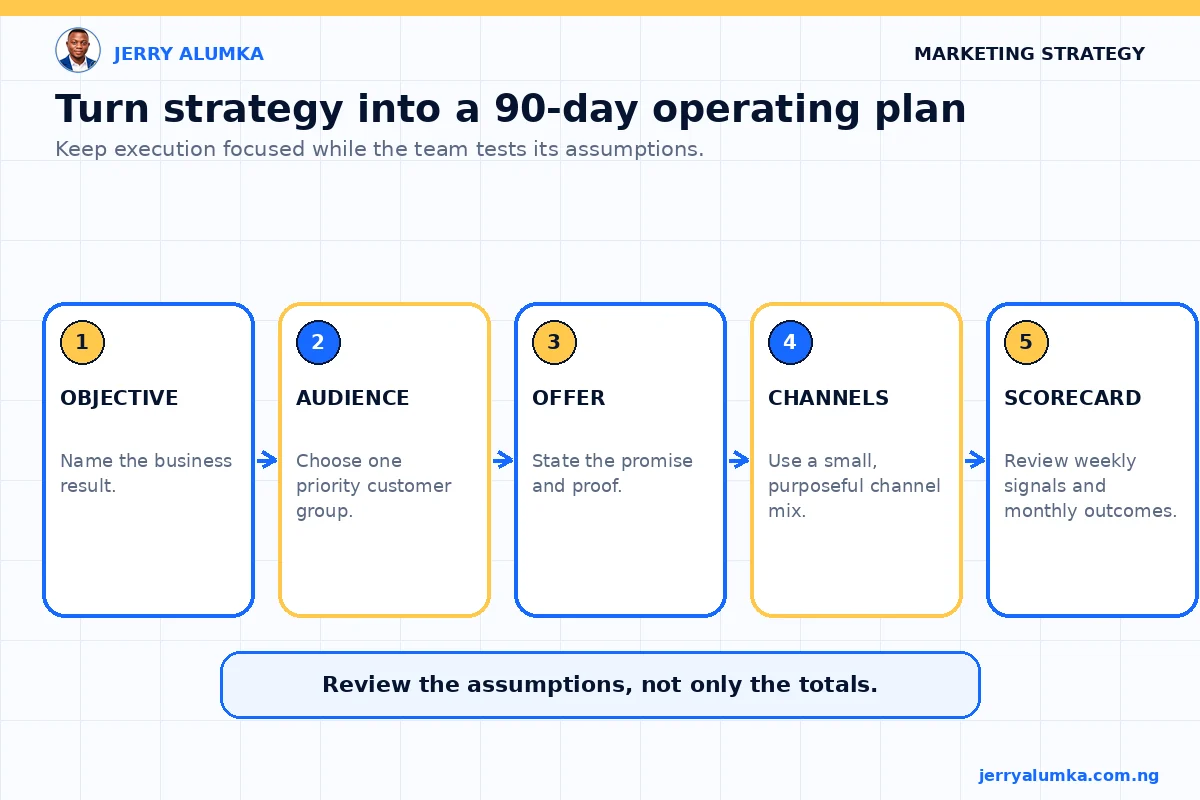
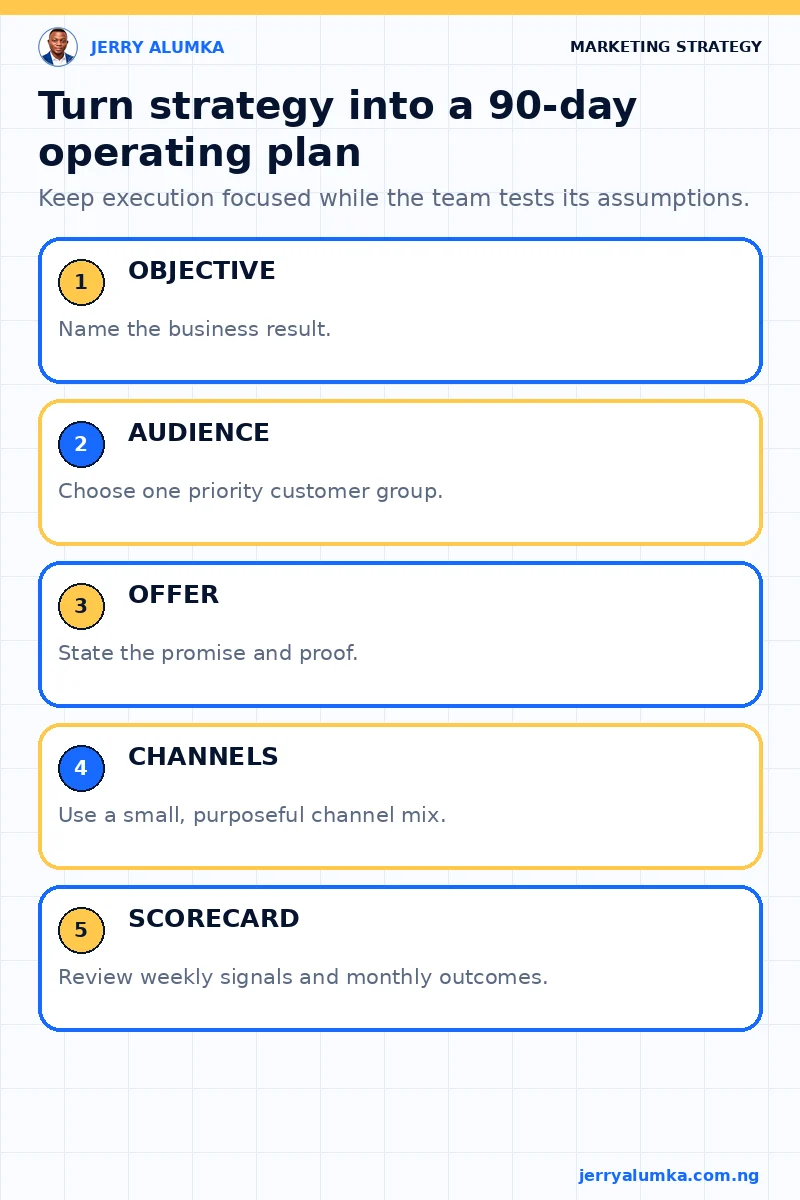
Use the same office menu for the next set of enquiries and ask the same basic questions: location, number of people, date, time and who approves the order.
Review what happened. Administrators may need earlier invoices. The delivery area may be too wide. Referrals may work better than adverts. Use those findings to change the work.
The business can still sell other products, but each offer should have a clear customer. Mixing office lunches, family trays and event service into one vague advert makes all of them harder to understand.
Start with your own records. Choose one customer with a clear problem, make the offer easier to understand and buy, then count what happens after the response. If you want help making that choice, tell me what you sell, who you currently serve and where growth is getting stuck.