
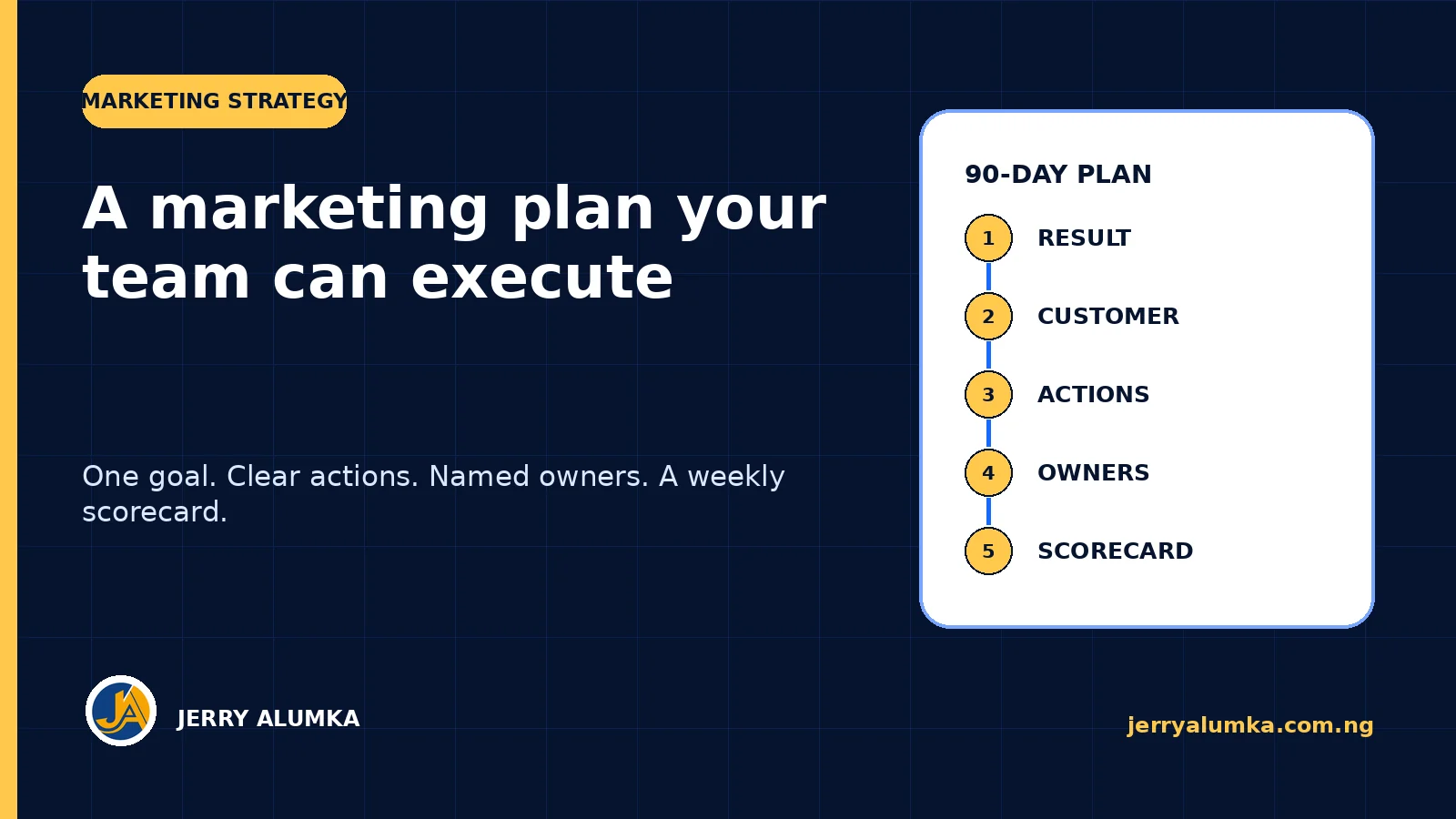
“Increase awareness” can sit in a marketing plan without telling anybody what to do on Monday. “Grow online” has the same problem. A working plan names the business result, the customer, the offer, the work, the owner, the cost and the evidence the team will review. It also makes some activities wait.
For most small and growing businesses, I recommend planning 90 days at a time. That is long enough to run meaningful work and short enough to correct a poor assumption before it becomes an annual habit. The document itself can stay brief if it helps the team decide what to do this week.
Give the plan one business result
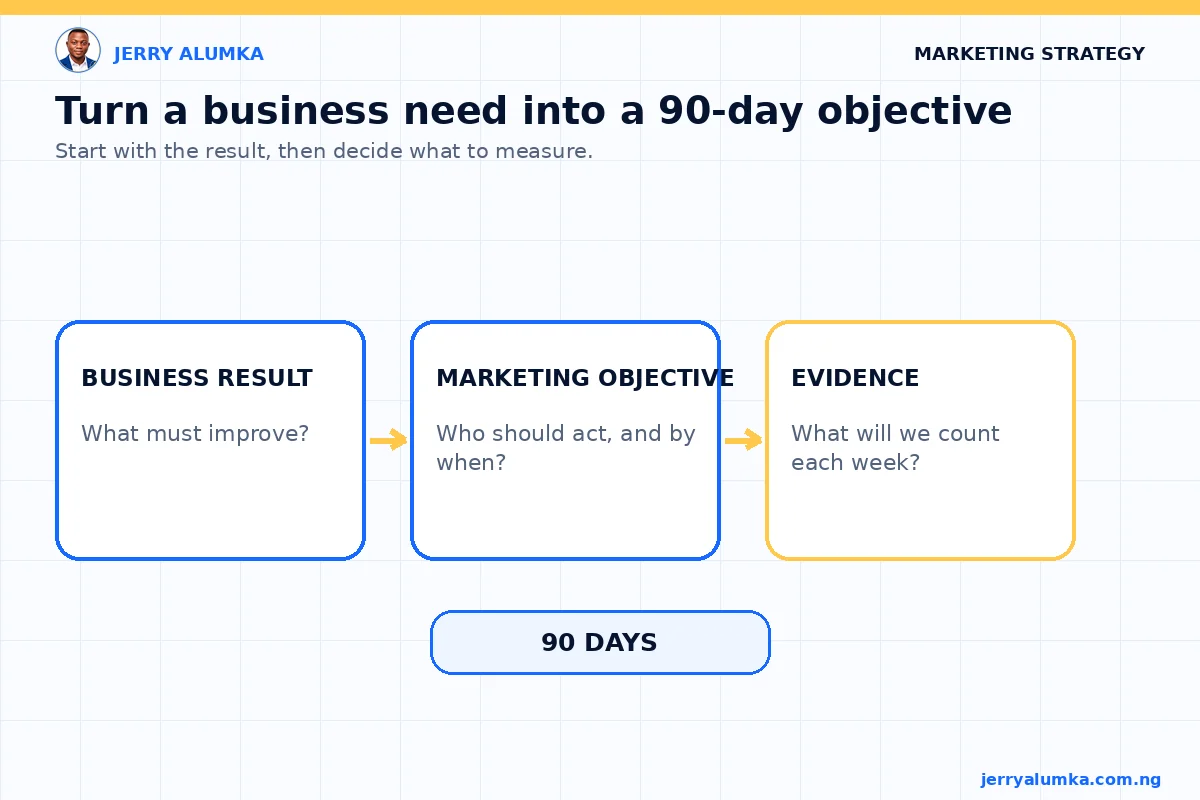
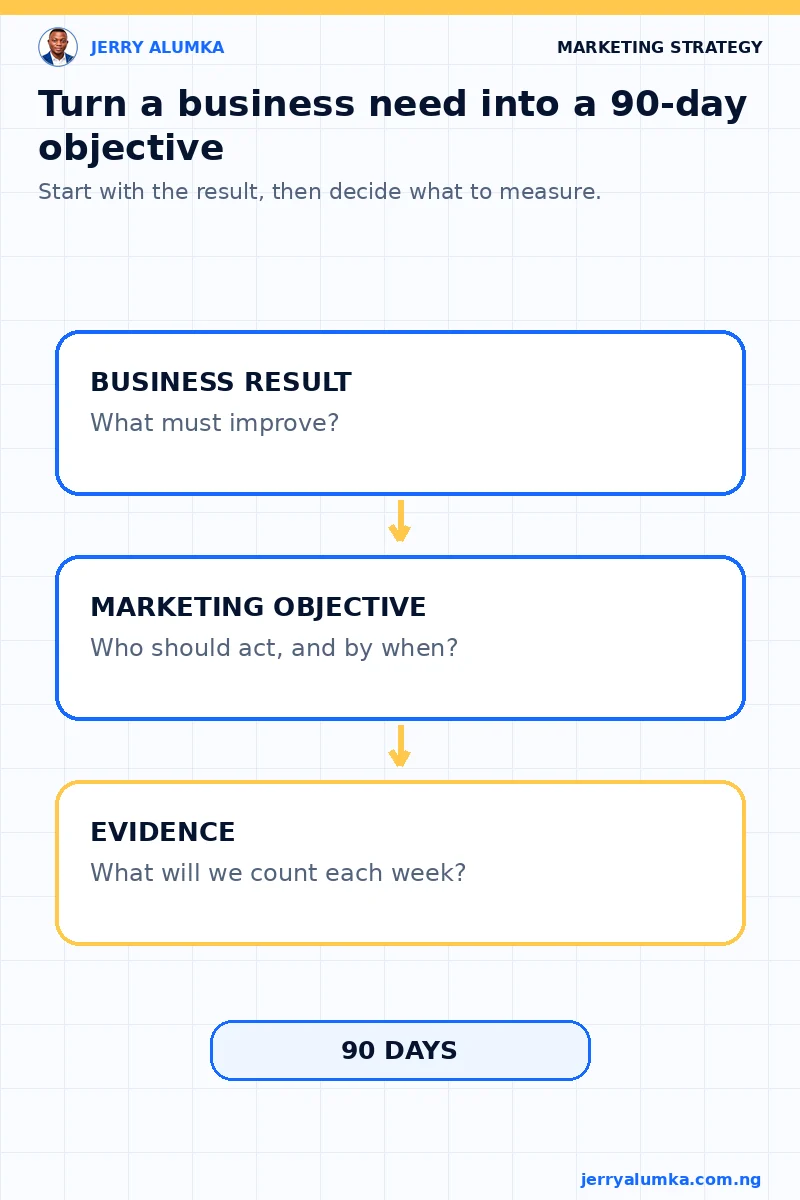
Write one result the business needs marketing to support during the period. It could be qualified enquiries for a service, registrations for a programme, visits to a retail location or repeat purchases from existing customers.
Be careful with activity goals. Publishing 20 posts is an output. Reaching 100,000 people is a platform result. Neither tells you whether the business gained the kind of response it needed.
A stronger objective connects the activity to an outcome. For example: “Generate qualified enquiries from business owners in Lagos during the next 90 days, then track how many receive follow-up and reach a sales conversation.” The exact target should come from the business’s real capacity and previous data. Don’t choose a large number because it looks impressive in a presentation.
If the business hasn’t decided where it wants to compete, settle that first. My marketing strategy framework explains the choices around customer, problem, advantage, route and measurement. Strategy decides the direction. The marketing plan turns that direction into work.
Define the customer, problem and offer
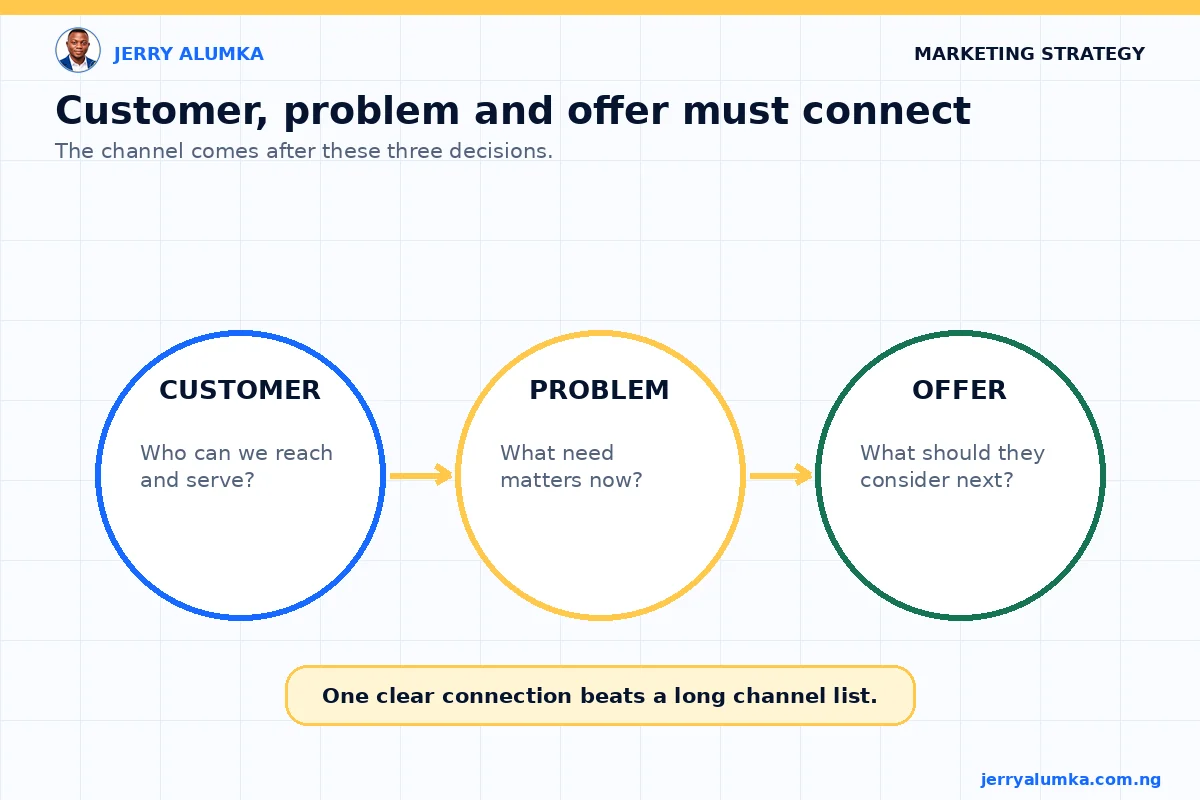
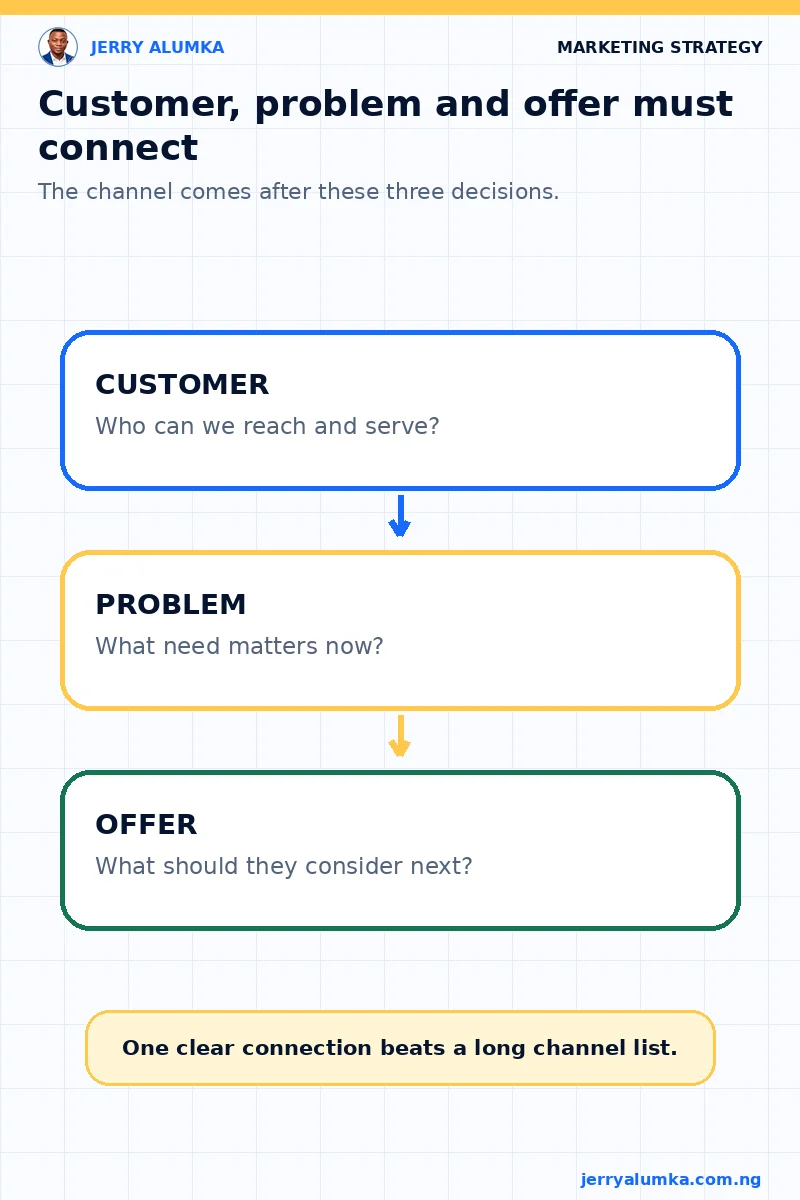
“Everyone” isn’t a target customer. Describe the group whose problem matches the offer and whom the business can realistically reach and serve.
A practical customer description answers a few practical questions: Who are they? Where are they? What situation creates the need? What may stop them from acting? Who influences or approves the purchase?
Then state the problem in the customer’s language. A parent isn’t looking for “an integrated educational solution”. The parent may be looking for a safe lesson programme that fits work hours and helps a child improve in a weak subject. Plain language makes channel and message decisions easier.
The offer is the next step you want the person to consider. It may be a product purchase, consultation, showroom visit, registration, demo or request for a quotation. Write down what the customer receives, why it is relevant now, what proof supports it and what the person should do next.
Choose a small set of marketing actions
A marketing plan should not contain every channel the team knows. Choose the smallest set of actions that can move the target customer from attention to decision.
For a Nigerian professional service, the plan might combine useful search-led articles, a focused landing page, paid search for high-intent queries and a clear follow-up process. A neighbourhood retail business may need local discovery, customer referrals, WhatsApp communication and simple social content. The right mix depends on how the customer finds, evaluates and buys the offer.
For each action, write its job. An advert may bring the right person to a page. The page may explain the offer and collect an enquiry. A follow-up call may confirm fit and answer questions. When every action has a job, the team can spot a weak link instead of blaming “marketing” as one large block.
Turn each action into an owned task
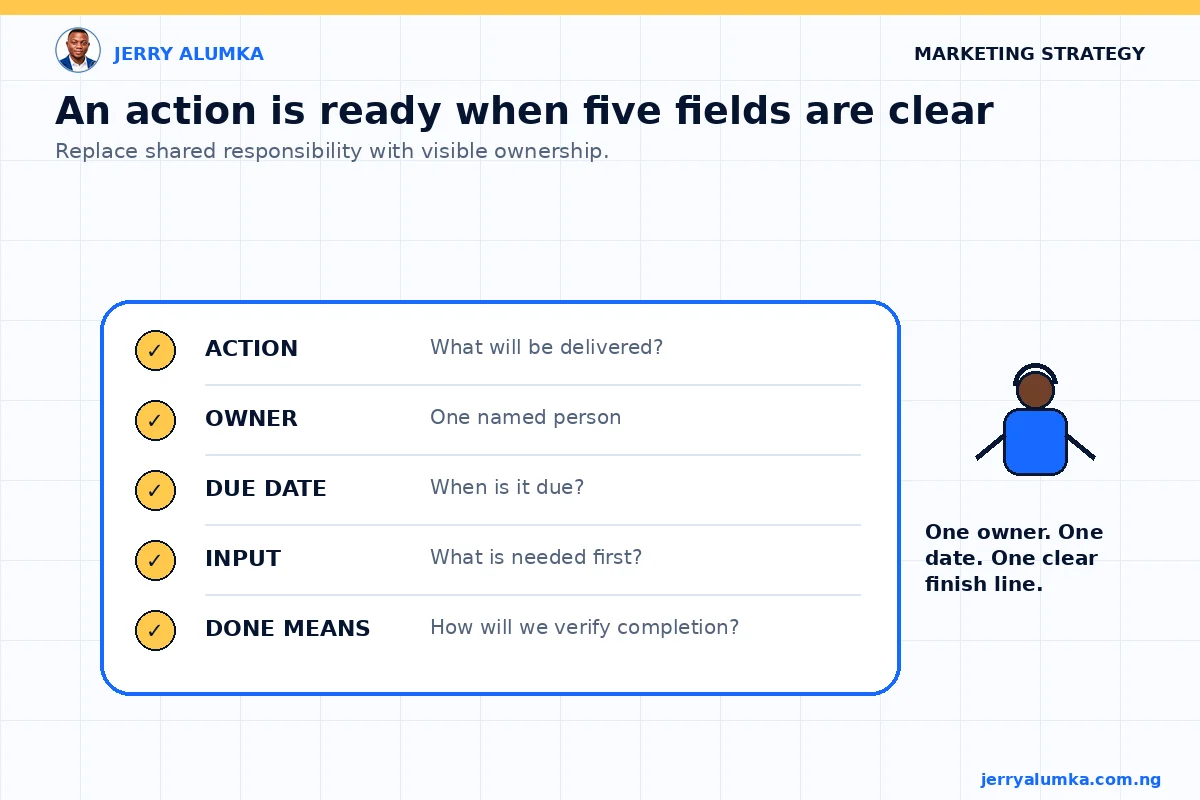
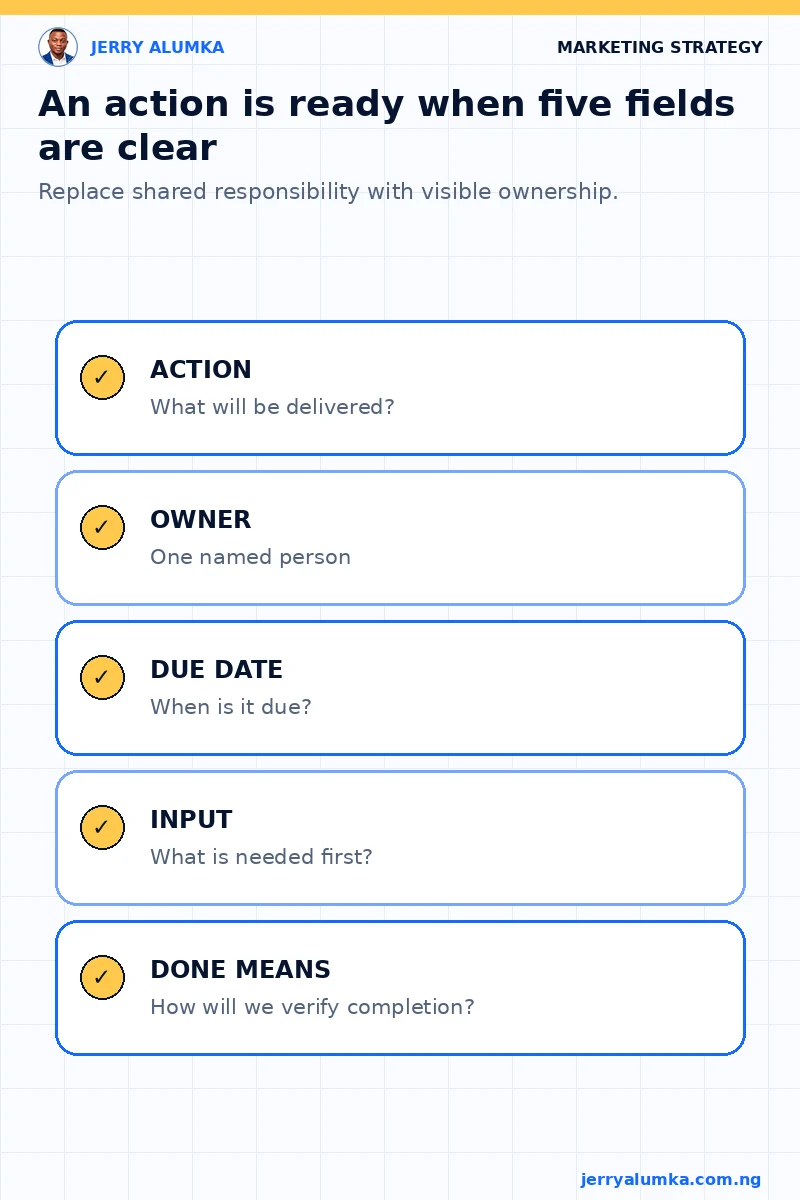
A plan becomes executable when every action has an owner, due date, required input and definition of done.
| Action | Owner | Due date | Done means |
|---|---|---|---|
| Prepare the offer page | Named team member | Week 2 | Page is public, tested on mobile and ready to receive enquiries |
| Create campaign messages | Named team member | Week 3 | Approved messages match the audience and offer |
| Set up lead follow-up | Named team member | Before launch | New enquiries reach one list and have a response owner |
“Marketing team” isn’t an owner. A person’s name should sit beside the task. Shared responsibility often means nobody notices a missed deadline until the campaign is already late.
Build the budget around the work
List the cost of producing and distributing the plan. Include advertising spend, design or video work, software, landing-page work, events, printing and outside support where they apply. Also account for staff time and sales capacity. A campaign can generate more enquiries than a team can handle, which turns paid attention into poor customer experience.
Separate fixed costs from variable costs. A landing page may be a fixed setup cost. Advertising spend may change with delivery. This distinction helps management understand what can be adjusted during the 90 days and what has already been committed.
The Australian Government’s business portal says a marketing plan should define the target market, messages, channels, goals, time frames, budget and the method for evaluating success. Its marketing plan guidance also starts with market research and positioning before tactics. The order matters. Channel choices made without customer and market decisions are guesses.
Use a weekly scorecard
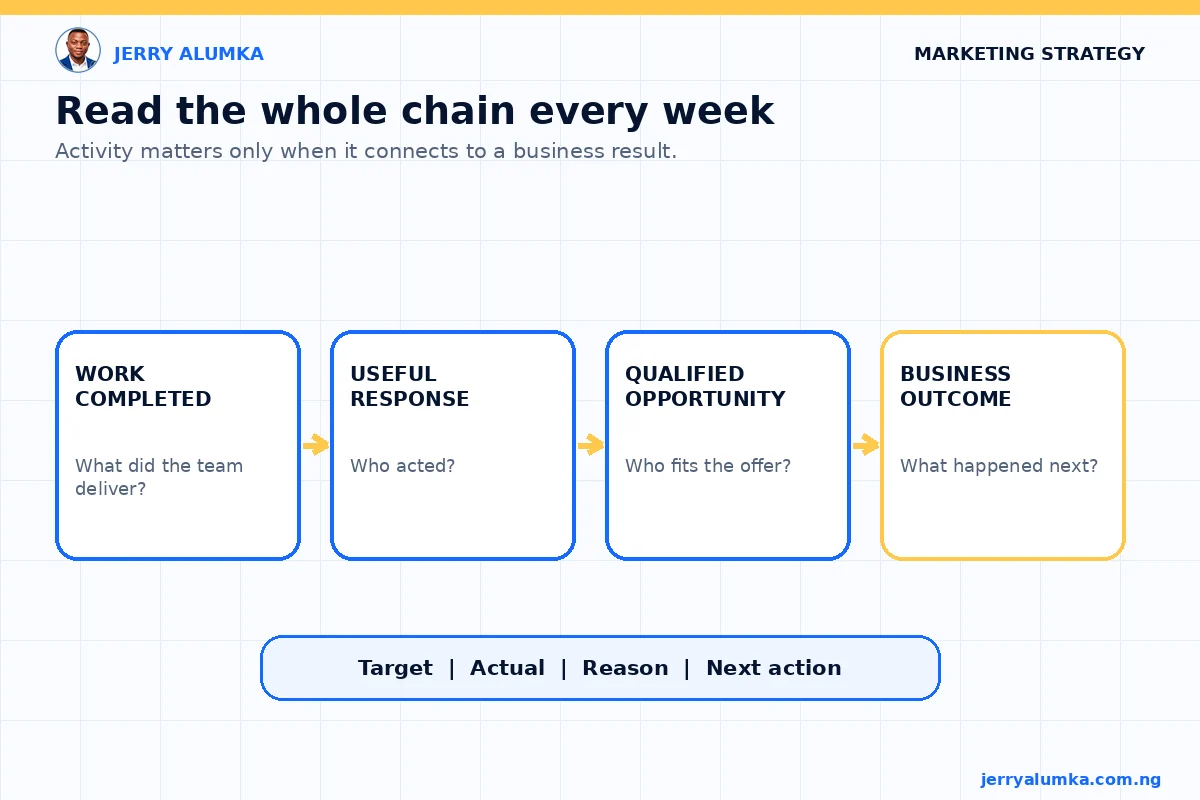
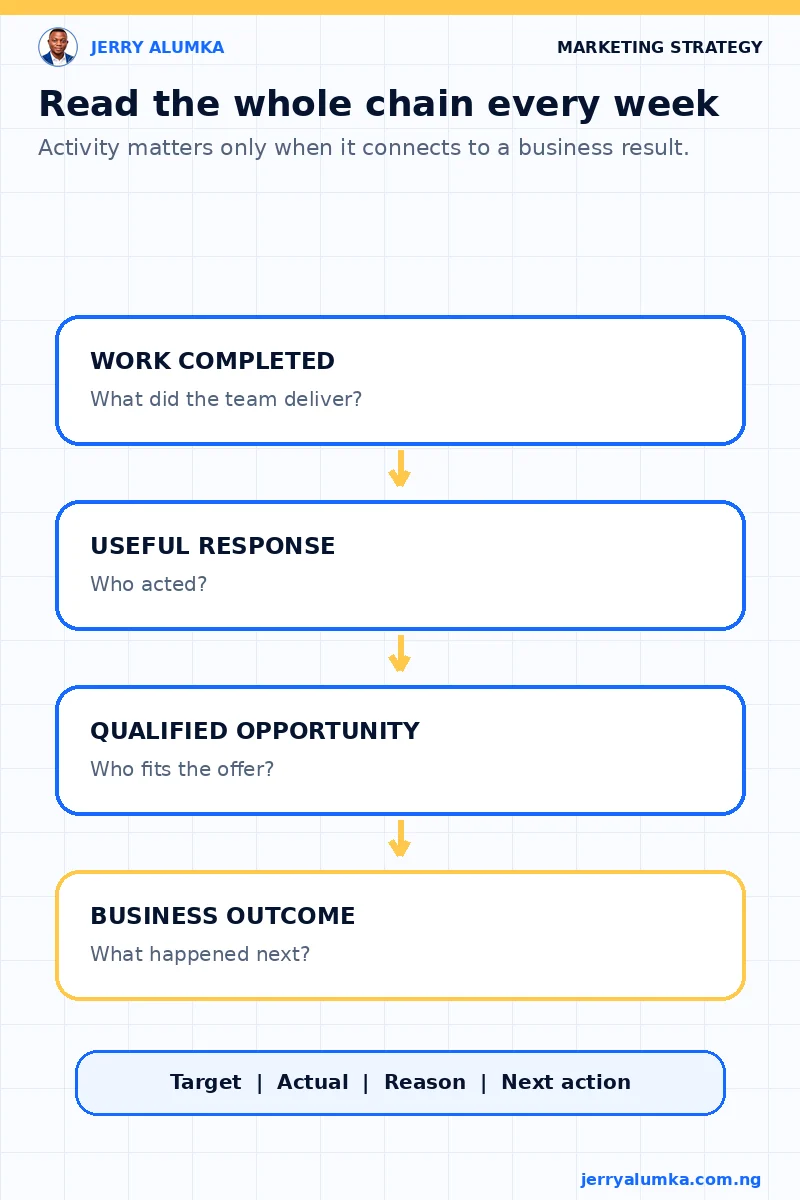
Don’t wait until day 90 to learn that the plan wasn’t working. Review a short scorecard every week.
Track the chain from activity to business result: work completed, people reached, useful responses, qualified opportunities and final outcomes. Add cost and follow-up speed where they matter. Use the same definitions each week so the numbers remain comparable.
A scorecard should also show the target, actual result, reason for the gap and next action. A weak number isn’t useful on its own. The team needs to know whether the problem came from late production, poor delivery, the wrong audience, a weak offer, a slow response or a measurement gap.
My guide to weekly marketing performance reports shows how to present this information to management without turning the report into a dump of platform metrics.
What fits on the shared page
You can fit the working plan on one page:
- Business result: What must improve in the next 90 days?
- Target customer: Who has the problem and can act on the offer?
- Offer and message: What are we asking the customer to consider, and why should it matter?
- Actions: Which few activities will reach, convince and move the customer?
- Owners and dates: Who will deliver each task, and when?
- Budget: What will production, distribution and follow-up cost?
- Scorecard: Which numbers will show progress and business value?
Keep detailed calendars, creative briefs and campaign settings in separate working documents. The plan should remain the shared reference that connects all of them.
A weak week does not need another channel
At the weekly review, ask four things: What was completed? What changed in the numbers? What is blocking the next result? What will the team change before the next review?
Don’t respond to every weak week by adding another platform. Fix the broken part of the current plan first. If the offer is unclear, more reach spreads confusion. If follow-up is slow, more leads create a larger backlog.
A good marketing plan gives the team focus, ownership and a way to learn. If you need help turning a broad goal into a practical 90-day plan, contact me.