
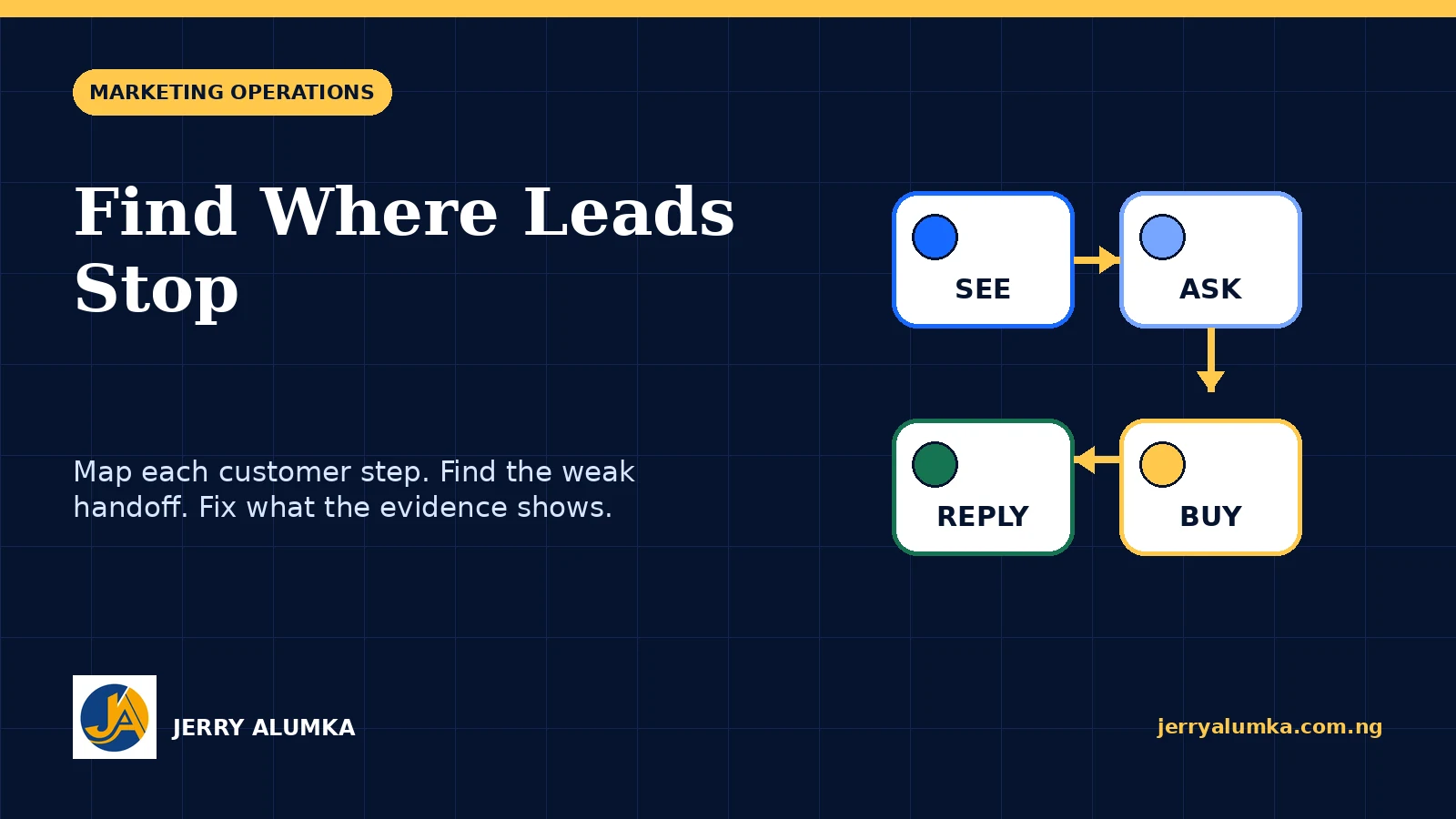
A woman sees an advert for a training programme, opens WhatsApp and asks for the price, date, location and whether she can pay in parts. It sounds like a short route to registration. It can still break several times.
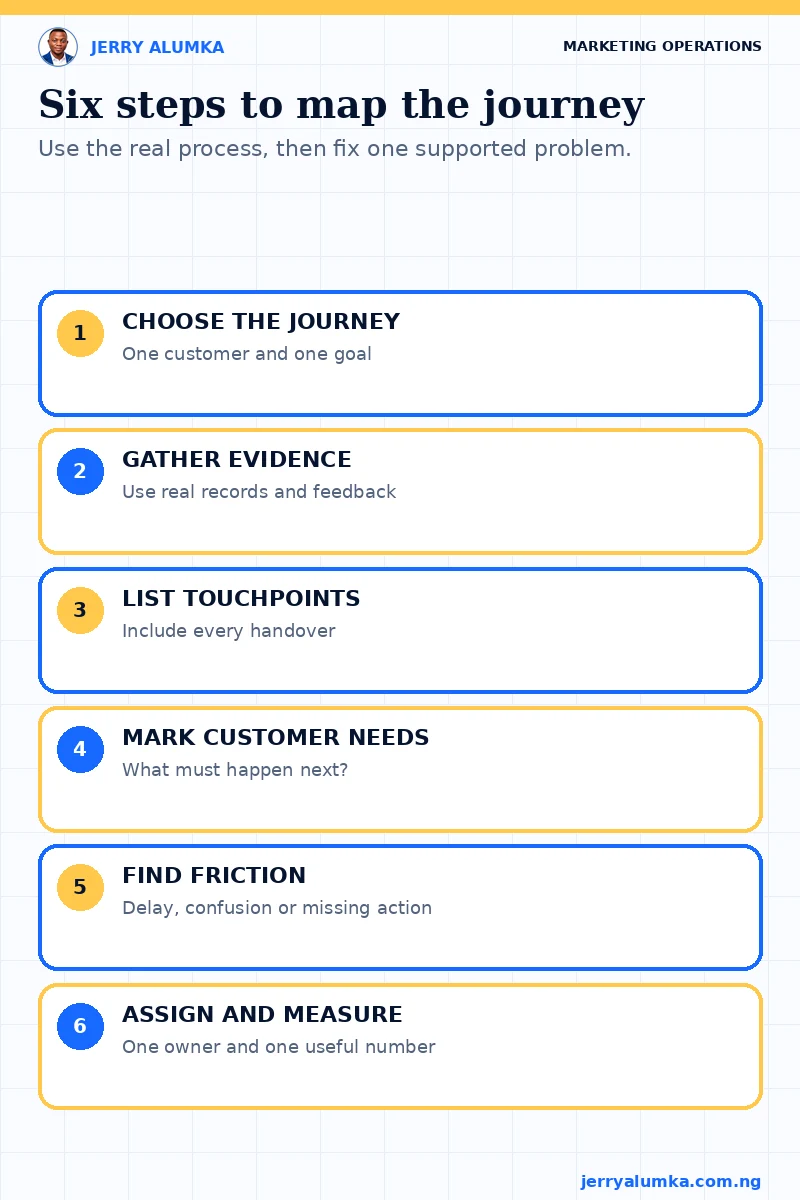
A customer journey map makes those breaks visible. Follow one enquiry from the advert to payment and record what the customer saw, what the team did and where the conversation stopped.
The advert sets up everything after it
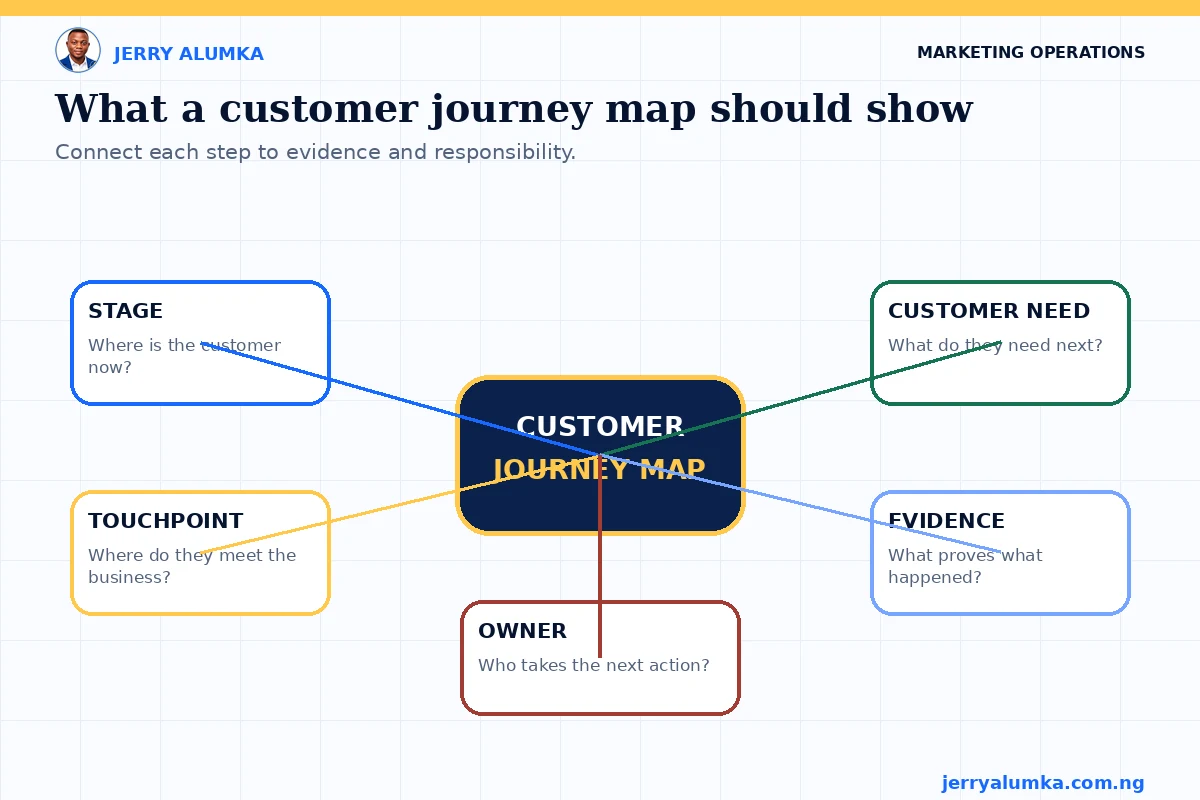
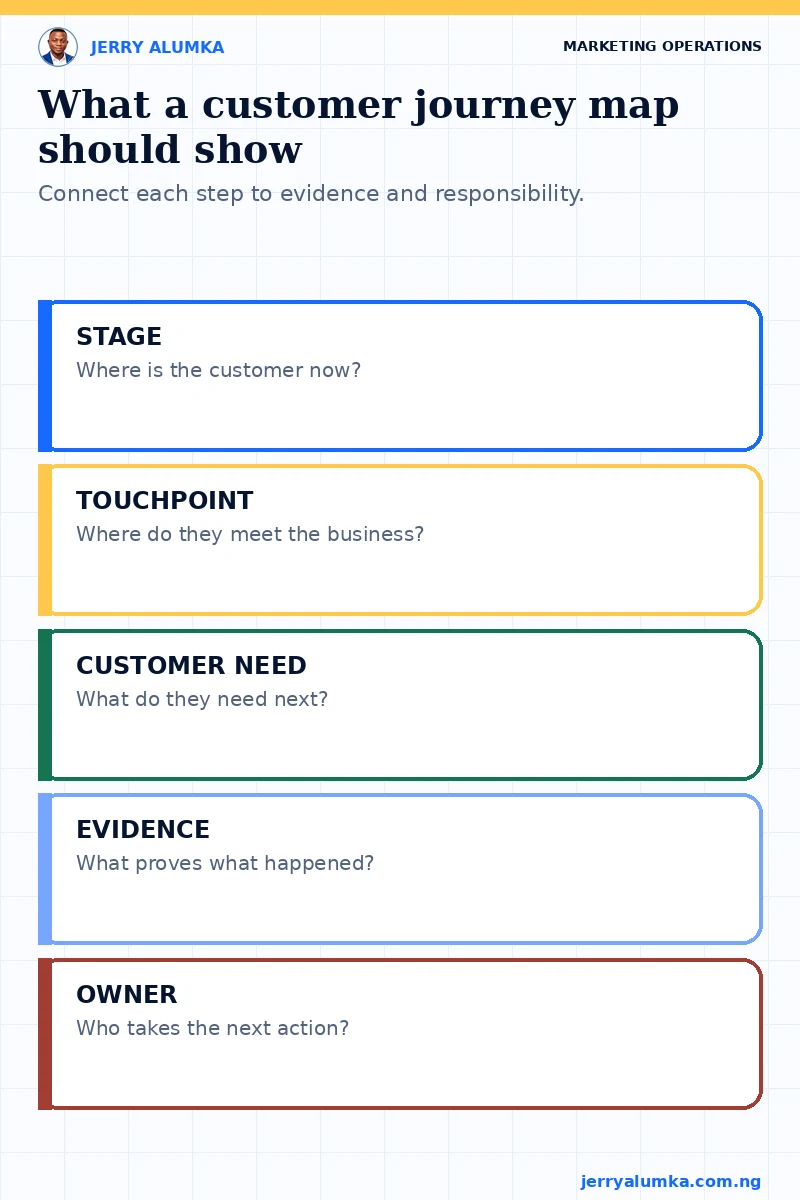
Salesforce describes a customer journey as the experiences and points of contact a person has with a company. Here, the advert is the first point. WhatsApp, registration and payment follow.
Check whether the advert said who the programme was for and showed the important conditions. If it hid the location, people outside the area may enquire even though they cannot attend. That problem began before the message reached sales.
Put the date, location and other important conditions where people can see them. This may reduce the number of messages, but the business needs enquiries from people who understand the offer, not the largest possible inbox.
WhatsApp is a handover, not merely a channel
Suppose her message arrives at 10 a.m. on a shared phone. Nobody owns new enquiries, so the first reply comes the next day. By then, she may have spoken to another provider.
Give one person responsibility during each working period. If that person cannot answer fully, the customer should still receive an acknowledgement and a clear time for the answer.
The reply should address the questions asked. A long script that hides the date, location and payment options creates more work for the customer. Answer those questions, share the registration route and ask if anything remains unclear.
If several people handle enquiries, a customer relationship management tool can show the owner and next action. It only helps when the team keeps it current.
A difficult form can waste a good conversation
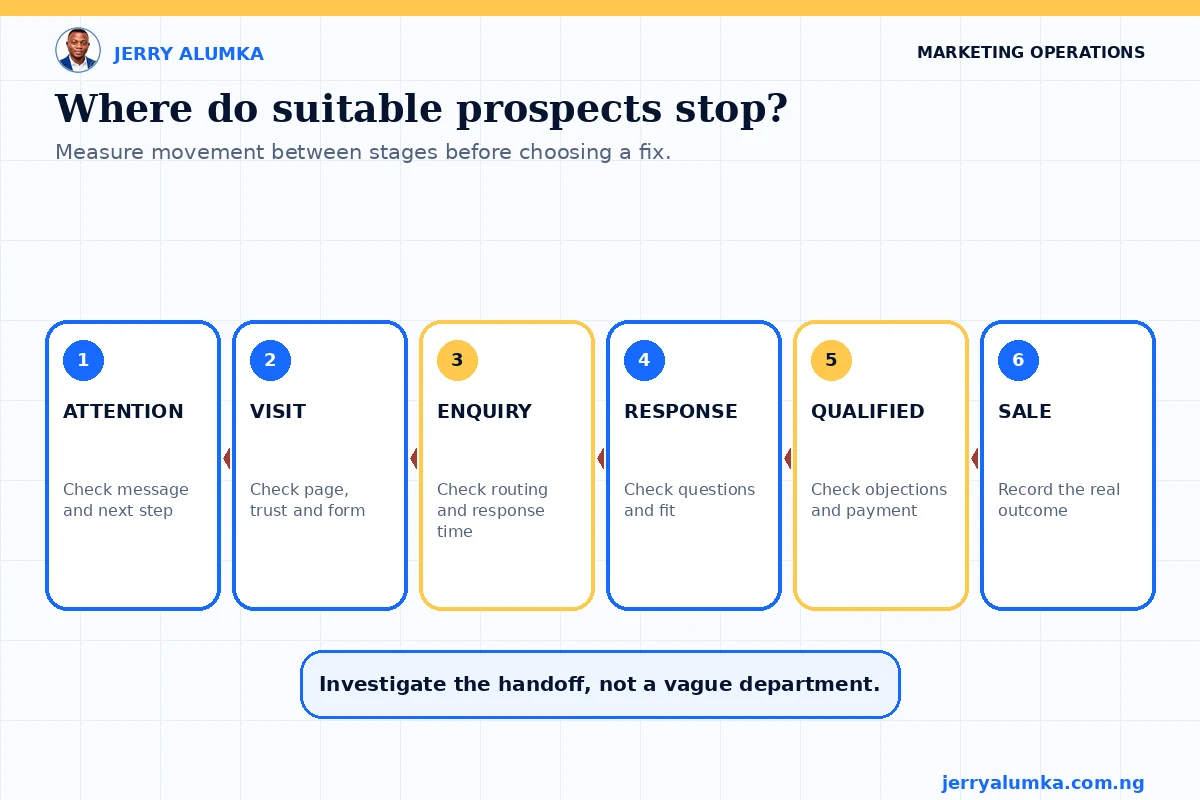
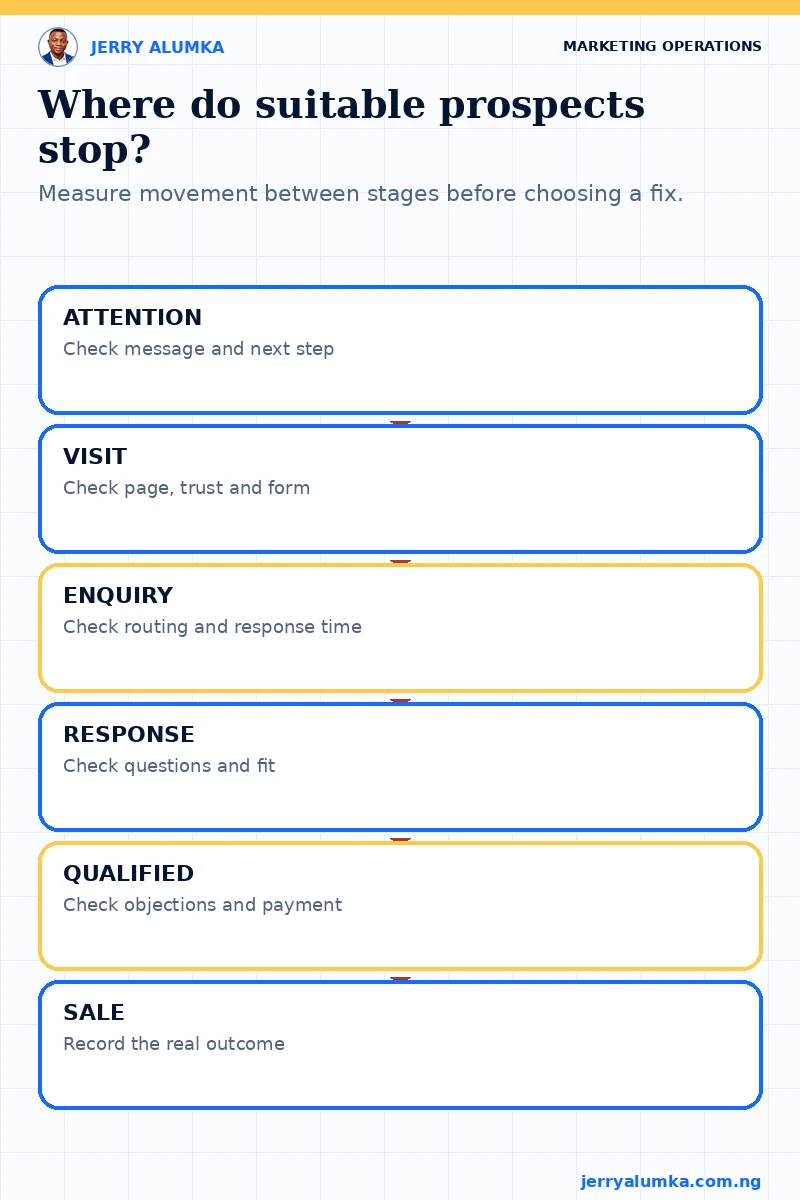
Now imagine that the form asks for information the business does not need and one field is difficult on a phone. The confirmation page gives bank details inside an image that is hard to copy and says nothing about where to send proof.
Open the form on an ordinary phone and complete it as a customer would. Remove unused questions, make the payment details easy to copy and explain what happens after payment.
Someone should also confirm the payment. A customer who has paid should not have to chase the business for days.
Qualtrics explains that journey mapping uses customer interactions and feedback to locate weaker parts of the experience. Useful evidence can be simple: message times, form records, payments and questions customers repeat.
One page can show the break and its owner

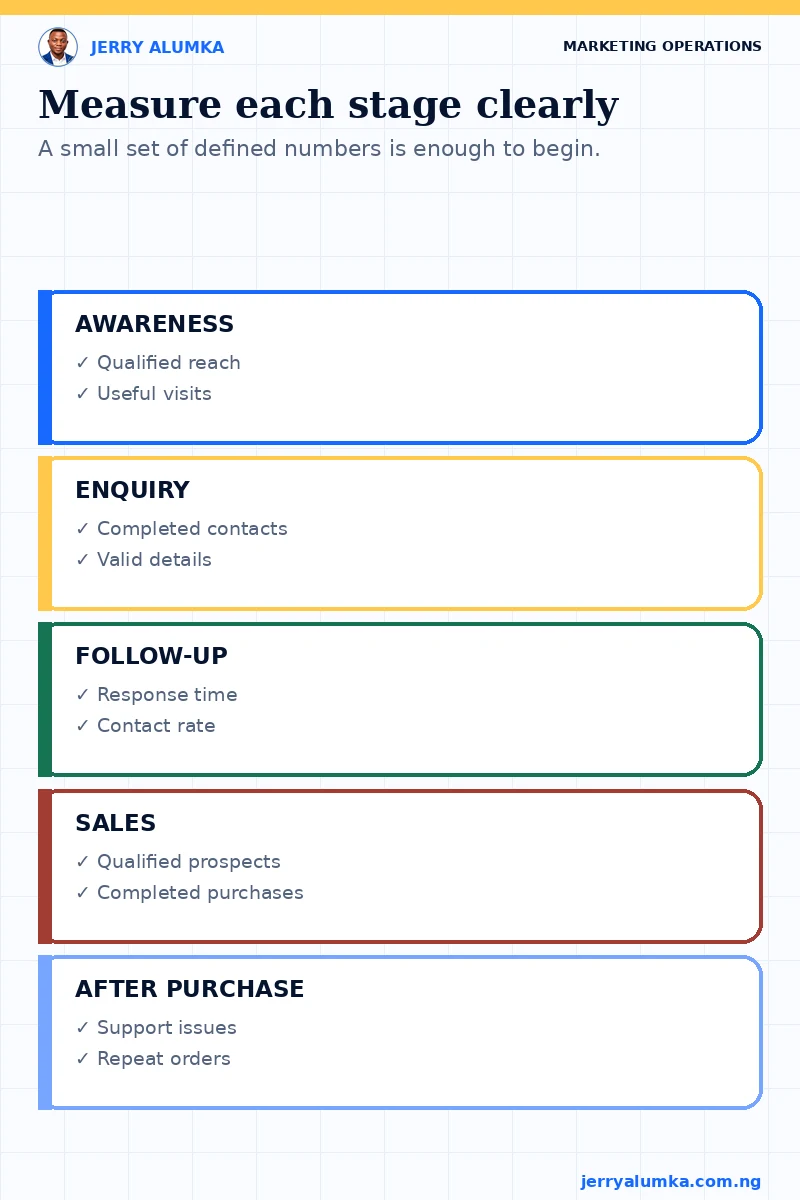
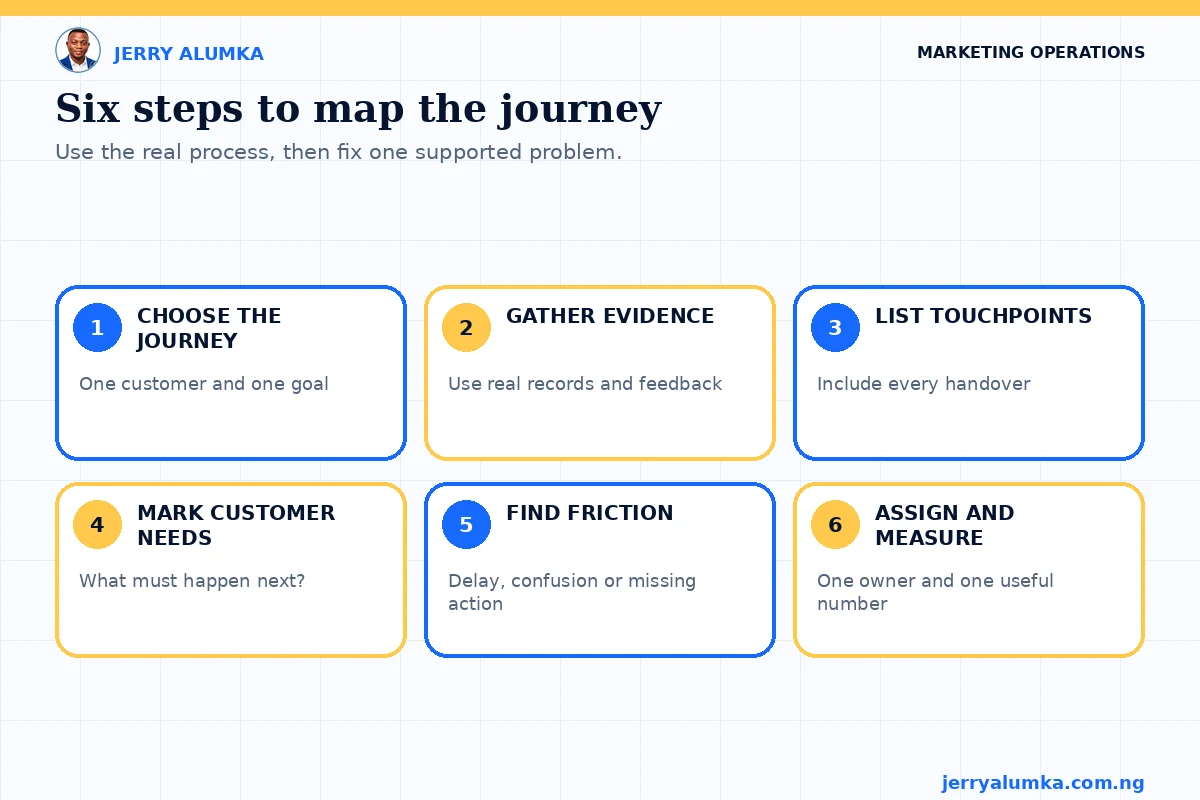
List the advert, WhatsApp message, reply, form, payment and confirmation. Beside each point, record what happened. Avoid guessing how the customer felt when you have evidence you can use instead.
Assign each correction. Marketing can fix the advert. Sales can own new messages. The form owner can remove unnecessary fields. Accounts can make payment confirmation clear.
One enquiry will not explain every lost sale, so review more enquiries and look for repeated breaks. Record when each enquiry arrived, when the team replied, whether the person fit the offer and what happened next.
Begin with an enquiry that should have had a fair chance of becoming a sale. The first corrections belong where the customer had to wait, ask again or work too hard to pay. If the break remains difficult to locate, send me the advert, enquiry route and follow-up process.