
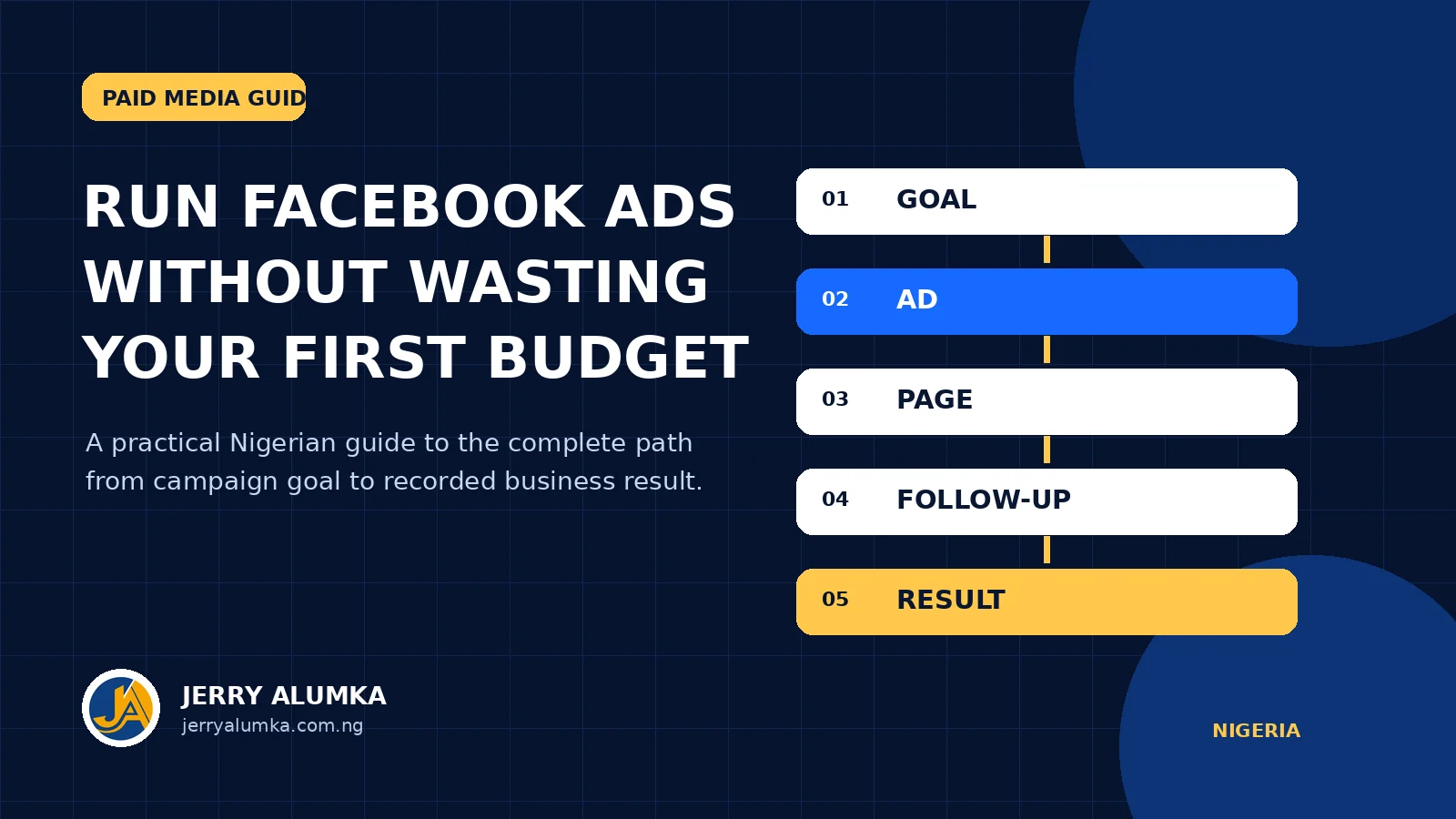
Someone boosts a post, chooses an audience, adds money and waits for sales. By the time the advert goes live, the first budget may already be in trouble. The goal may be unclear, the objective may not fit it, the offer may be weak or nobody may be ready to answer enquiries. When sales do not arrive quickly, Facebook gets the blame for work that was never prepared around the advert.
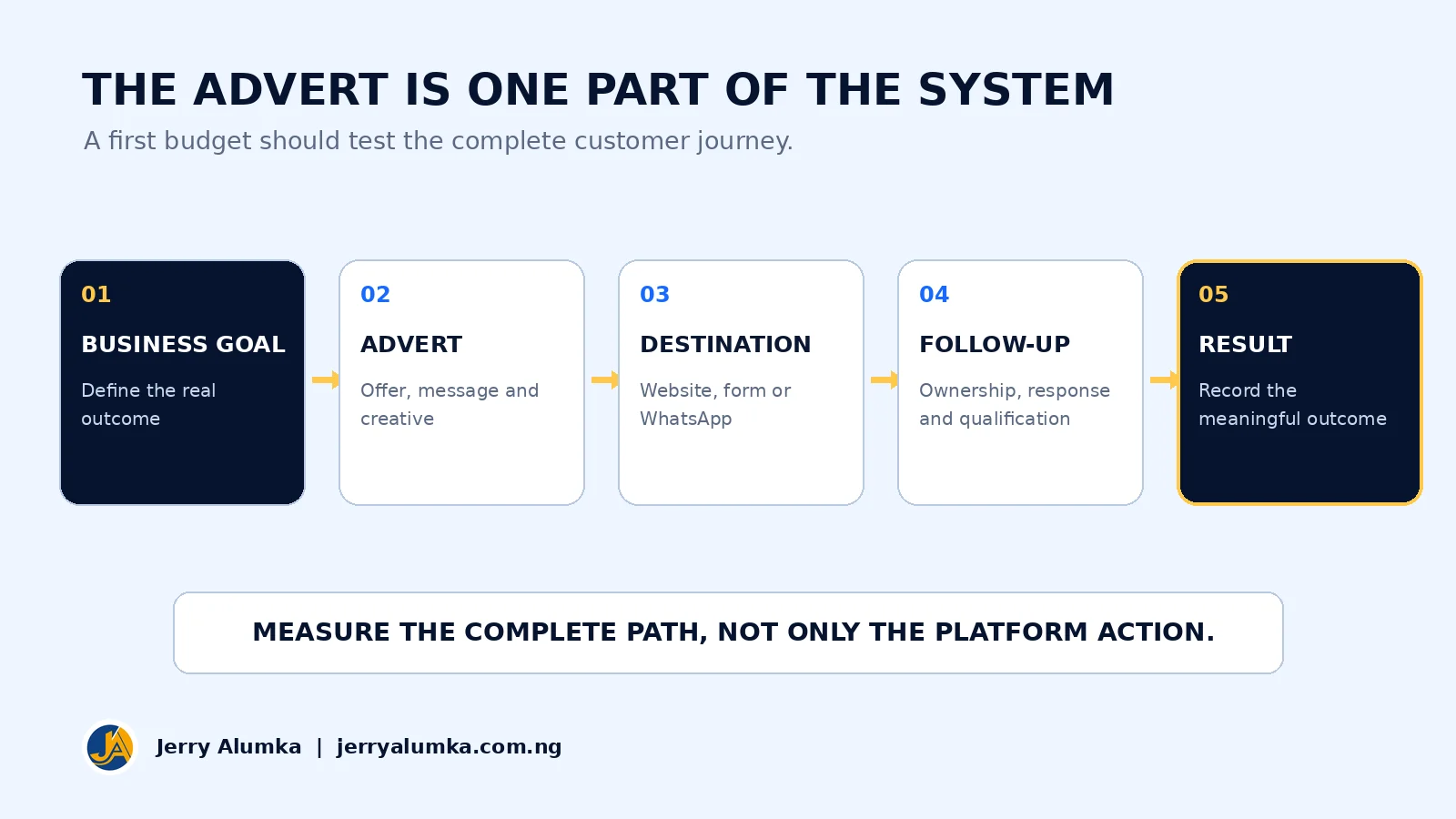
Meta Ads Manager can deliver across Facebook, Instagram, Messenger and other approved placements. Before spending, prepare the full path from the first impression to the response inside the business.
Choose the goal before opening Ads Manager
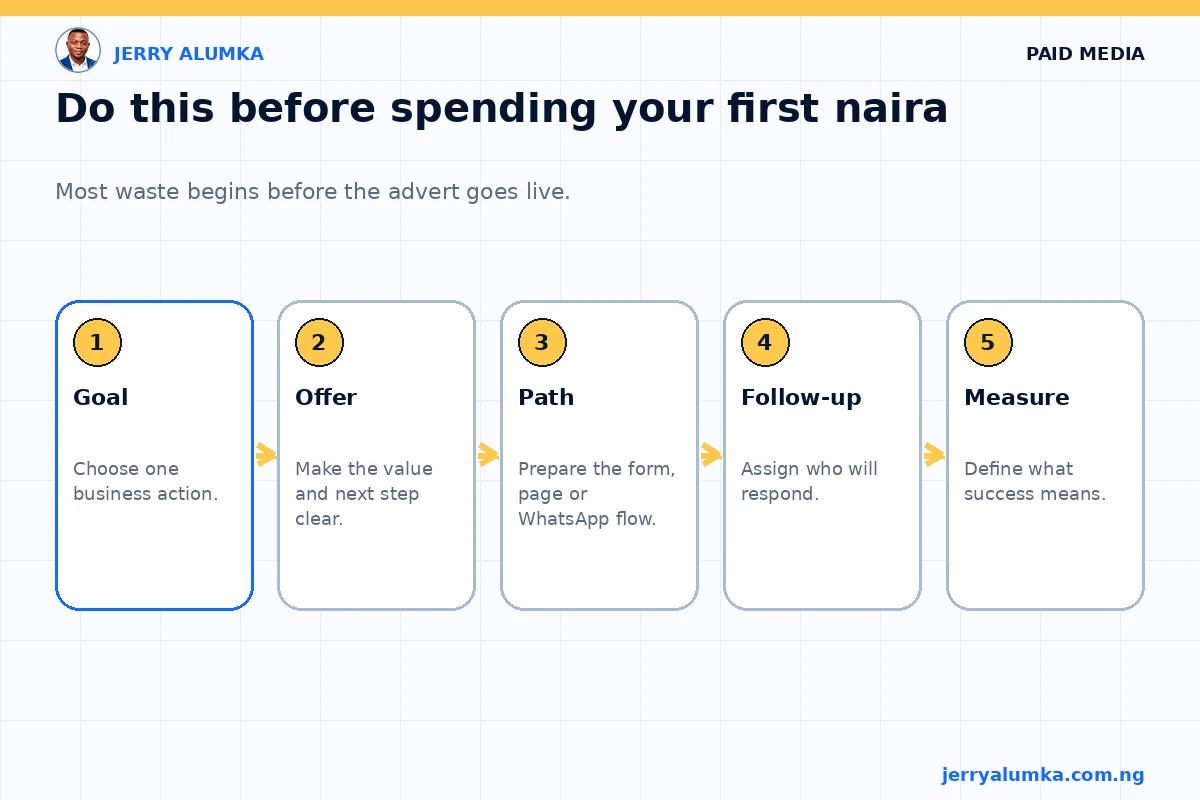
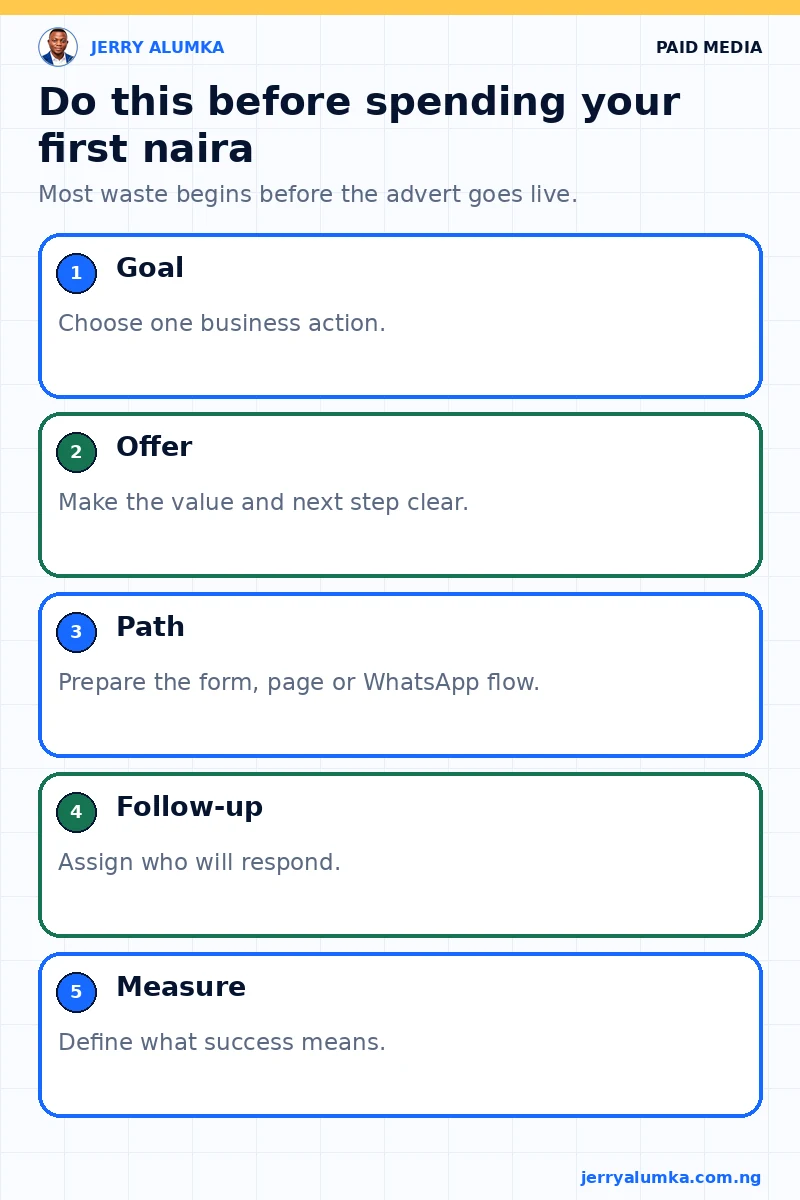
Don’t begin inside Ads Manager. Write the business result in one sentence.
- I want suitable people to request a quotation.
- I want customers to buy this product on the website.
- I want people in Abuja to start a WhatsApp conversation.
- I want suitable applicants to complete a job application.
These goals need different settings and follow-up. “I want more customers” is not clear enough.
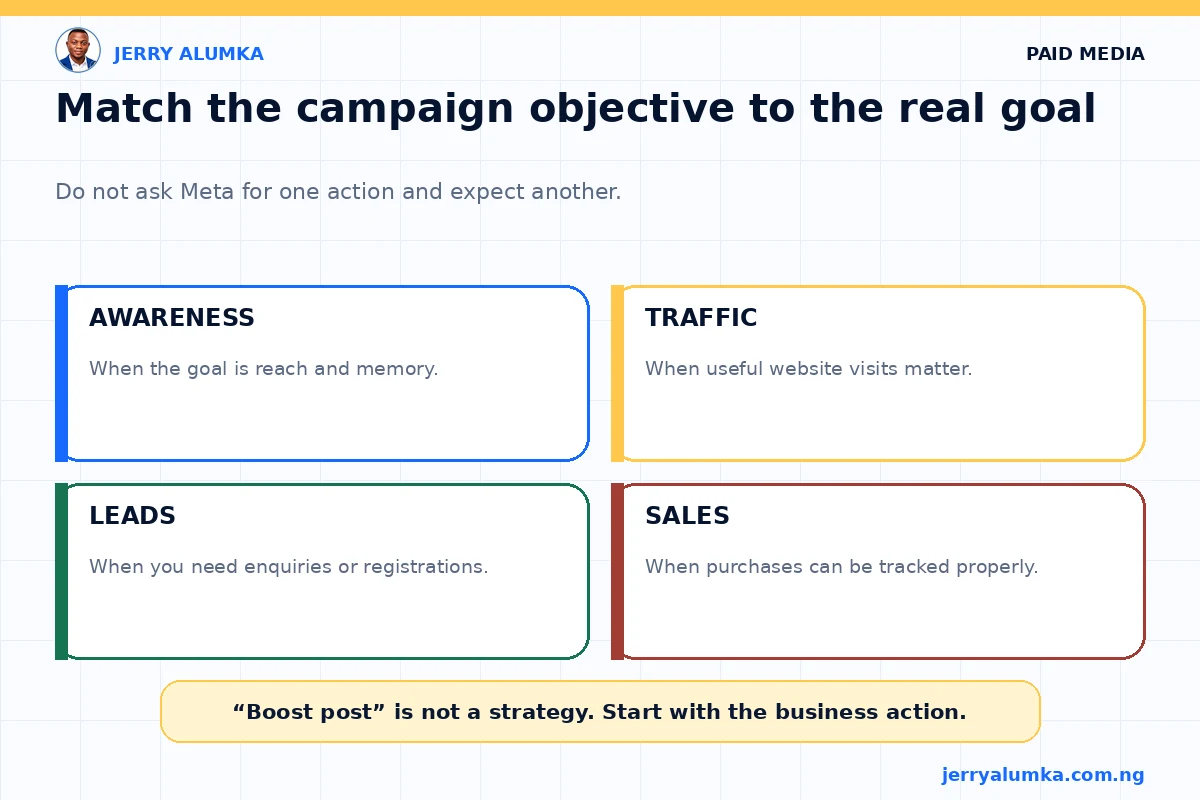
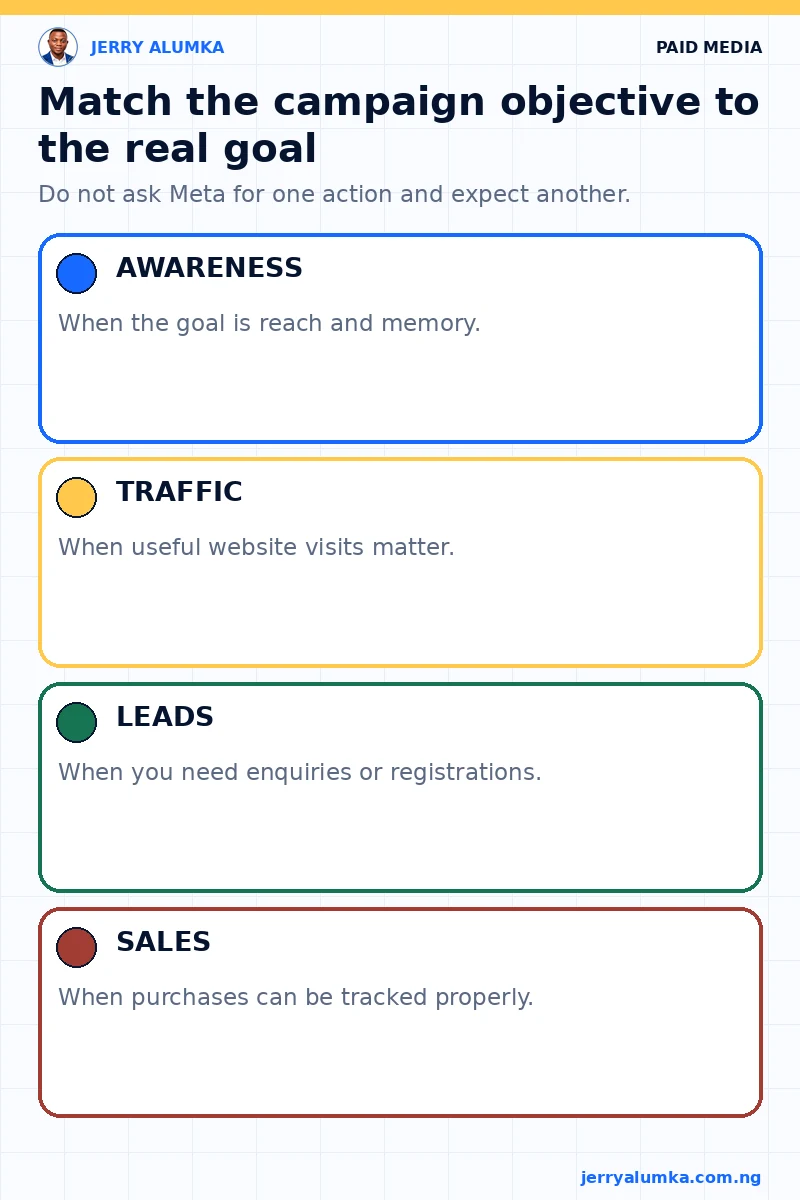
Meta offers objectives for results such as awareness, traffic, engagement, leads and sales. Choose the objective that matches the action you need. Traffic can find people likely to visit a page. It should not be treated as a cheaper sales campaign.
If you need enquiries, use a path that can record enquiries. If customers can buy and the website tracks purchases correctly, the sales objective gives Meta a better signal than page visits.
Open the destination on a normal phone before you spend money. Use mobile data if that is how many of your customers will visit.
Check the page speed, headline, form, WhatsApp link and confirmation message. Complete the whole process yourself. If you get confused, a new customer may get confused too.
For a lead campaign, decide:
- where the enquiry will enter;
- what details you really need;
- who receives the alert;
- who sends the first reply;
- how soon that reply should happen; and
- where the final result will be recorded.
Nigerian customers may move between mobile data, WhatsApp, calls and a physical shop. A beautiful advert can’t repair a broken form or an unanswered message.
The advert and destination should also tell the same story. If the advert promises one product but the page opens with another, people may leave before asking a question.
Meta instant forms are quick because people stay inside Facebook or Instagram. They can work well for a simple offer when you need only a few details.
A website form gives you more room to explain the offer and ask questions. It also needs a fast page, working tracking and a form that behaves well on a phone.
WhatsApp can suit a product that needs discussion. But somebody must answer. The team must also record the conversation instead of leaving it inside one staff member’s phone.
Choose based on how the customer buys. If the offer needs explanation, give enough information first. If it is familiar and simple, remove extra steps. If poor enquiries waste a lot of staff time, add one or two useful questions.
Make one offer easy to understand
A fine design can’t save an offer that people don’t understand.
The advert should quickly answer these questions:
- What are you offering?
- Who is it for?
- What problem does it solve?
- Why should the person trust the claim?
- What should the person do next?
“Quality service at an affordable price” doesn’t say much. For example, a lesson advert should state the class, location or online format, who can join and how to register.
List the questions customers normally ask. Price may matter, but delivery, location, payment, timing and trust may matter too. Answer the biggest question that can stop a suitable person from acting.
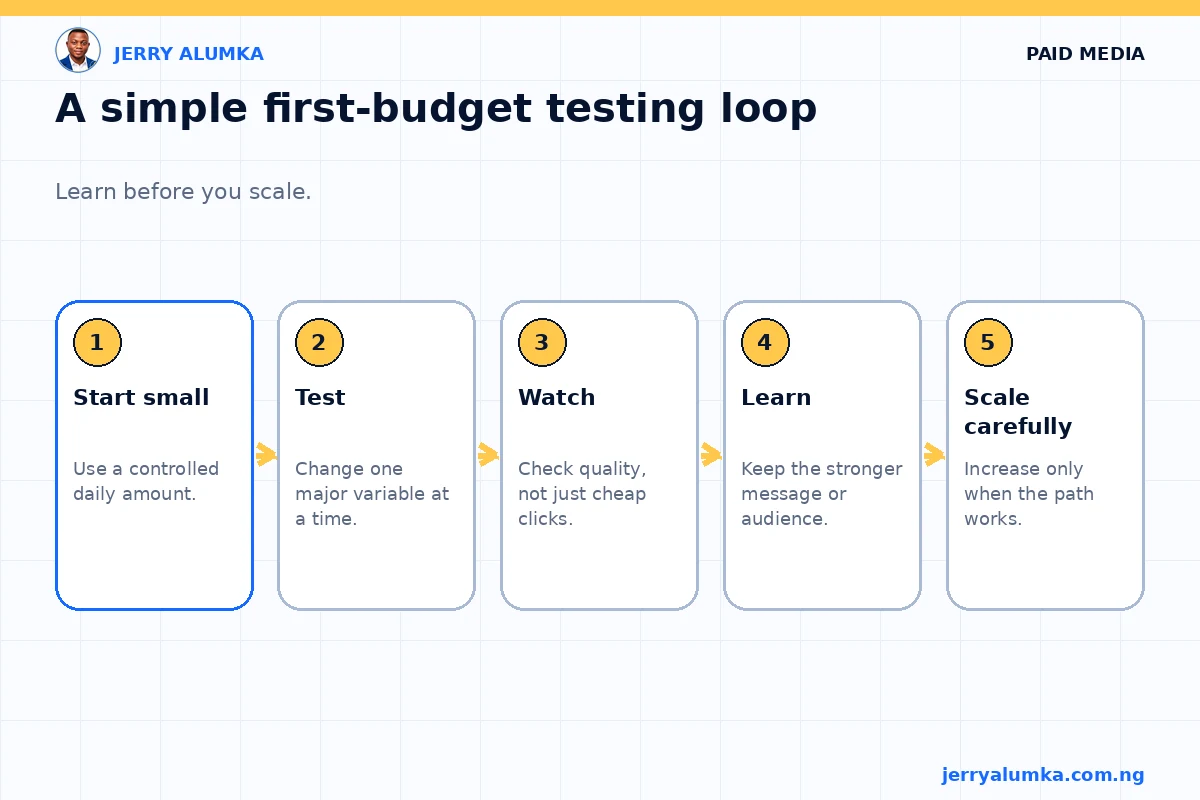
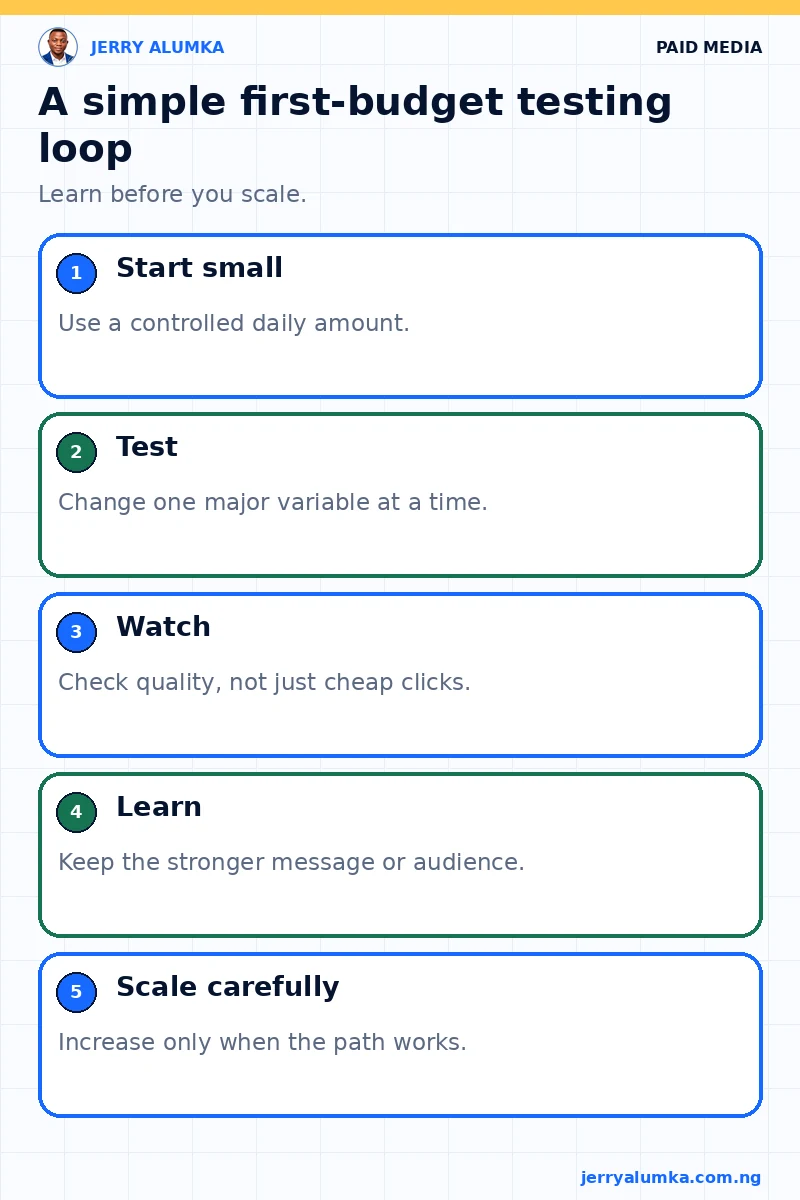
Changing the button colour is not a serious test. Start with two or three different messages.
One advert can show the problem. Another can show the product in use. A third can answer the main objection. Keep the offer and destination the same so you can see which message brings the right response.
Don’t change the audience, promise, picture, form and page at the same time. If the result changes, you will not know why.
Design for a small phone screen. The first part of a video should make sense without sound. Keep the words readable. Use correct product information and believable pictures.
A fair test needs a boundary
There is no one best first budget for every Nigerian business. The right amount depends on the product, objective, audience and likely cost of the result.
Ask, “What do I need to learn from this test?” You may need to learn which message brings suitable enquiries, whether the page works or whether the team can respond quickly.
Don’t split a modest budget across many ad sets and adverts. Each part may receive too little delivery to show a useful pattern.
Write the question beside the campaign before launch. For example: “Can this message bring quotation requests from shop owners in Abuja?” That question will help you choose what to measure and stop you from celebrating unrelated numbers.
Also decide when you will stop or correct the campaign. A broken link, wrong price or misleading claim needs quick action. One slow day doesn’t always mean the campaign has failed.
Prepare to receive and record enquiries
If you use a website, test the actions that matter. A page view can’t prove that someone submitted a form or bought a product.
Keep a simple record with the campaign name, objective, offer, audience, advert, destination, money spent and result. Use clear tracking links where needed.
Test notifications too. Submit one test lead and confirm that the right person receives it. Remove the test record from the final report or label it clearly so it is not counted as a customer.
Meta’s report is useful, but the business still needs its own record. Check whether each lead was real, whether the team made contact and whether the sale or booking happened.
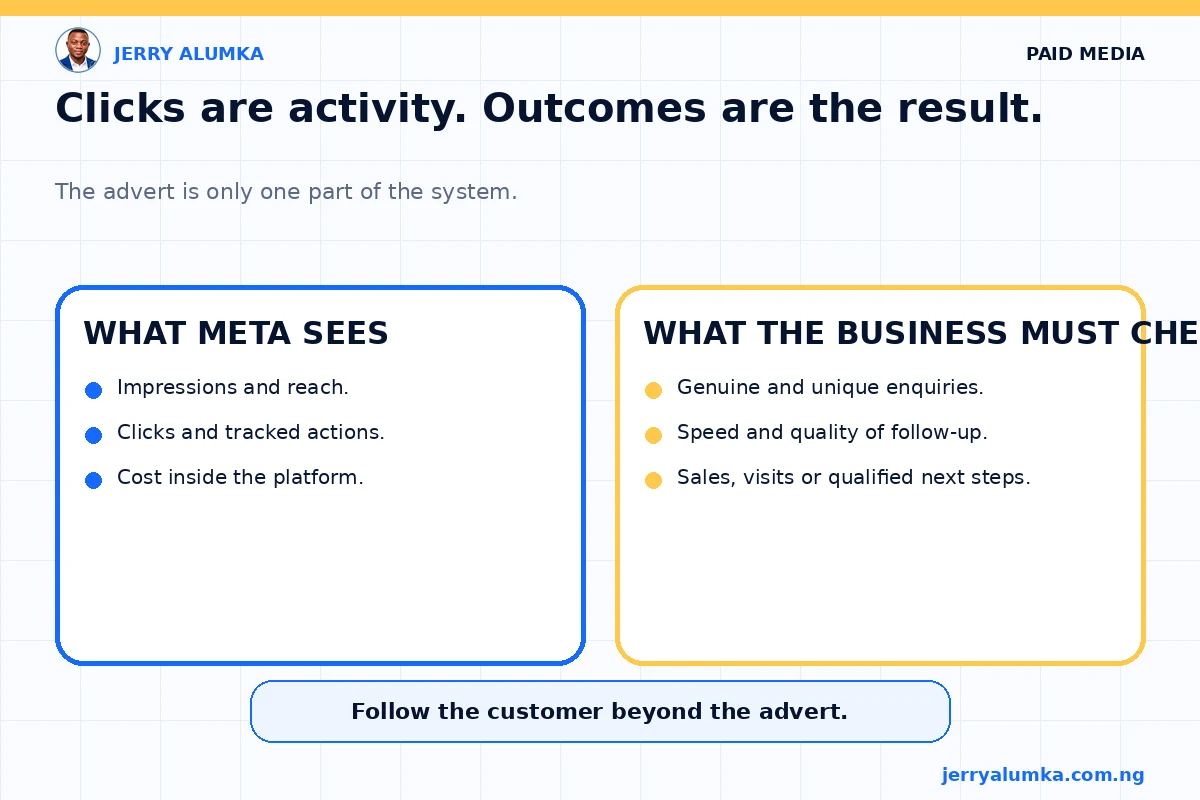
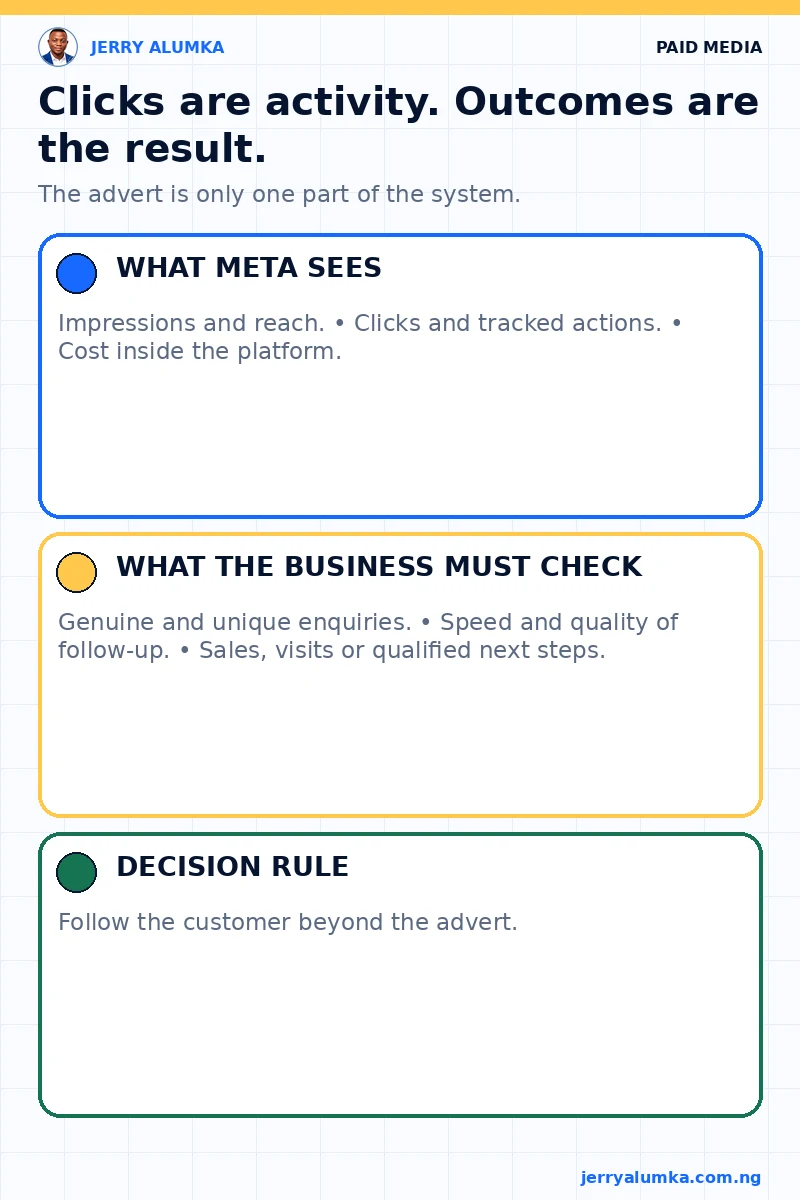
A low cost per lead can hide a poor process. If people wait for hours or receive different answers, more budget will only send more people into the same problem.
Check how many enquiries entered the business register. Check how many phone numbers worked, how quickly the team replied and how many people moved to the next step.
This is not about blaming the sales team. Marketing needs information from sales and customer service. Without that information, the person running the adverts can’t know whether the leads were useful.
Agree on a short list of outcomes, such as reached, interested, not suitable, follow-up booked and bought. If every staff member writes a different description, the report will be difficult to combine.
Review the list with the team after the first week. Remove unclear labels and make sure everyone knows when to use each one.
Read delivery before judging sales
Don’t judge the campaign from one attractive number. Read the journey step by step.
- Delivery: did Meta show the advert to the intended market?
- Attention: did people click, watch or respond?
- Arrival: did they reach the page, form or WhatsApp chat?
- Action: did they complete the intended step?
- Quality: were the enquiries or orders genuine and suitable?
- Outcome: did the business complete the sale, visit or booking?
Many clicks but few page views may point to a slow page or accidental clicks. Many page views but few forms may point to the offer or form. Many leads but few sales may point to the audience, qualification or follow-up.
Before launch, use your own phone
- The business result is written in one sentence.
- The objective matches that result.
- The offer is clear and true.
- The destination works on a normal phone.
- The form asks only useful questions.
- One person owns the first reply.
- Tracking has been tested.
- The adverts test different ideas.
- The budget is not divided into too many parts.
- The team knows where to record results.
Your first campaign can stay small. Give it a clear goal, an offer people understand, a working destination and one person responsible for follow-up. Meta’s guides to choosing an advertising objective, the sales objective and the traffic objective can help with current platform settings. The rest of the path belongs to the business. If you need that path checked before spending more, send me a project enquiry.