
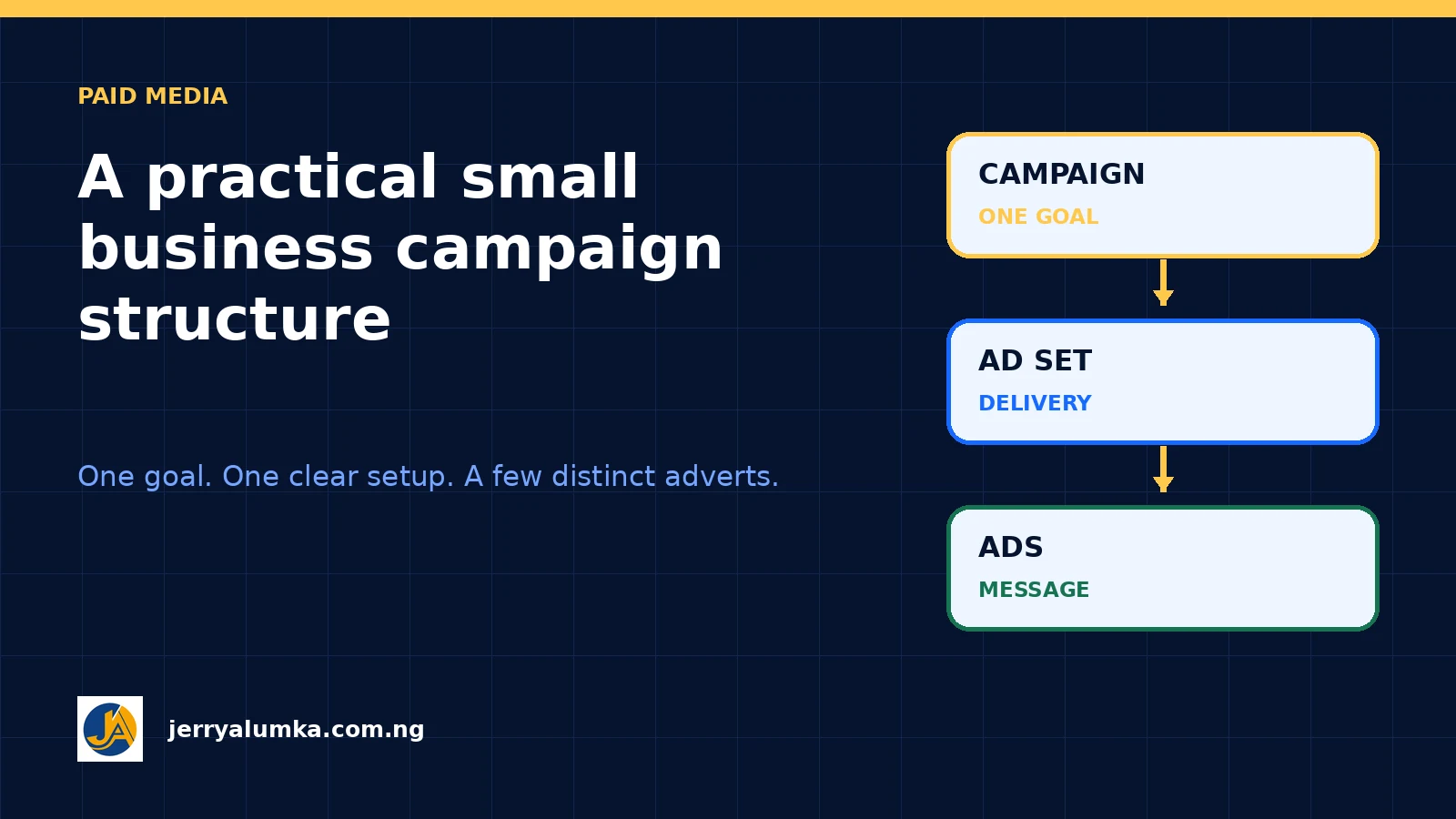
Ask the owner or team to explain the Facebook advertising account. If nobody can say what each campaign and ad set is doing, adding more structure will make the problem worse.
A practical first build uses one campaign for one business goal and one ad set for the main audience. Add a second ad set only when there is a real difference to test. The first round needs only a few adverts with genuinely different ideas.
If you need the full setup process, read my guide on how to run Facebook ads in Nigeria.
Name the action you want
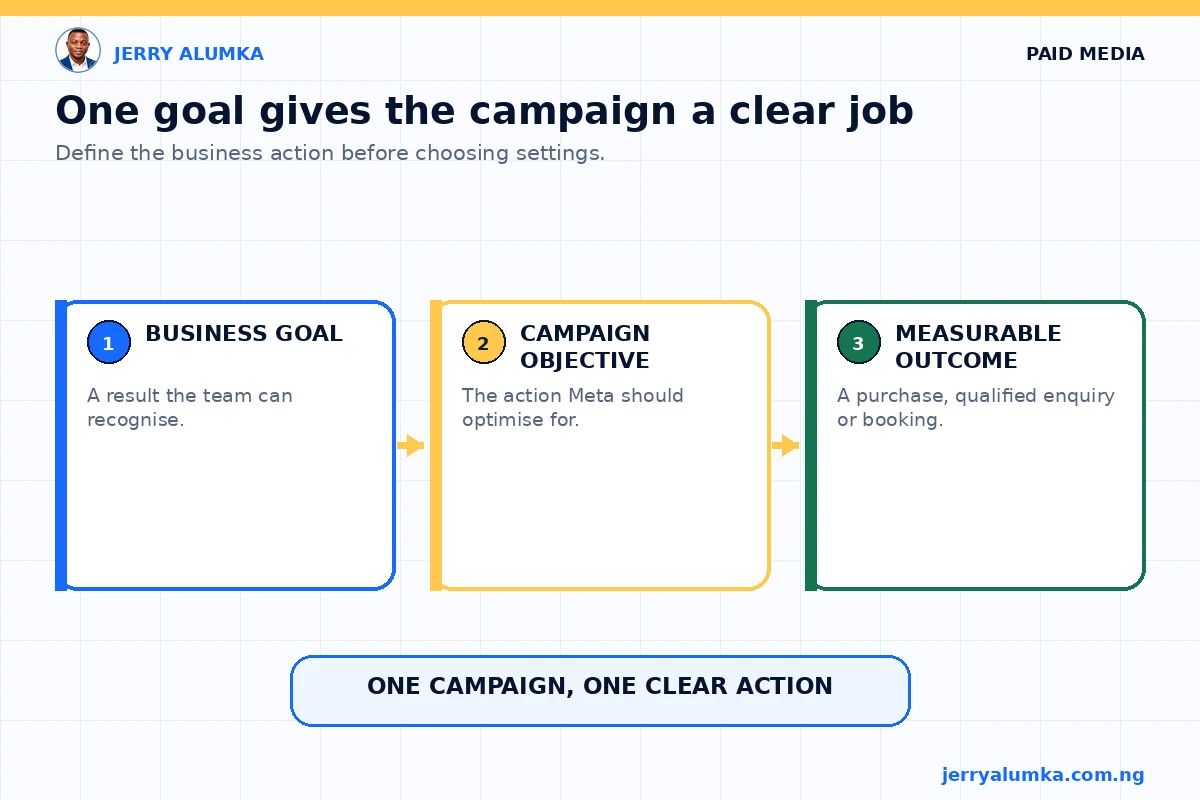
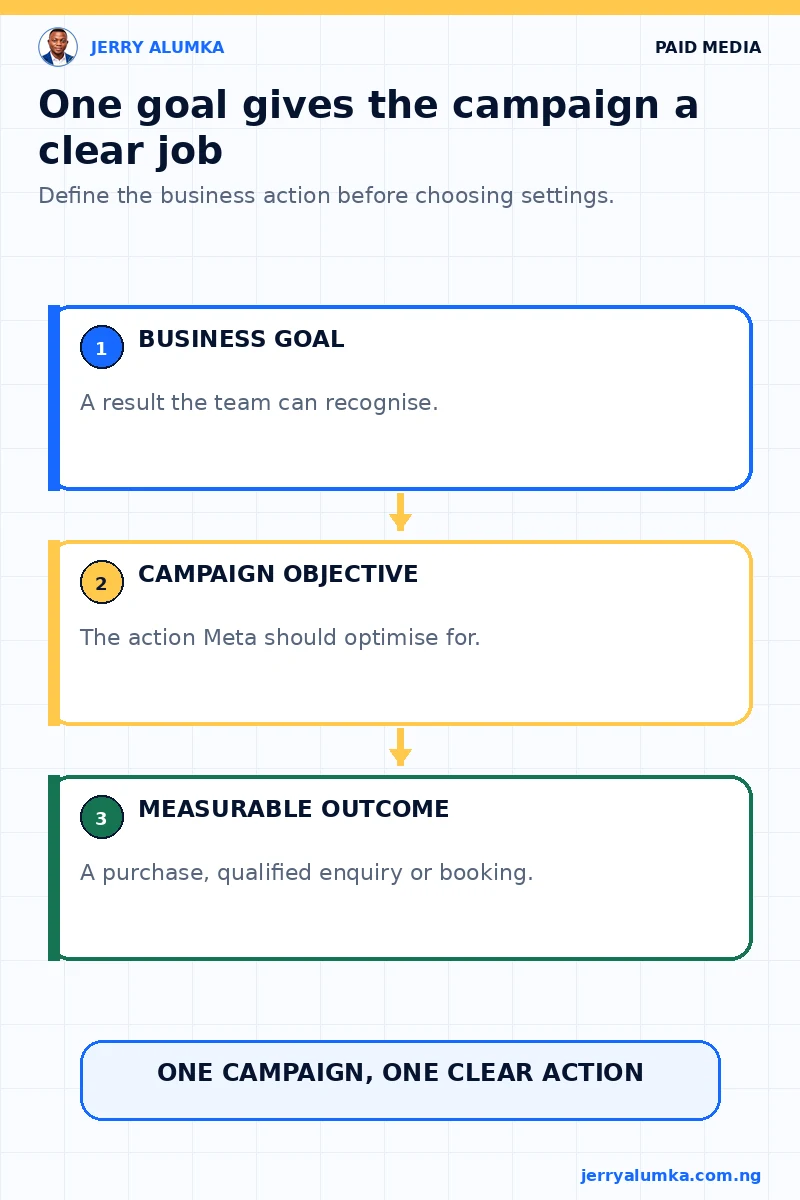
Don’t open Ads Manager until you know what you want people to do.
“Get more customers” is too loose. Do you want people to request a quotation, book an appointment, buy on the website or ask for directions to your shop? These actions are not the same.
For example, a furniture business may need quotation requests from people in Lagos. Website traffic may bring many visitors, but a visit is not a quotation. The campaign should be built around the action the business can follow up.
Write one sentence: “This campaign should bring quotation requests from people in Lagos who need office furniture.” That sentence gives the campaign a direction.
If you put two different goals in the same sentence, choose the more important one. A campaign that tries to get sales, followers and video views at the same time will be hard to judge.
The three levels have different jobs

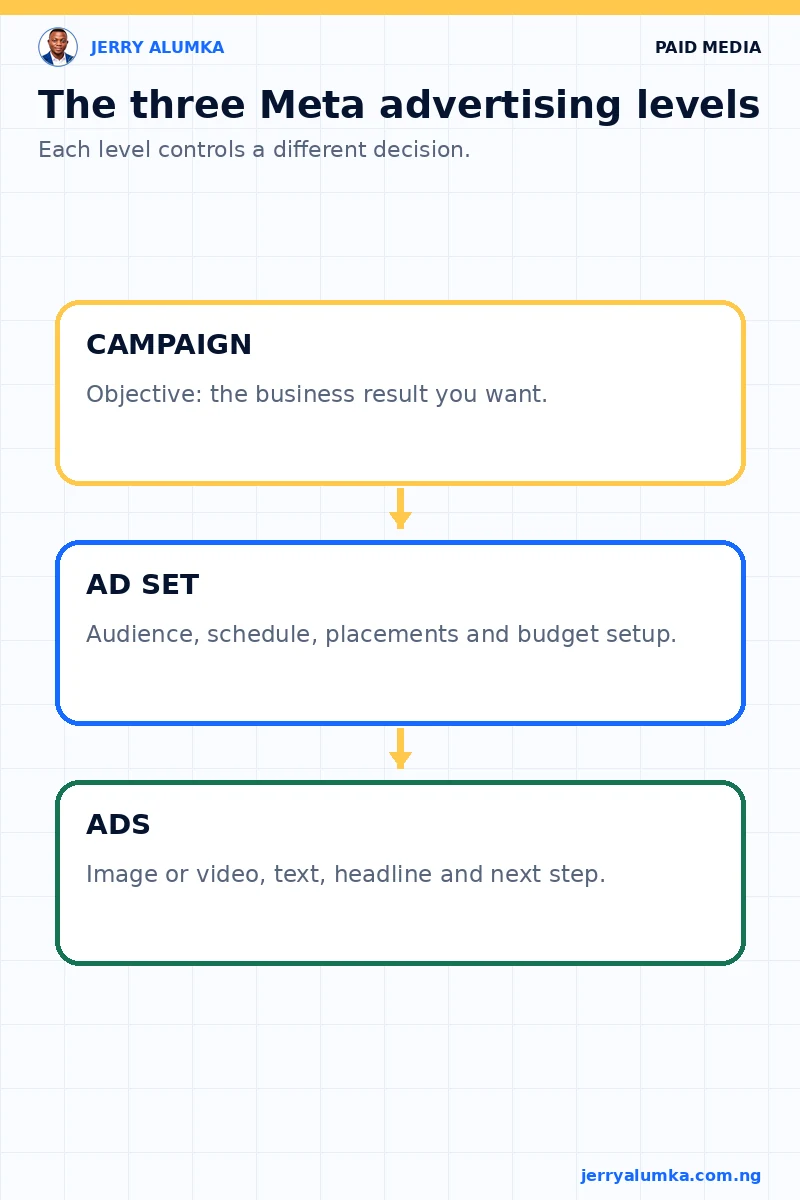
Meta Ads Manager has three main levels: campaign, ad set and ad. Meta explains this structure in its official lesson on campaign levels.
- Campaign: this holds the objective, such as leads or sales.
- Ad set: this controls the audience, schedule, placements and part of the budget setup.
- Ad: this is the image or video, headline, text, button and destination that people see.
Think of a small shop promotion. The campaign is the reason for the promotion. The ad set decides who should hear about it and when. The advert is the actual message shown to them.
Keeping these jobs separate makes your results easier to read. Two ad sets can compare two real audiences. Two adverts inside one ad set can compare two messages.
Use clear names at every level. A name such as “Campaign 1” will become confusing after a few weeks. A useful name can include the goal, offer, location and month. The team should be able to understand the setup without opening every item.
Don’t create a new campaign each time you make a small copy change. Keep related work together unless the business goal has changed. This helps you compare the old and new adverts in the right place.
What a manageable first build looks like
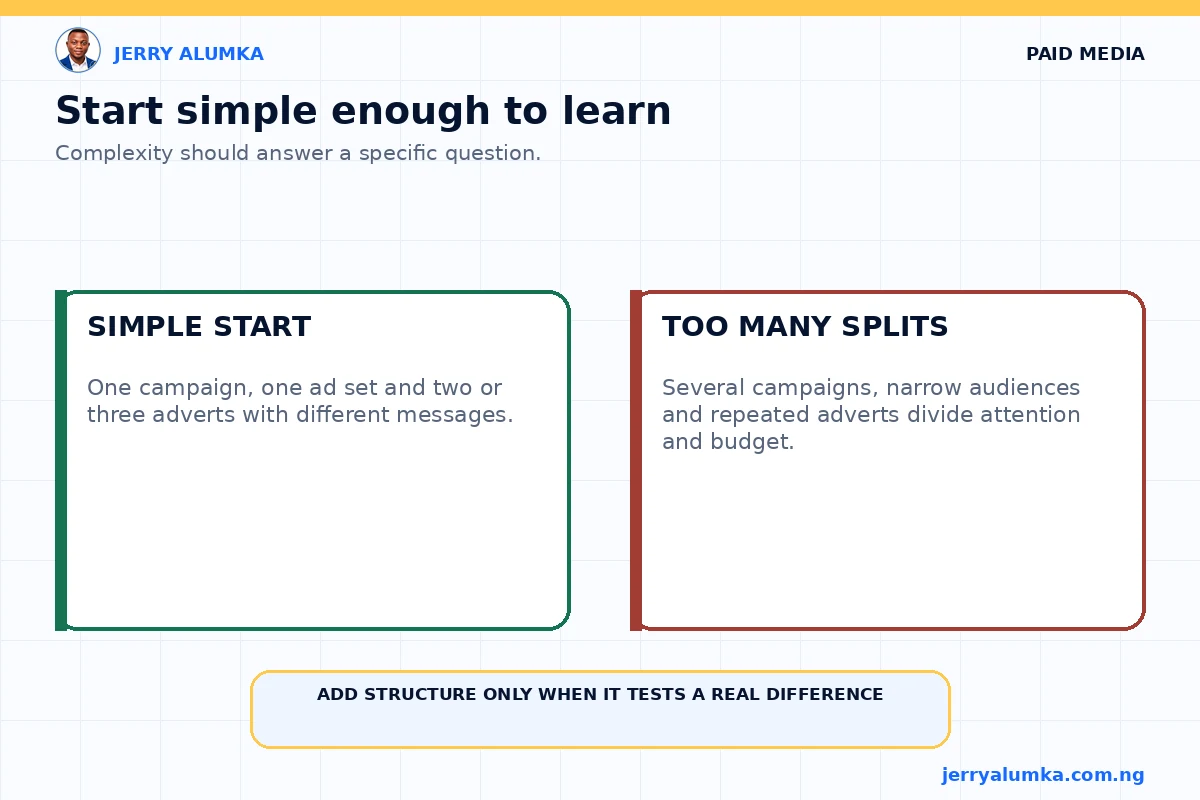
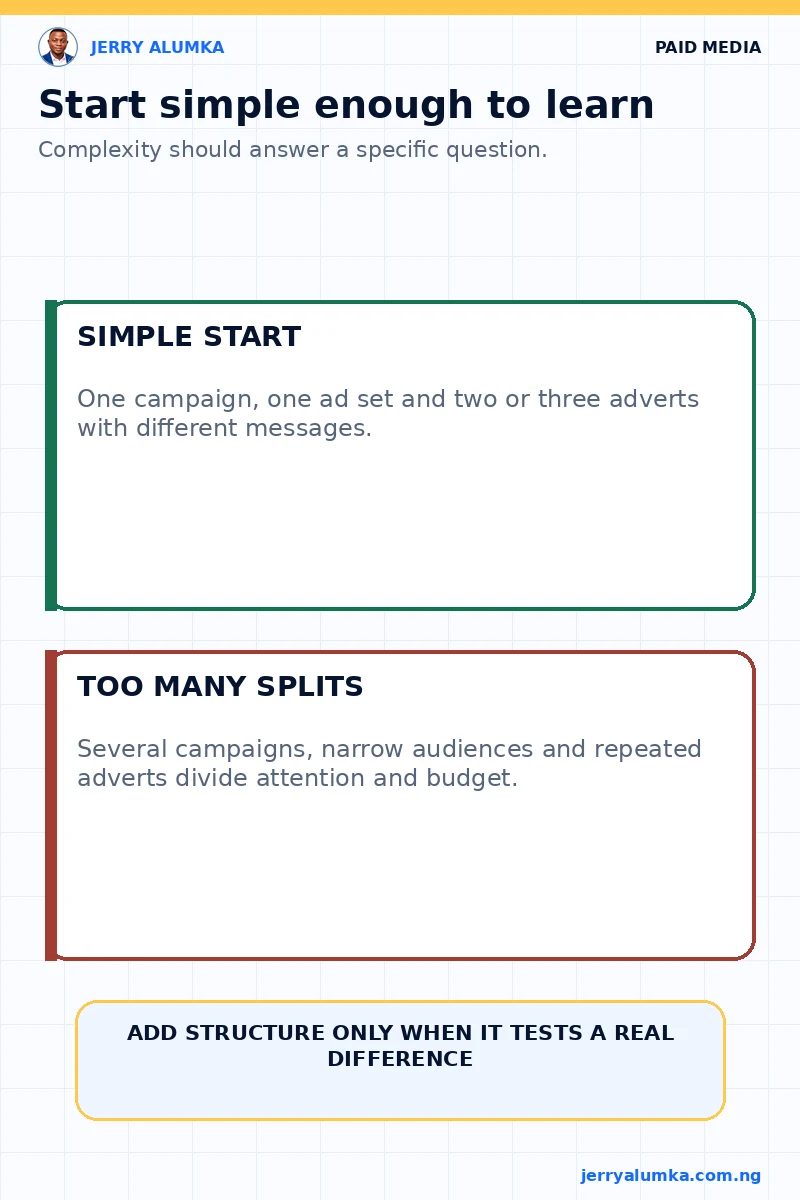
Start with one campaign and one ad set if you have one offer for one broad customer group. Don’t create five tiny audiences because the platform gives you many options.
A modest budget spread across too many ad sets may not give any of them enough delivery. You will spend money without learning much.
Add a second ad set only when you can name the difference. You may want to compare Abuja and Lagos, new customers and past website visitors, or retailers and final buyers.
Inside the ad set, use two or three adverts with different jobs. One can explain the main benefit. Another can answer a common objection. A third can show the product in use.
Changing a background from blue to red is not a strong test if the message stays the same. Test ideas, not decoration.
Give each advert enough time to be seen. Don’t switch adverts on and off every few hours because one has an early lead. Small numbers can change quickly. A useful test needs enough delivery for a pattern to appear.
A simple setup may look like this:
- One campaign for quotation requests.
- One ad set for people in the service area.
- One advert that explains the customer problem.
- One advert that shows the product and price range.
- One advert that answers the main question about delivery.
Prepare what happens after the click
The advert should make one clear offer and ask for one next step. Don’t squeeze several products, discounts and phone numbers into one message.
Also prepare what happens after the click. Test the page, form or WhatsApp link. Decide who will receive each enquiry and where the team will record it.
A campaign can bring attention. It can’t fix an unclear offer or an inbox that nobody checks.
For example, a school may run an advert for admission. Before launch, the team should agree on the fees it can share, the classes with space, the documents parents need and the person who will answer calls. Without that preparation, good enquiries will receive slow or different answers.
Ask only for information that helps the first conversation. A name, working phone number, location and product interest may be enough. Don’t turn a simple enquiry form into a job interview.
Connect advert results to business records
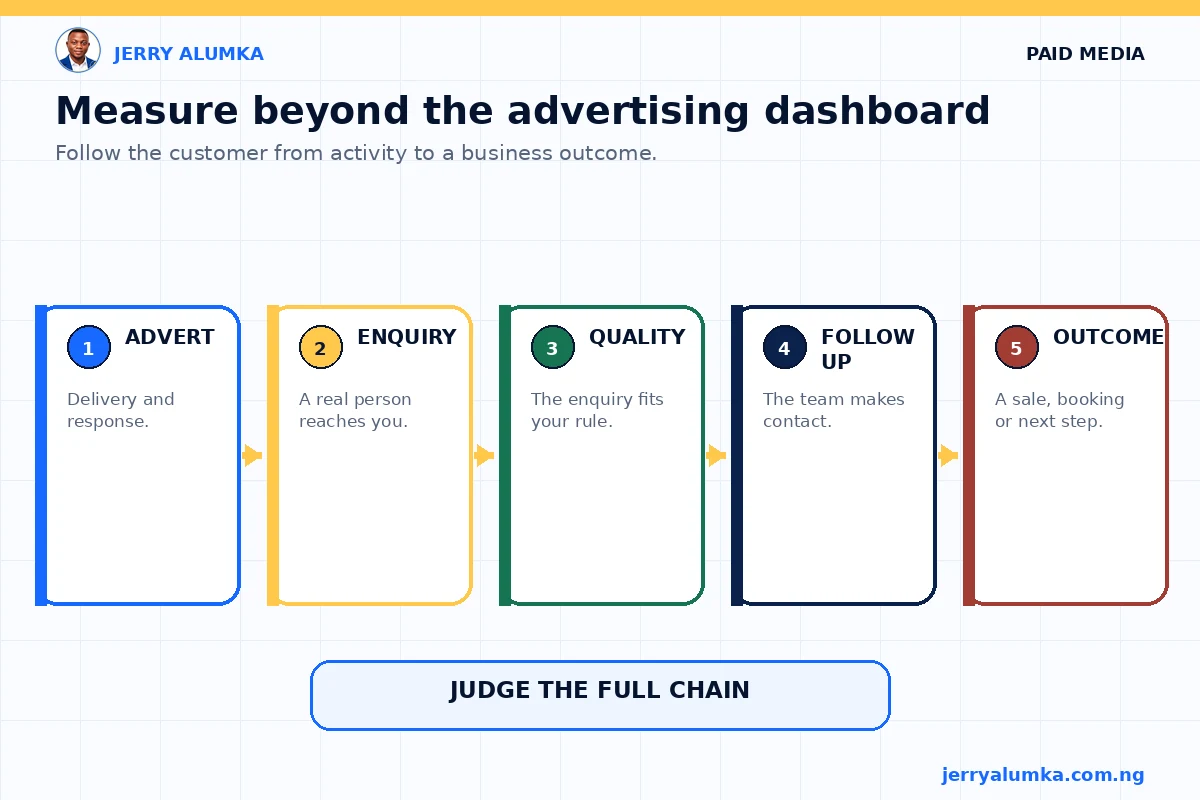

Ads Manager will show reach, impressions, clicks and recorded actions. These figures are useful, but they are not the whole business result.
For a lead campaign, count genuine enquiries, people who fit the offer, people the team contacted and people who completed the next action. For online sales, compare Meta’s recorded purchases with the shop’s own order records.
A cheap lead may be useless if the phone number is wrong or the person lives outside your service area. A more expensive lead may be better if the person understands the offer and is ready to talk.
Review the campaign at a fixed time each week. Look at the platform report and the business register together. Ask why people were rejected, how long replies took and what happened after contact. These details show whether the next change belongs in the advert, form or sales process.
Don’t increase the budget simply because Meta reports a low cost per lead. First confirm that the team can handle more enquiries and that the existing leads are useful.
Keep a short change log with the date an audience was added, an advert was paused or a form was changed. When the numbers move, the record gives you something better than memory to compare.
Another campaign or ad set should answer a question the current structure cannot answer. Until then, the smaller account is easier for the team to manage, measure and explain. Meta’s Facebook and Instagram advertising resources provide the current platform guidance. If the account has already become difficult to explain, contact me with the current structure.