
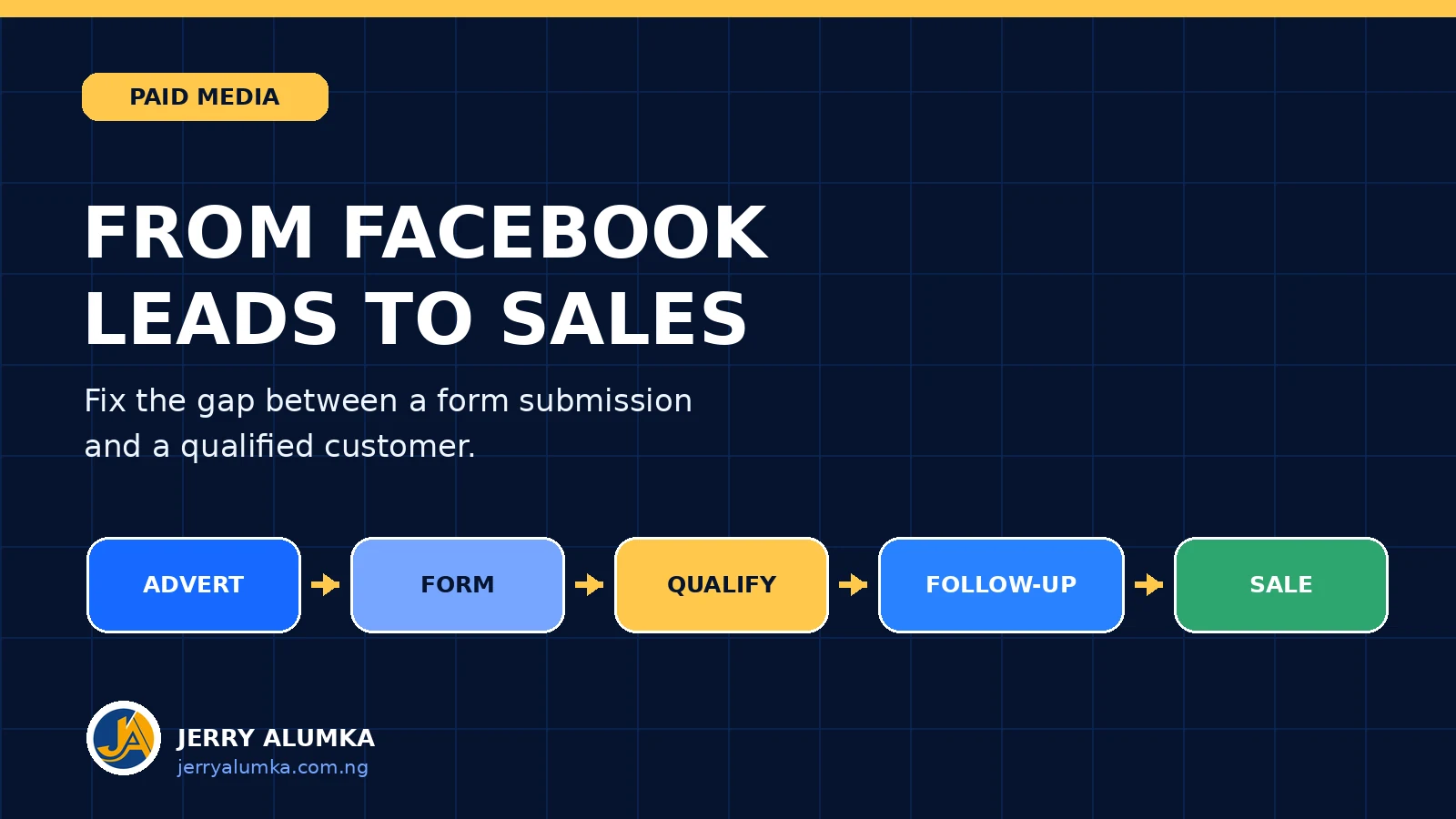
The Facebook report shows 100 leads. The sales calls tell a less comfortable story: only a few people are ready to listen.
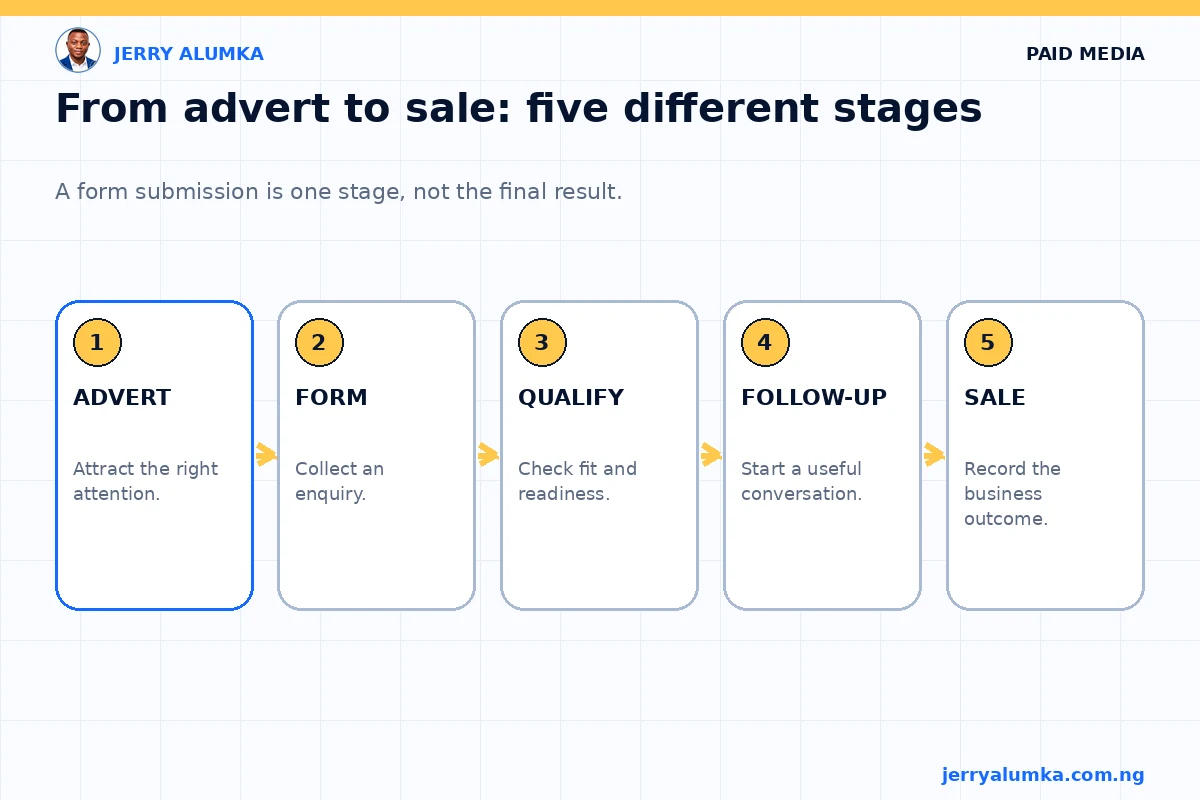
Both records may be correct. The platform counted people who showed interest and submitted information. It did not count 100 customers. The advert, form, qualification and follow-up still have work to do after submission.
Judge the campaign by following those people to a business outcome, not by stopping at the form total.
The platform delivered the result it was asked to find
Facebook tries to get the result you ask for. If you ask for leads, the system looks for people who are likely to submit a form.
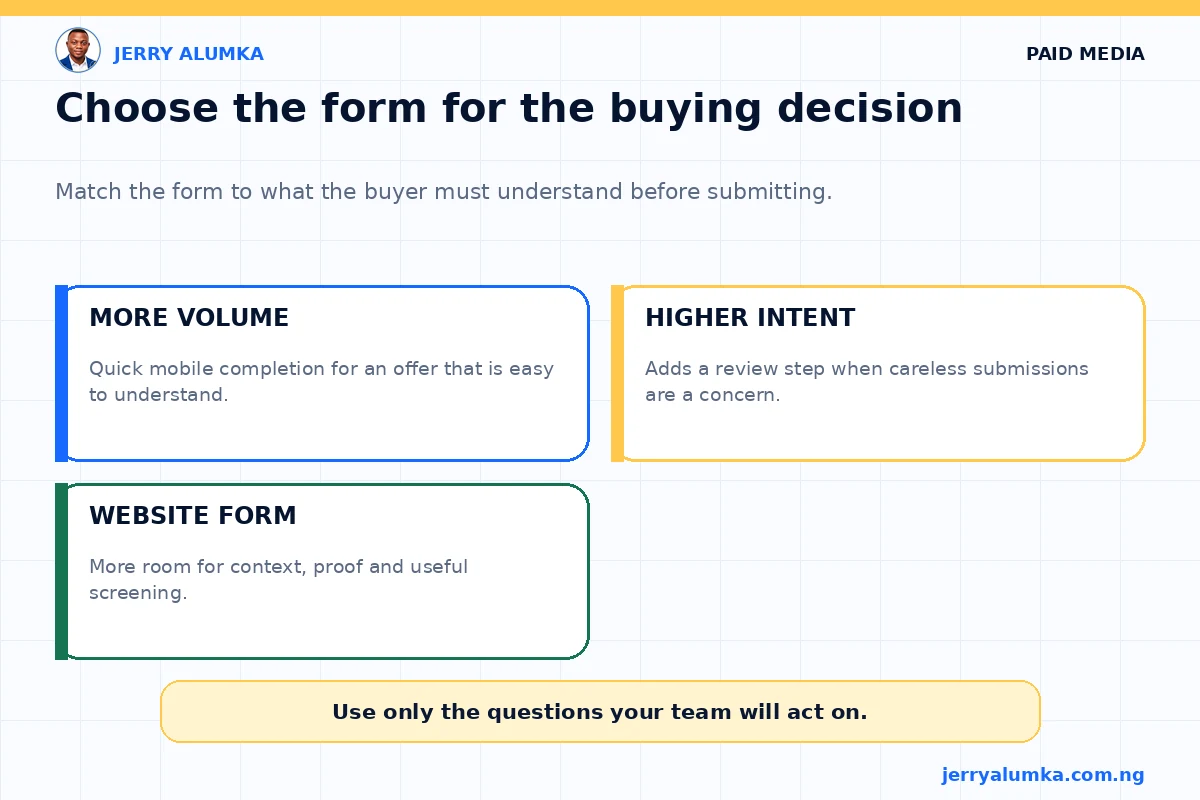
If the form is very easy, some people may submit before they understand the offer. Meta’s lead advert guide explains its form options, including a Higher Intent form with a review step. That extra step may reduce careless entries, but it can’t repair a confusing advert or poor follow-up.
A lead campaign often has several steps. The advert gets attention. The form collects details. The business checks whether the person fits the offer. Someone follows up. Then the person may book, request a quotation, visit or buy.
If your report stops at the form, the campaign can look successful while the business gets no useful result.

The advert may be attracting the wrong people
Sometimes the problem starts with the message.
If the advert makes a big promise but hides the important conditions, many people will fill the form without understanding the real offer.
Imagine that a training programme is available only in Lagos, but the advert doesn’t mention the location. People from different states may register. The campaign will record many leads, but most of them can’t attend.
This doesn’t mean Facebook brought bad people. It means the advert didn’t explain the offer well.
Tell people what they are asking for. Say who the offer suits and what will happen after the form. If price, location or another condition will stop many people, mention it early enough to prevent confusion.
A beautiful advert can still set the wrong expectation. Judge the message by the people it brings, not only by clicks.
Your form may be too easy or too difficult
A very easy form may bring people who are only curious. A very long form may chase serious people away.
The goal isn’t to ask every possible question. Ask only for the information your team needs to know what to do next.
A training provider may ask for the preferred programme and start period. A property company may ask for location and budget range. A company selling to other businesses may need the business name and size.
Choose the form based on the buying decision. Meta instant forms are quick on a phone. A website page gives you more room to explain a costly or complicated offer. My instant form versus landing page guide explains the difference.

Slow or careless follow-up can waste good leads
Some businesses blame the advert when the real problem is follow-up.
A person fills a form in the morning. Nobody calls until two days later. By that time, the person may have forgotten the advert or spoken to another business.
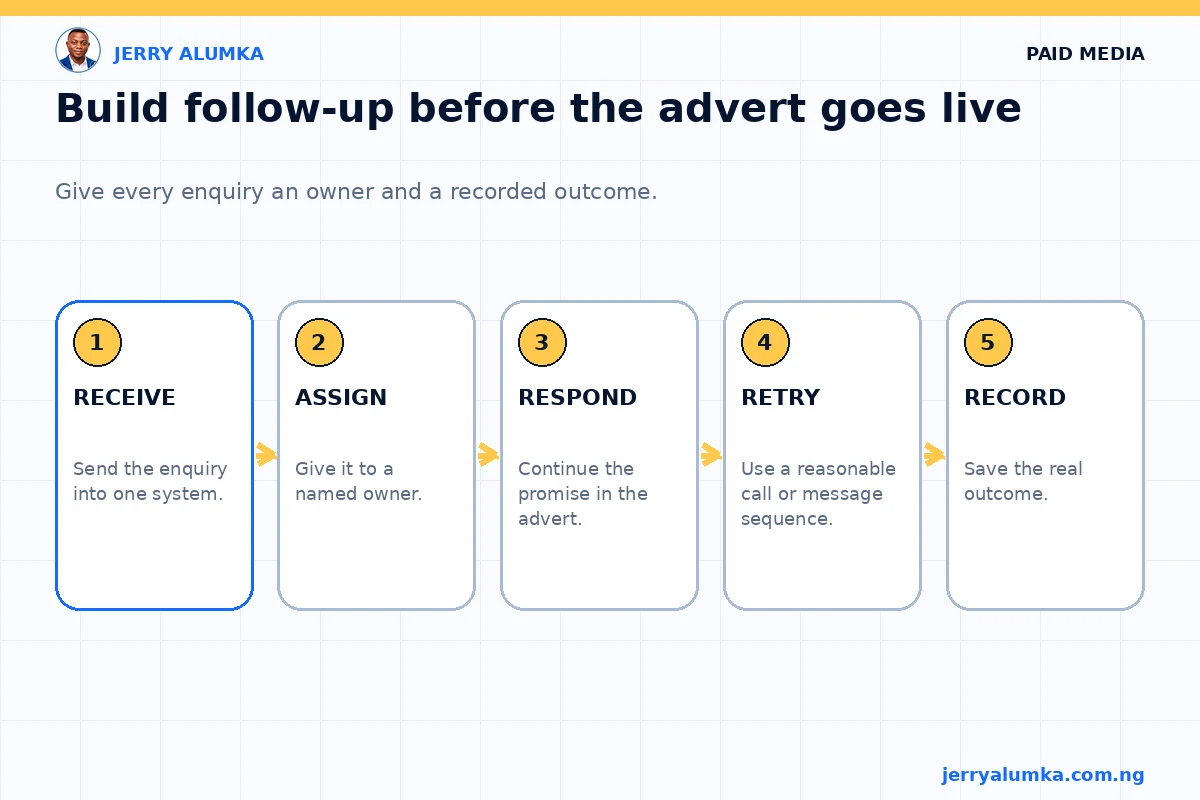
Before the campaign starts, decide where every lead will arrive and who will handle it. Prepare a first response that matches the advert.
If the person asked for a quotation, mention that request. Confirm the important details and give one clear next step. A generic greeting forces the person to explain everything again.
Fast replies are useful, but a fast reply from someone who hasn’t read the form can feel careless. Give the staff member the advert source and the form answers.
Also agree on what happens when the first call isn’t answered. One missed call should not always end the follow-up. Use a sensible mix of calls and messages, then record the final result.
The sales record completes the campaign report
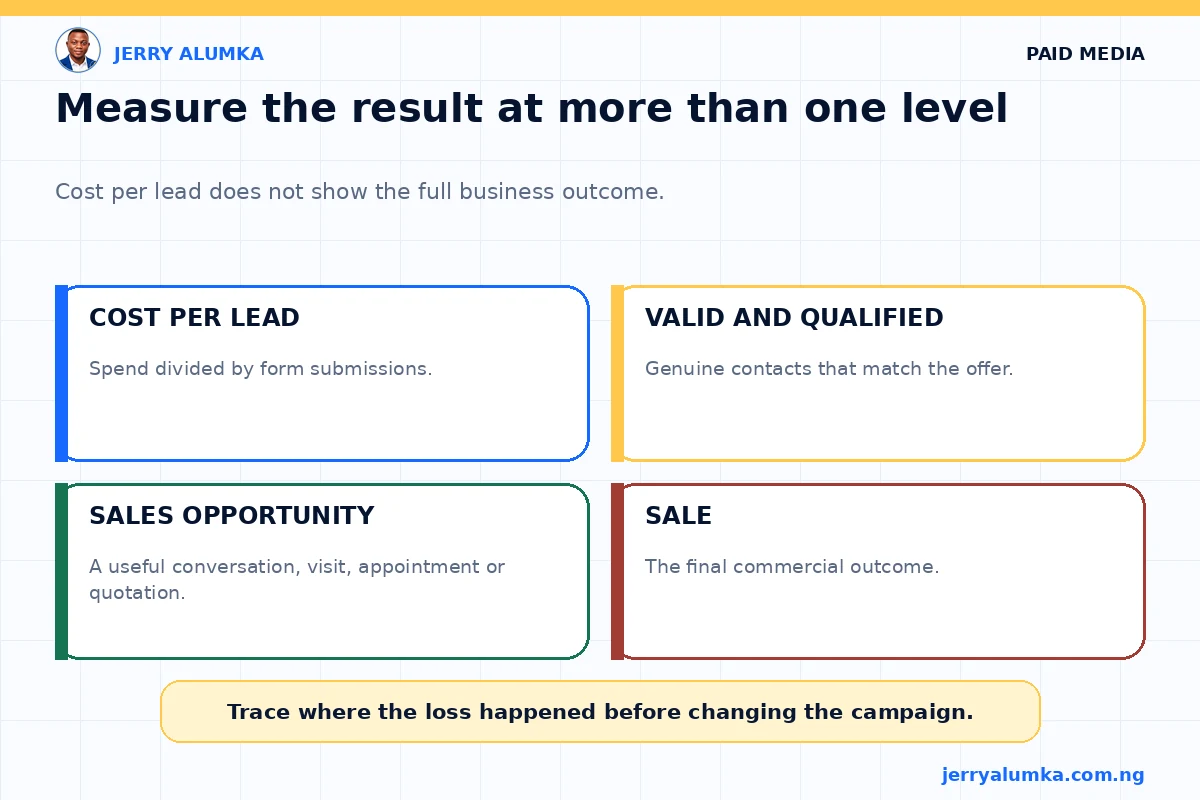
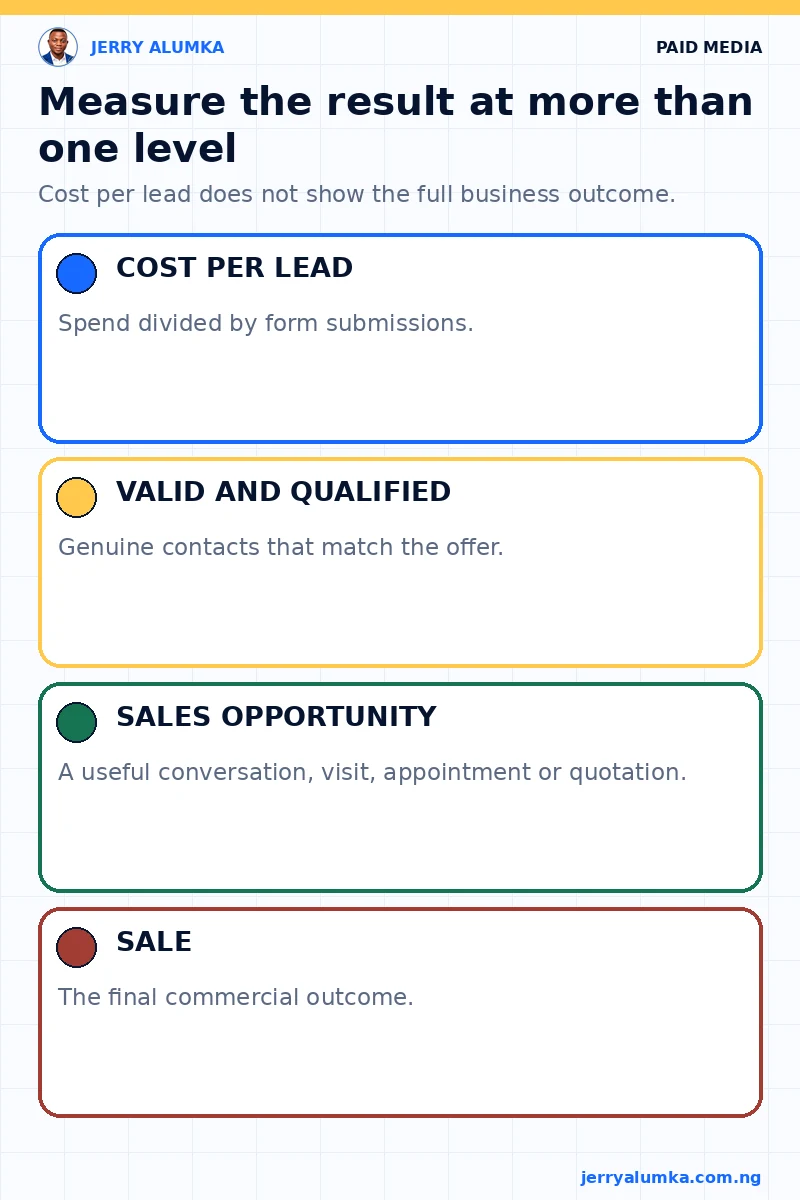
Cost per lead is useful, but it doesn’t tell the full story.
You should also know:
- How many phone numbers were correct?
- How many people answered?
- How many understood the offer?
- How many fitted the basic conditions?
- How many visited, booked, requested a quotation or bought?
These questions show where the problem is.
Don’t keep this information only in one salesperson’s head or WhatsApp. Use a shared sheet or CRM. Keep the stages simple enough for the team to update after every call or message.
If many phone numbers are wrong, check the form. If people answer but say the offer isn’t what they expected, check the advert. If suitable people aren’t called on time, check your team. If the conversations are good but nobody buys, check the price, offer and sales process.

Send better information back to Meta
A CRM is a system that stores leads and records what happens after the form. Meta can receive updates from a CRM through its Conversions API connection for leads.
That means the platform can learn which form submissions later became suitable leads. This is a better signal than the form alone.
Meta separates campaigns that aim for more leads from campaigns that aim for more qualified leads. The second option needs correct lead stages and a working connection. Don’t rush into it when your team doesn’t update the CRM properly.
The connection doesn’t replace human judgement. Poor records will teach the system from poor information.
Begin with simple meanings for valid, contacted, qualified and sold. Confirm marketing and sales use the same meanings. Then keep the records current.
Audit 20 leads before changing the budget
- Check that the advert describes the real offer.
- Remove form questions you don’t use.
- Add only the questions needed to screen people fairly.
- Give every lead an owner before the advert starts.
- Prepare a first reply that matches the advert.
- Record valid, contacted, qualified and sold results.
- Compare campaigns by good leads and sales, not only cheap forms.
Take the last 20 leads from one campaign and write down what happened to each person. The pattern may point back to the message, the form, the response time, the sales conversation or the offer.
Keep the budget where it is until that audit shows where the leads are getting lost.
If you are still setting up your adverts, read my guide to running Facebook ads in Nigeria. If the leads already come in but you can’t see where they disappear, contact me.