
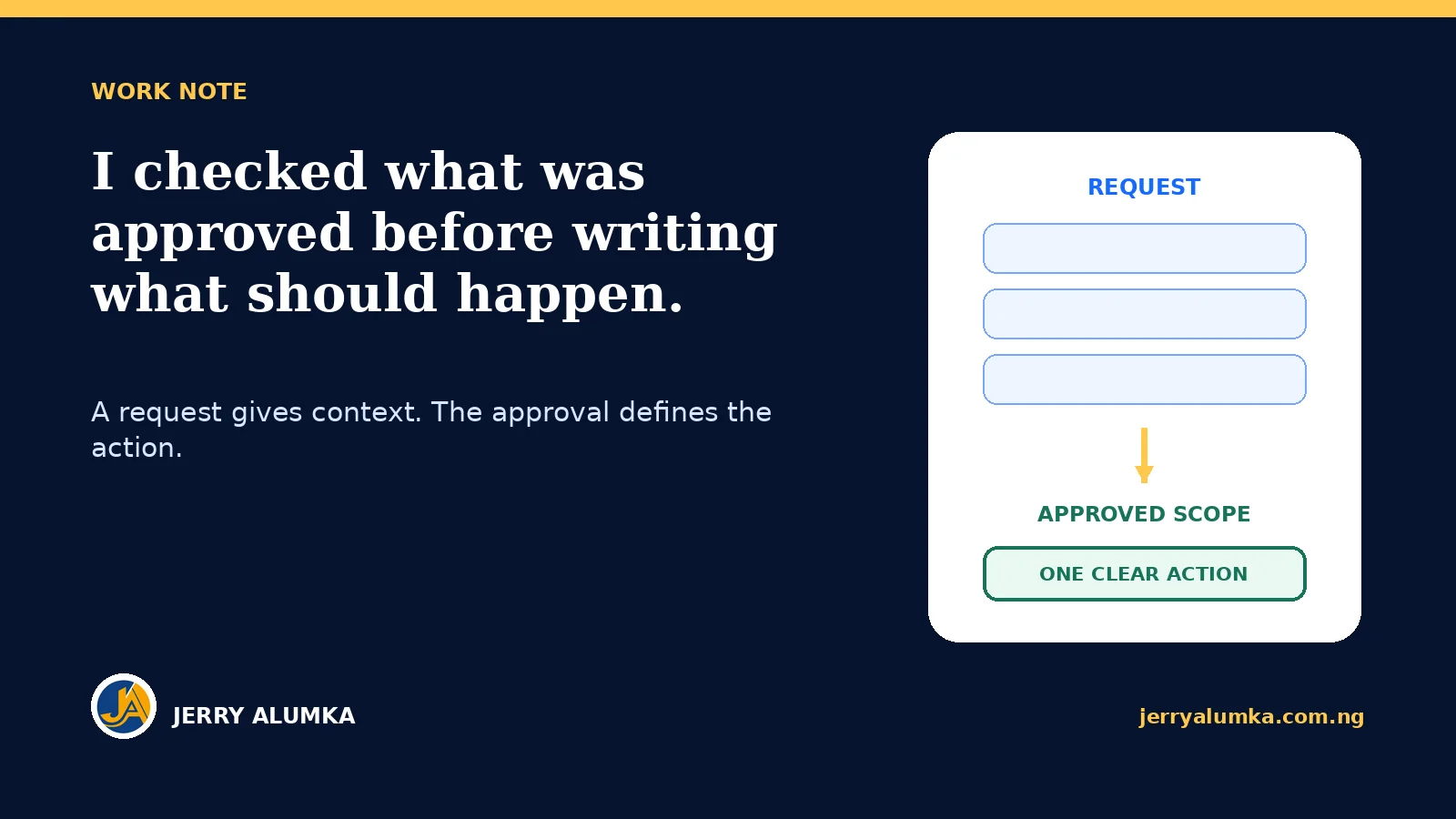
Today I prepared an internal document that would tell another team what to release. The original request mentioned more than one item. The approval did not cover everything in that request.
That difference mattered. If I had written from the request alone, the document could have authorised more than the decision maker approved. If I had written only the approved item and ignored the rest, the receiving team might still have wondered whether the other item was missing by mistake.
I went back to the exact response before drafting the instruction. The approved part went into the document. The unapproved part was stated as excluded. That gave the next team a clear boundary.
The request and the approval were not the same
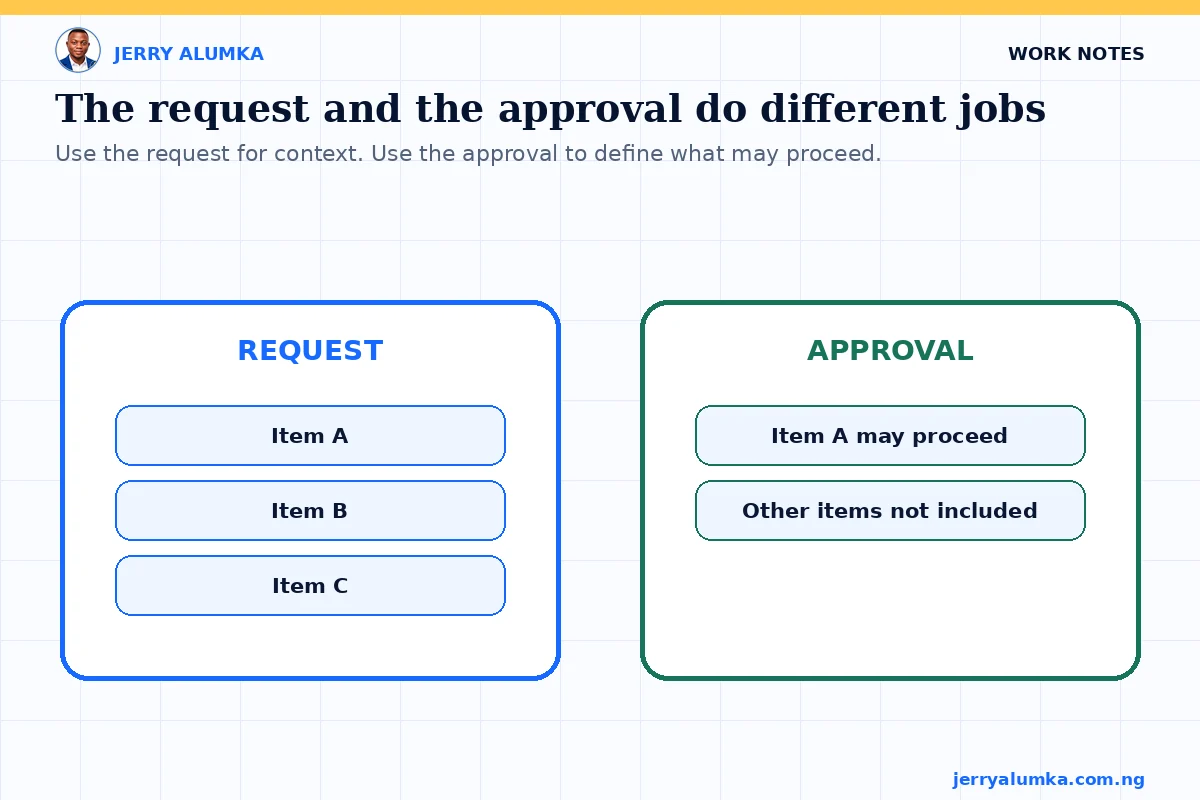
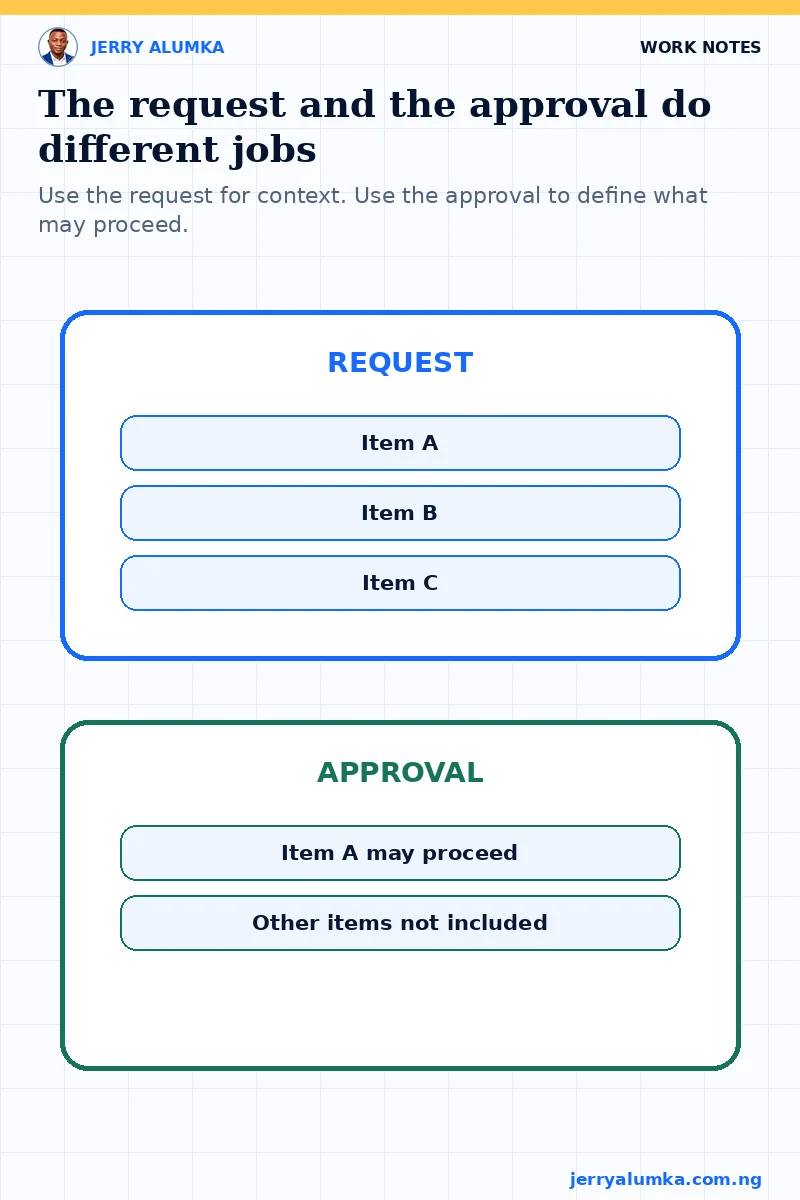
A request explains what somebody wants. An approval explains what the organisation has agreed to do. Those two records may look similar, but they do different jobs.
This is easy to miss when the request is detailed and the reply is short. The longer message can feel more complete, so a person drafting the next document may carry all its details forward without checking what the response actually accepted.
I treated the request as background and the approval as the decision. That meant I could use the request to understand the purpose, but I could not use it to widen the approved scope.
The same rule applies to marketing work. A campaign proposal may include several channels, creatives or activities. If management approves only one part, the execution brief must reflect that limit. A polished document does not repair an instruction that goes beyond the decision.
I traced the decision to the exact response
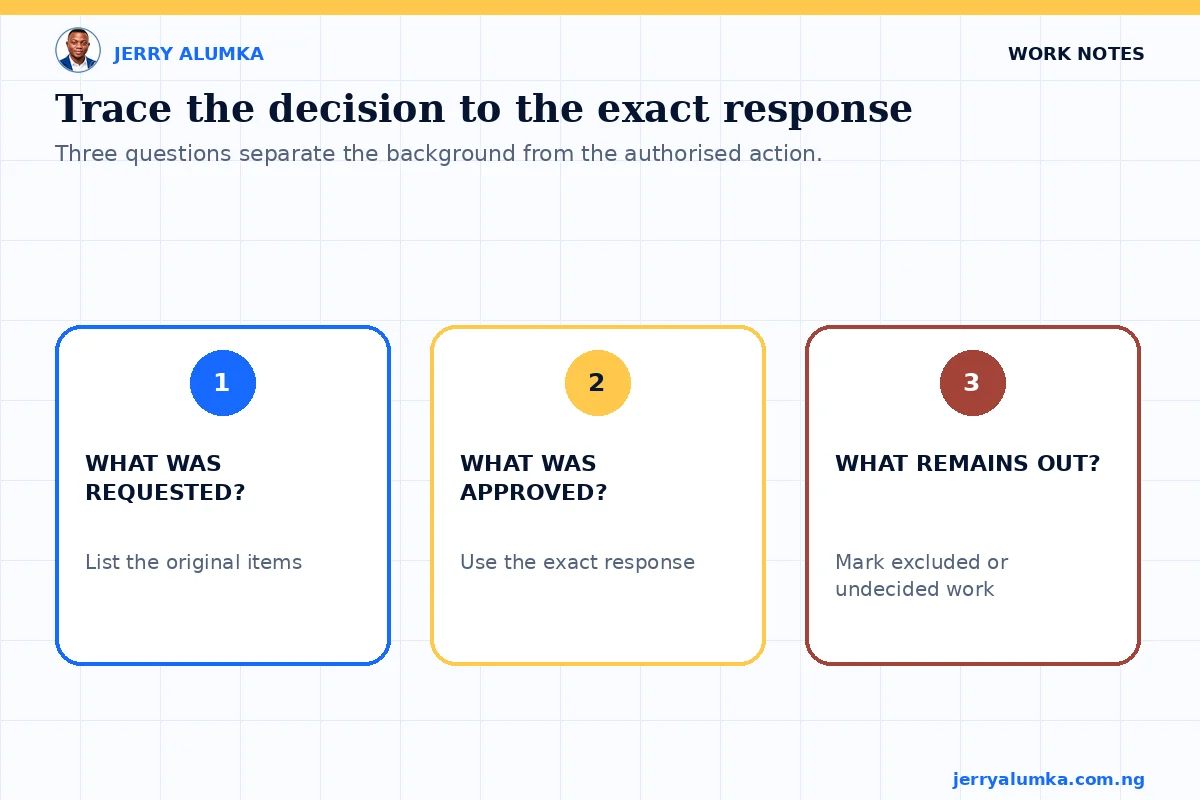
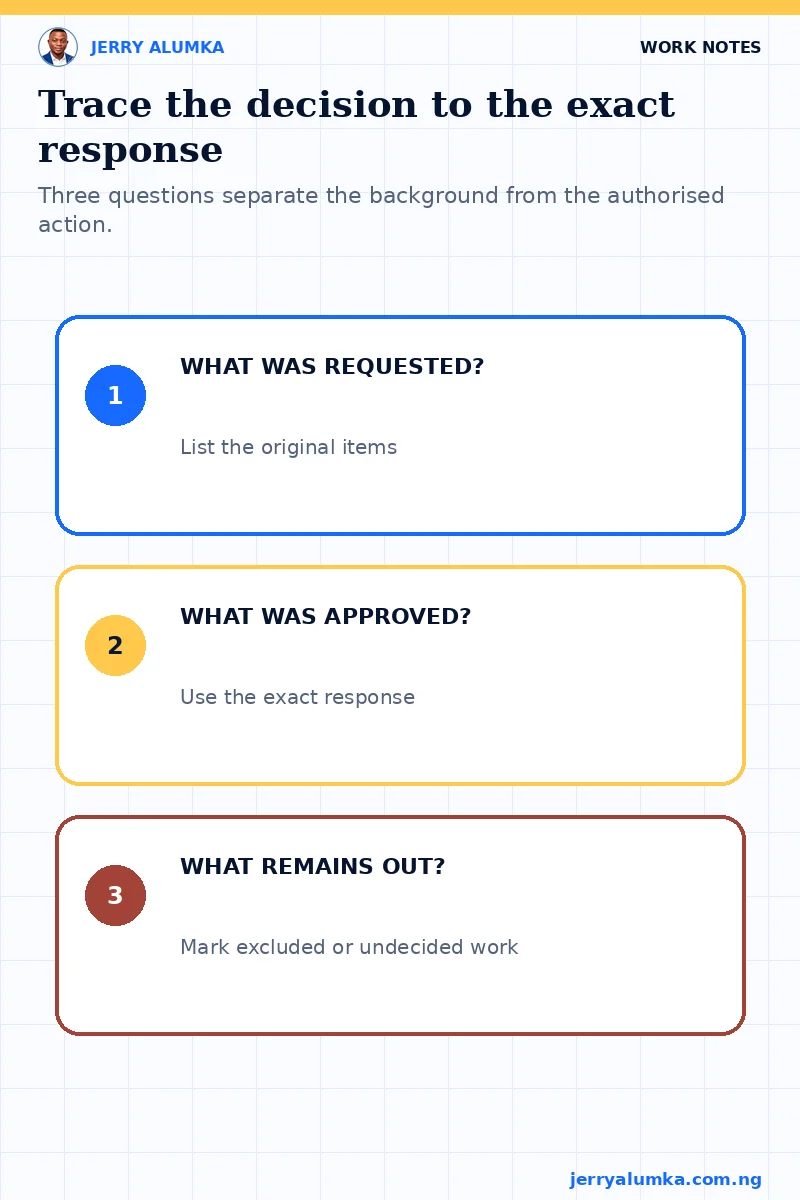
I did not rely on memory or on a summary passed through another conversation. I checked the approval record itself and compared it with the original request.
My check had three parts. First, what was requested? Second, what was approved in clear words? Third, was anything left undecided or rejected?
This comparison stopped me from treating silence as consent. When a response names one item and says nothing positive about another, I should not assume the second item is included. The action document should carry only what the evidence supports.
There was no need to reproduce the whole conversation. The document only needed a clear approval basis and an accurate instruction. Keeping the evidence trail short also made the document easier for the next team to use.
The action document needed a visible boundary
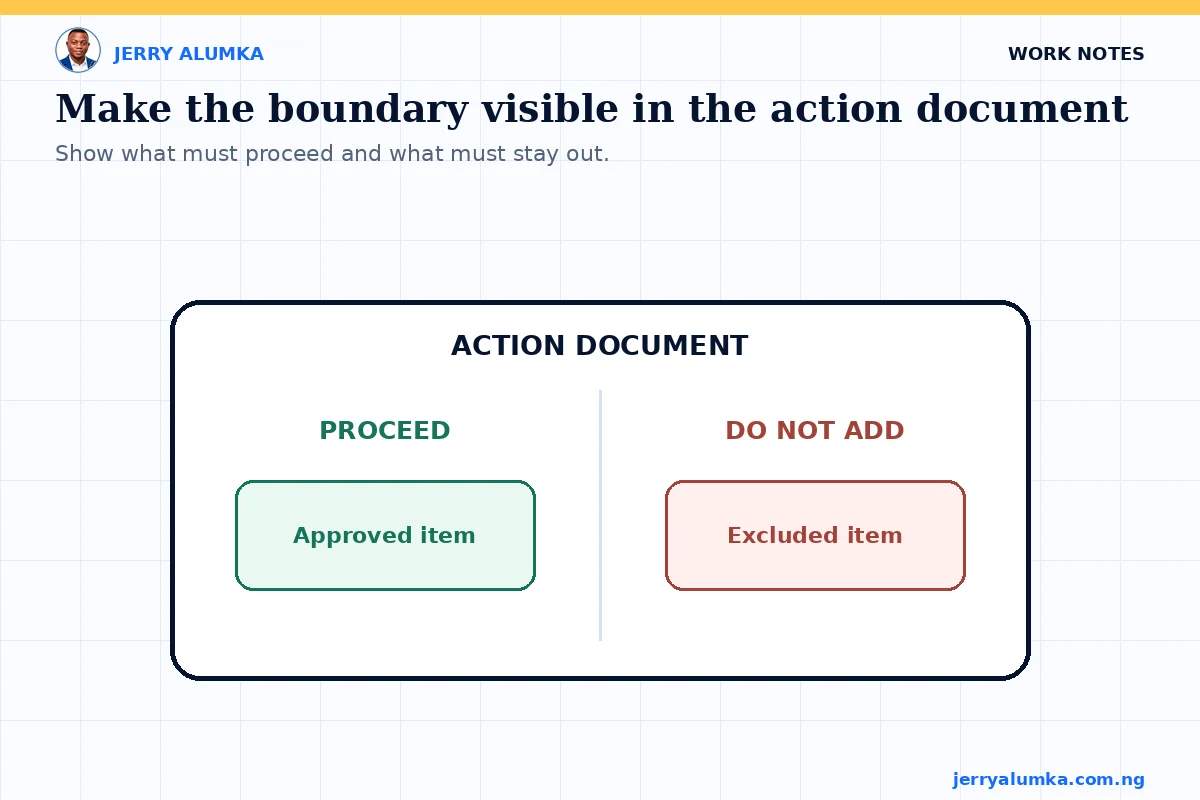
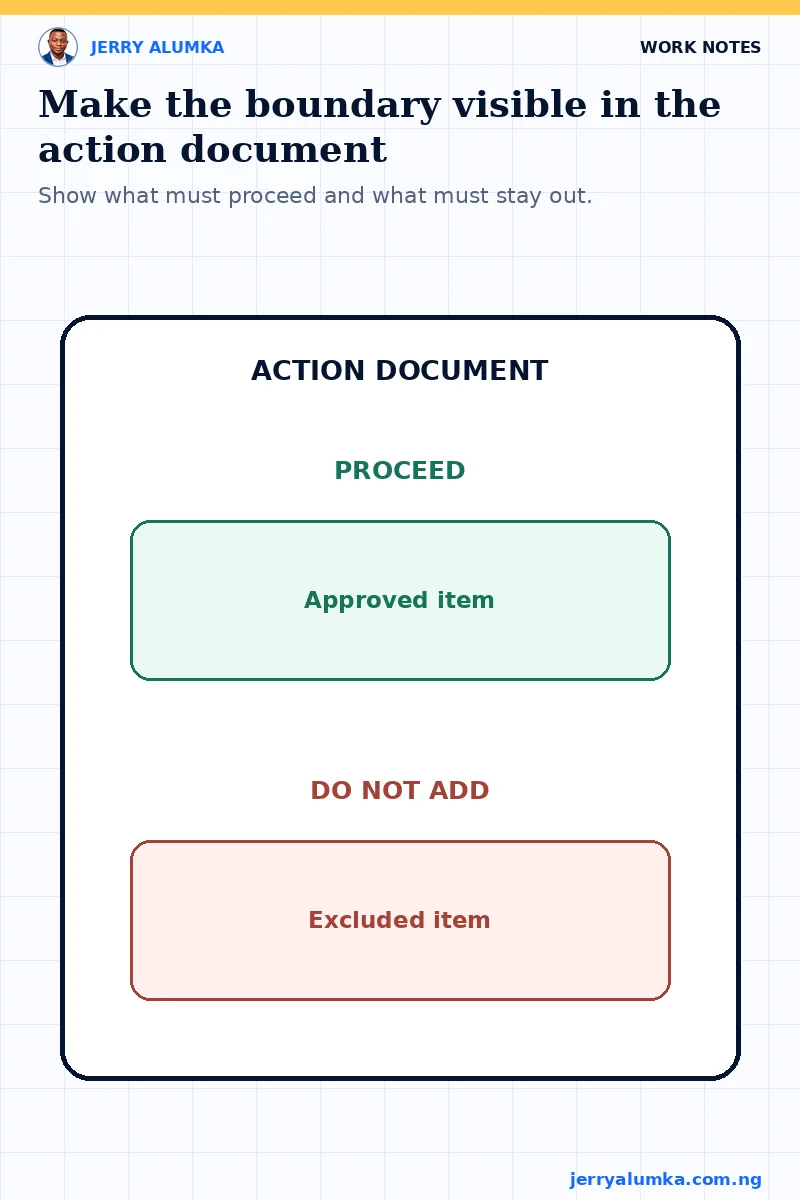
I wrote the approved item into the release section and made the exclusion explicit. This was not extra legal language. It was a practical control.
A visible boundary helps two people. The person acting knows exactly what to do. The person reviewing later can see why the document did not include everything from the original request.
It also reduces the chance of an informal addition. Without the exclusion, someone may see the earlier request, assume the missing item was an oversight and add it back during execution. The document then becomes broader as it moves from one desk to another.
I kept the instruction direct: approved work, quantity or scope, purpose, responsible team and the part that must not proceed. Every line had a job.
I now check scope before I prepare execution
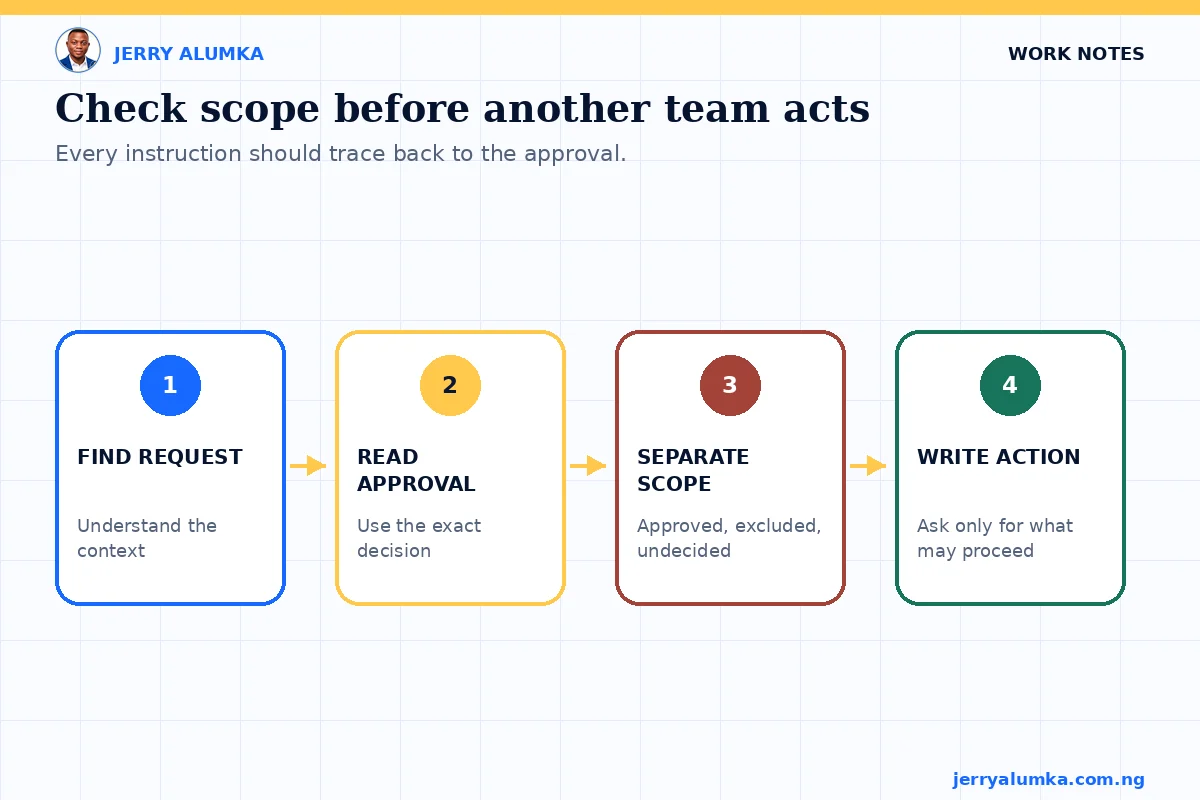
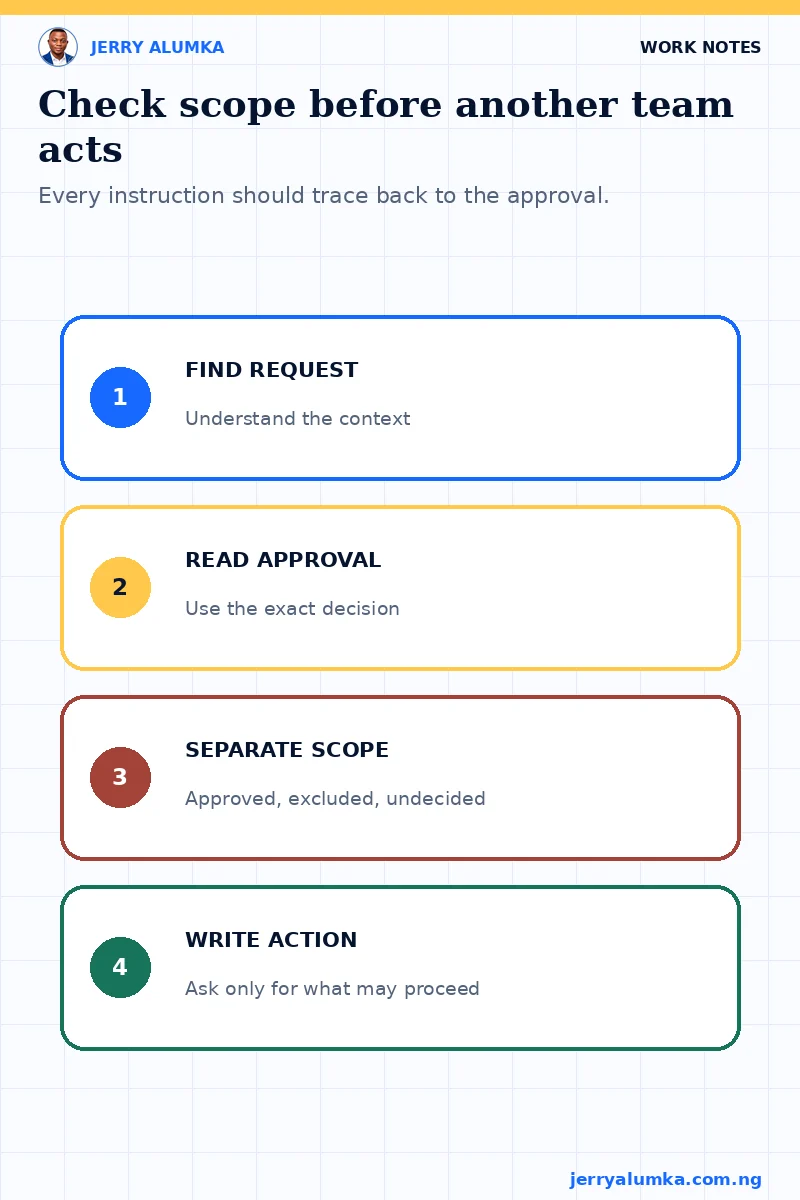
The sequence I use is simple. I find the original request, read the exact approval, separate approved items from excluded or undecided ones, then write the action document from that comparison.
After drafting, I check it in the opposite direction. Can every instruction be traced back to the approval? Is anything approved missing? Could a reader mistakenly add an item that was not approved?
This work is not difficult, but it needs care. Administrative documents often sit between a decision and real action. A small wording error can turn a limited approval into a wider instruction.
The lesson I took from today is plain: do not write from the request when the job is to execute the approval. Read both, show the boundary and make the next action difficult to misunderstand.