
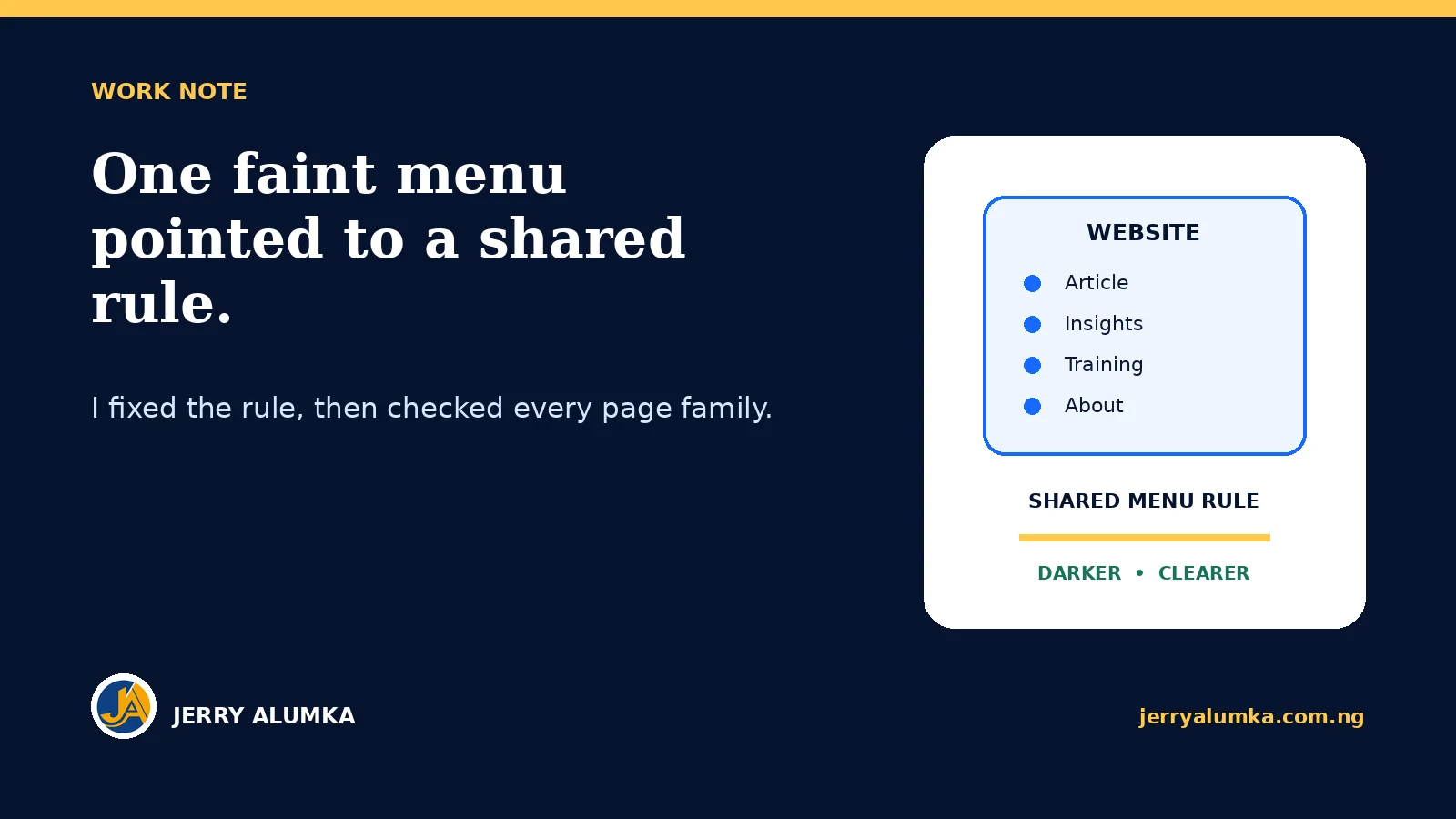
A screenshot of one article showed a problem that was easy to dismiss as small. The menu text looked faint against a light background. The links were there and they worked, but a reader should not have to strain to see where to go next.
My first instinct could have been to darken the menu on that article and move on. I did not do that. The page was using a design system shared by other parts of my website, so a weak menu on one page might be the visible part of a wider problem.
That changed the task. I was no longer fixing one page. I was tracing where the same visual rule travelled across the site.
The first screenshot was a clue, not the full scope
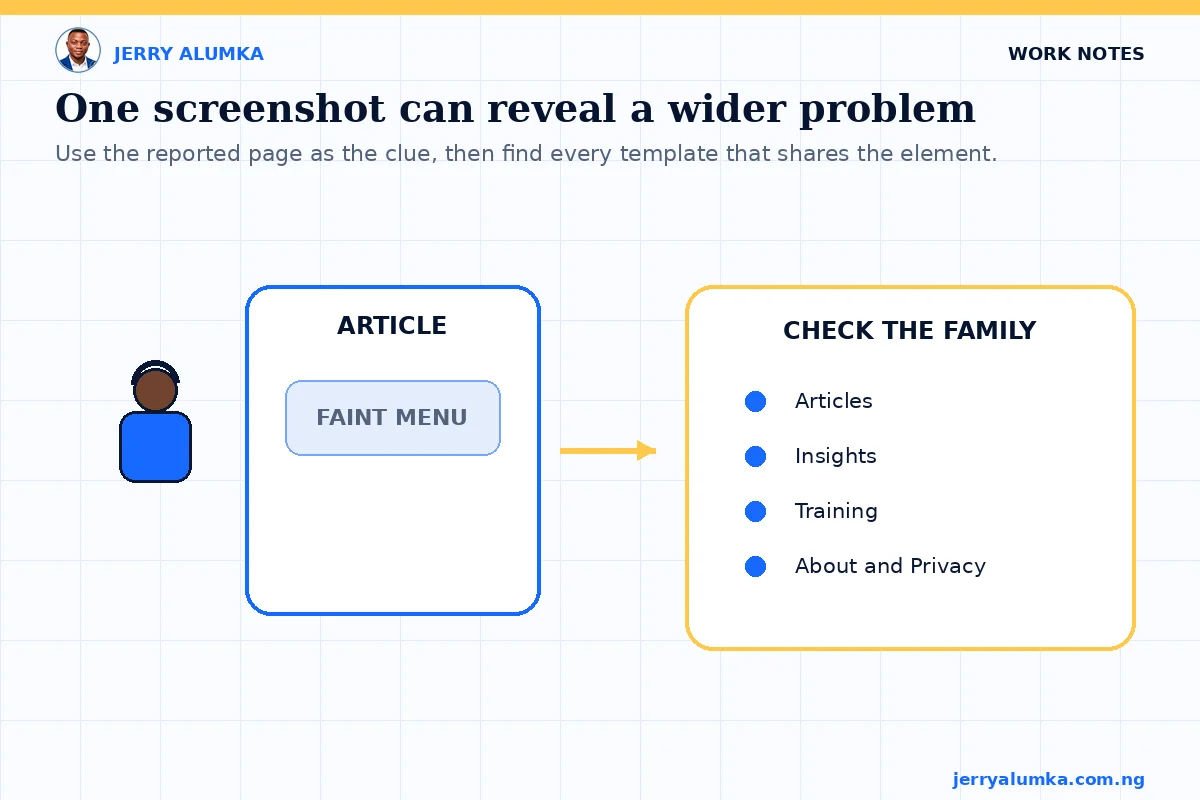
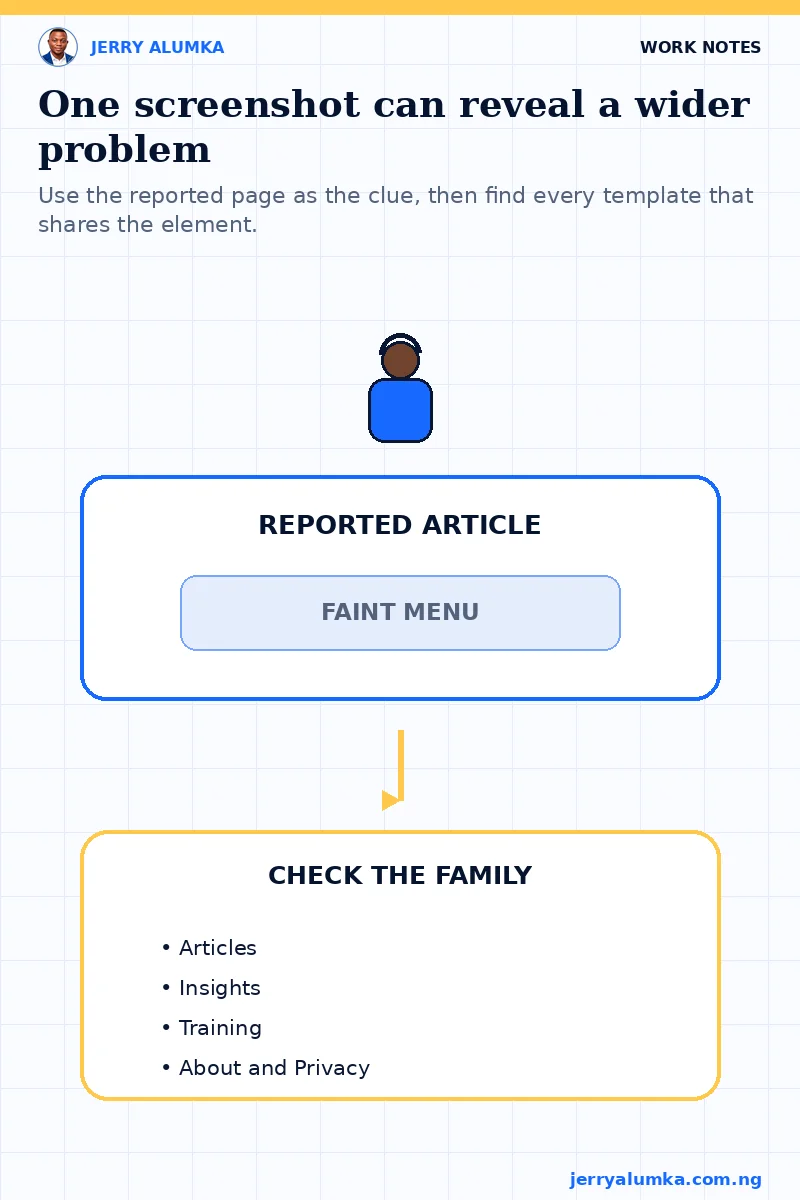
The screenshot made the symptom clear. The main navigation and the local “In this guide” links did not have enough visual weight on the light layout. Still, the screenshot could not tell me whether the problem came from the article itself, a shared stylesheet or an older rule left behind by another template.
I treated the reported page as my starting point, not my full test list. That distinction matters in website work. If several pages inherit the same rule, a page-level patch can make one URL look correct while every related page remains weak.
I also did not assume that working links meant the menu was fine. Function and readability are different checks. A link can open the right page and still be difficult to notice.
I traced the shared rule before editing
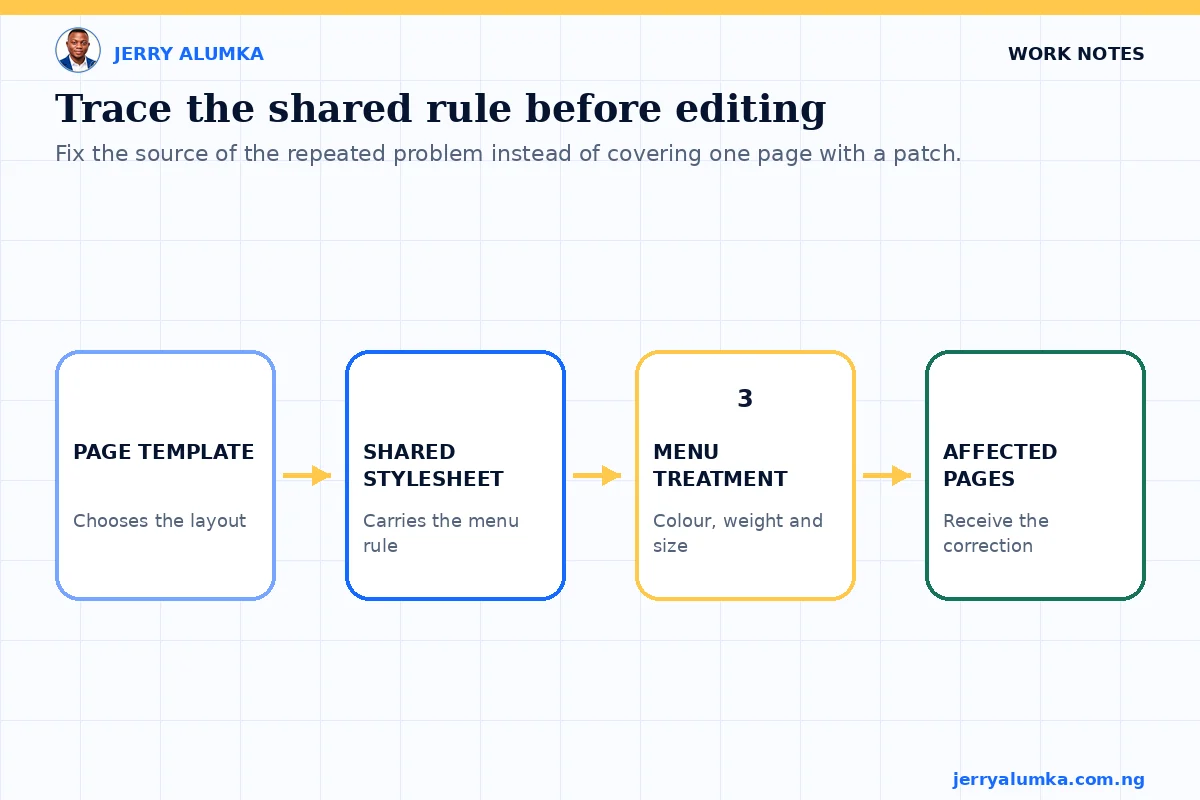
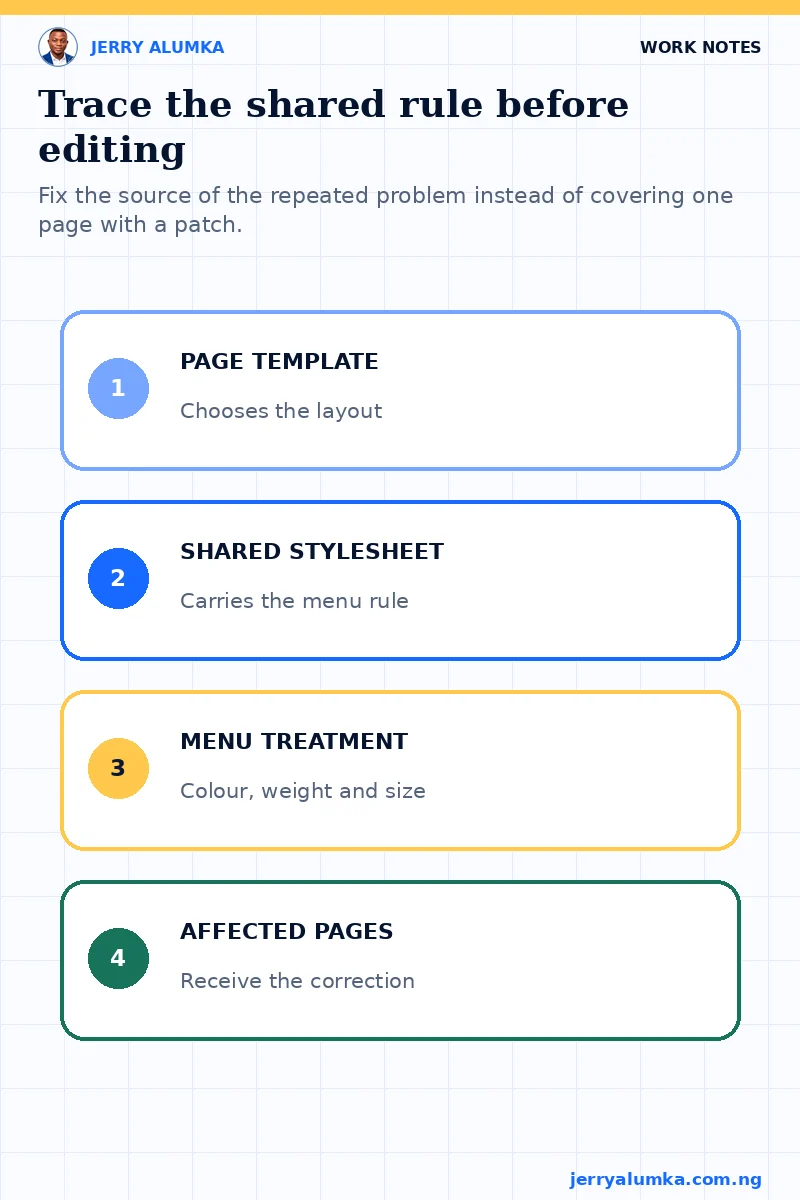
The issue came from an older pale navigation colour that was still being inherited on newer light headers. Once I found that shared rule, the sensible fix was to correct the navigation treatment where the affected templates received it.
I adjusted the text colour, weight and size instead of redesigning the header. The rest of the page did not need to change. This kept the correction close to the complaint and reduced the chance of disturbing unrelated parts of the website.
I also changed the stylesheet version so browsers would request the fresh file. Without that step, a correct update on the server could still look unchanged to someone whose browser kept an older cached copy. Cache simply means a browser stores a file for faster loading. It is useful until an old copy hides a new correction.
I checked page families, not one URL
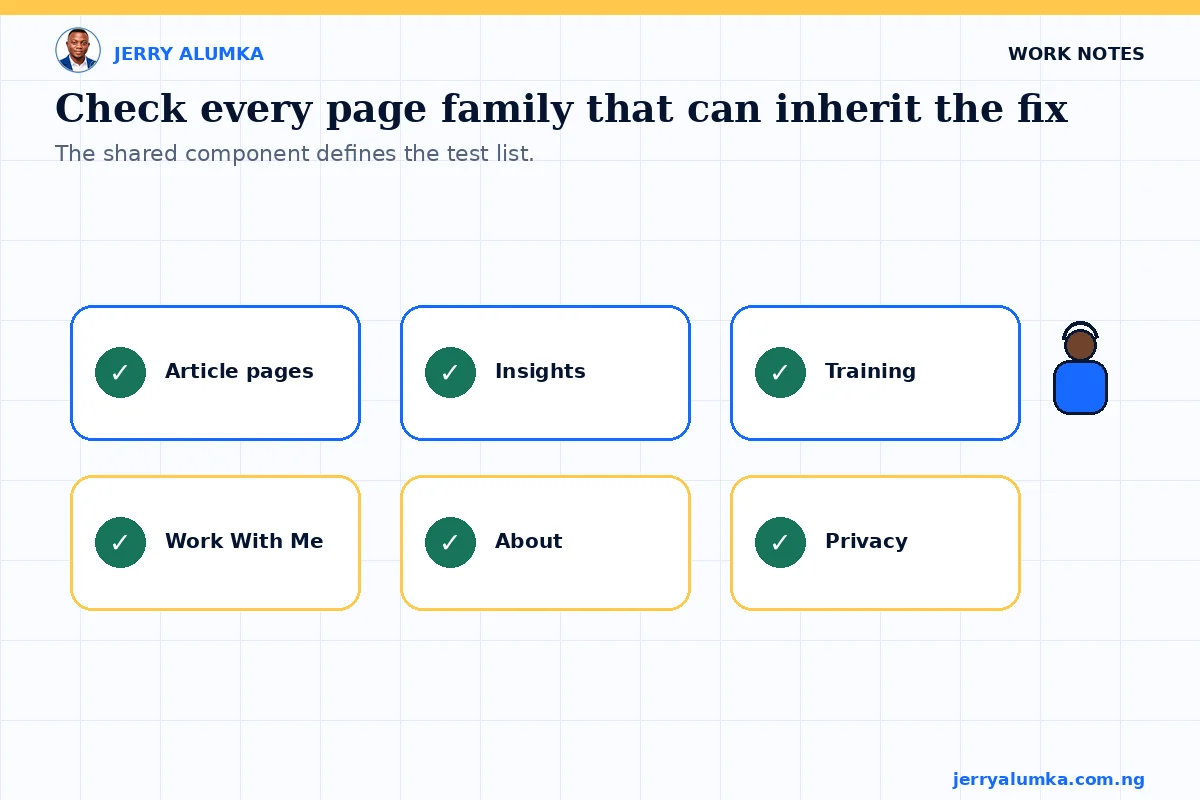
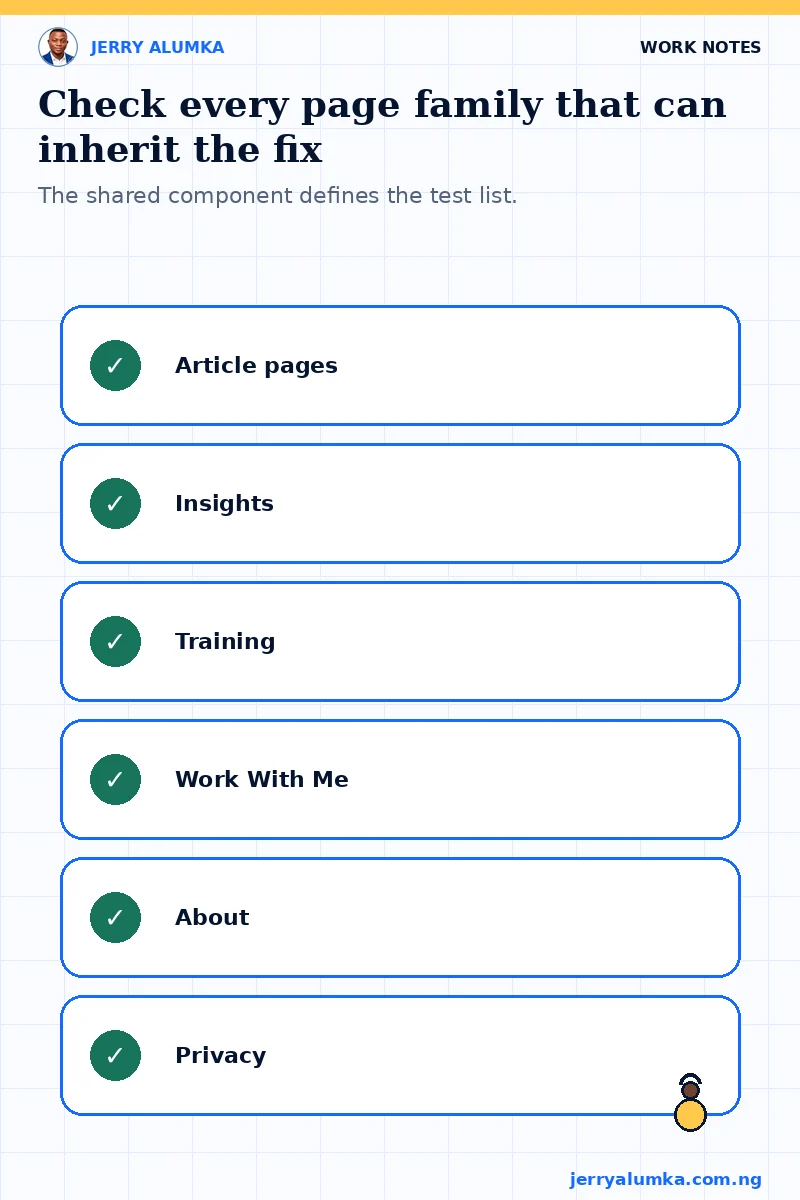
After the edit, I checked the article again, then moved through the other page families that used the same navigation treatment. That included the Insights area, Training, Work With Me, About and Privacy pages.
I was looking for the same basic things on each page: could I read the top navigation easily, did local menus remain clear, and had the change affected spacing or layout? The point was not to inspect every sentence on the website. It was to test every place the corrected rule could reasonably reach.
This is a better way to size a website correction. One complaint may identify the symptom, but the shared component defines the real scope.
The fix was complete only after public readback
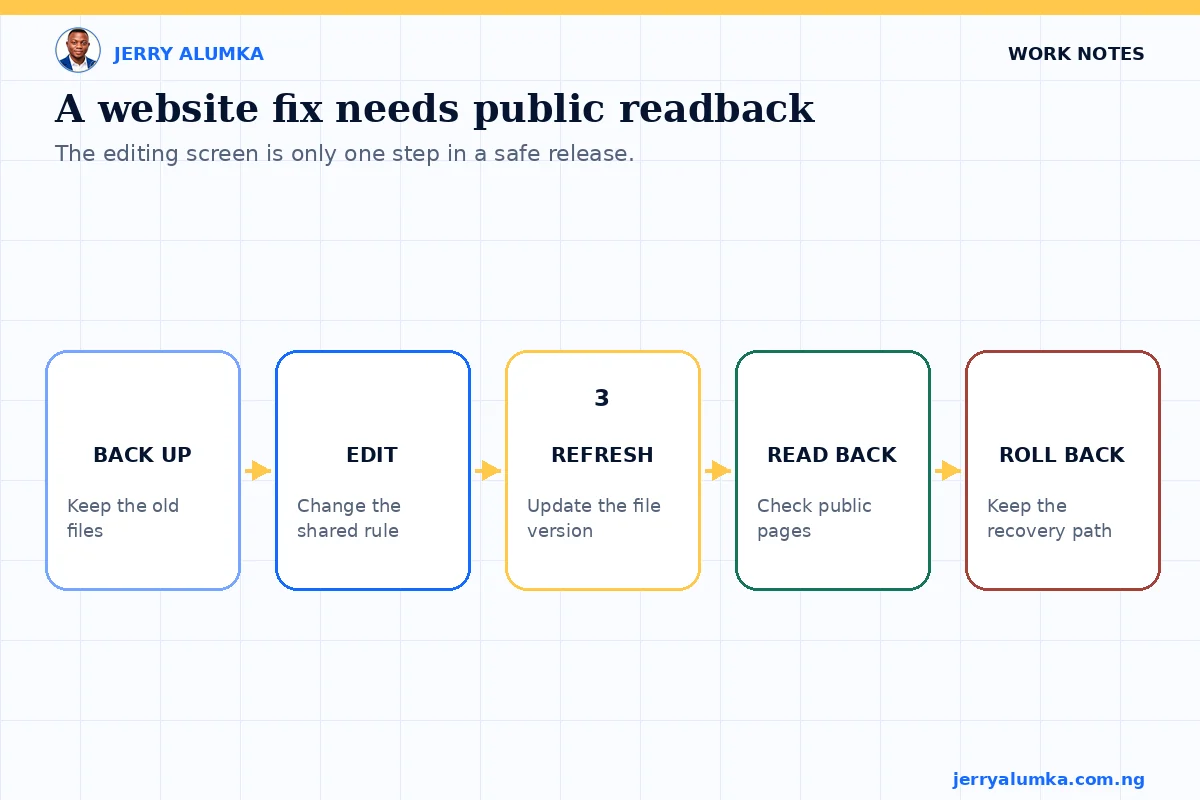
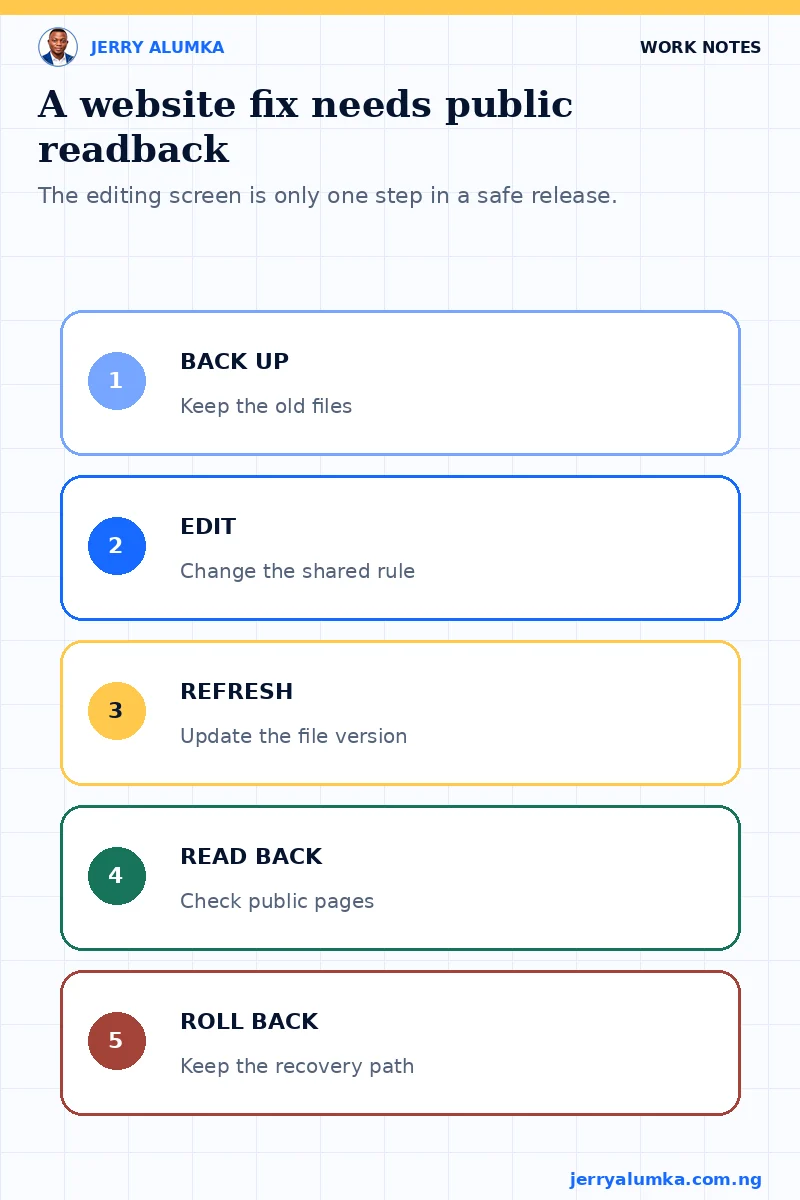
Saving a stylesheet is not proof that visitors received it. I read the public pages back after release and confirmed that the darker, heavier menu treatment appeared across the affected templates. I also kept a backup of the files changed before the release.
The lesson I am keeping from this is practical. When a repeated website element looks wrong, I should trace the rule before touching the page. Then I should test the other templates that share it and check the public result, not only the editing screen.
A small visual complaint can reveal a system problem. The useful response is not a larger redesign. It is a narrow fix applied at the right level, followed by a wider check.