
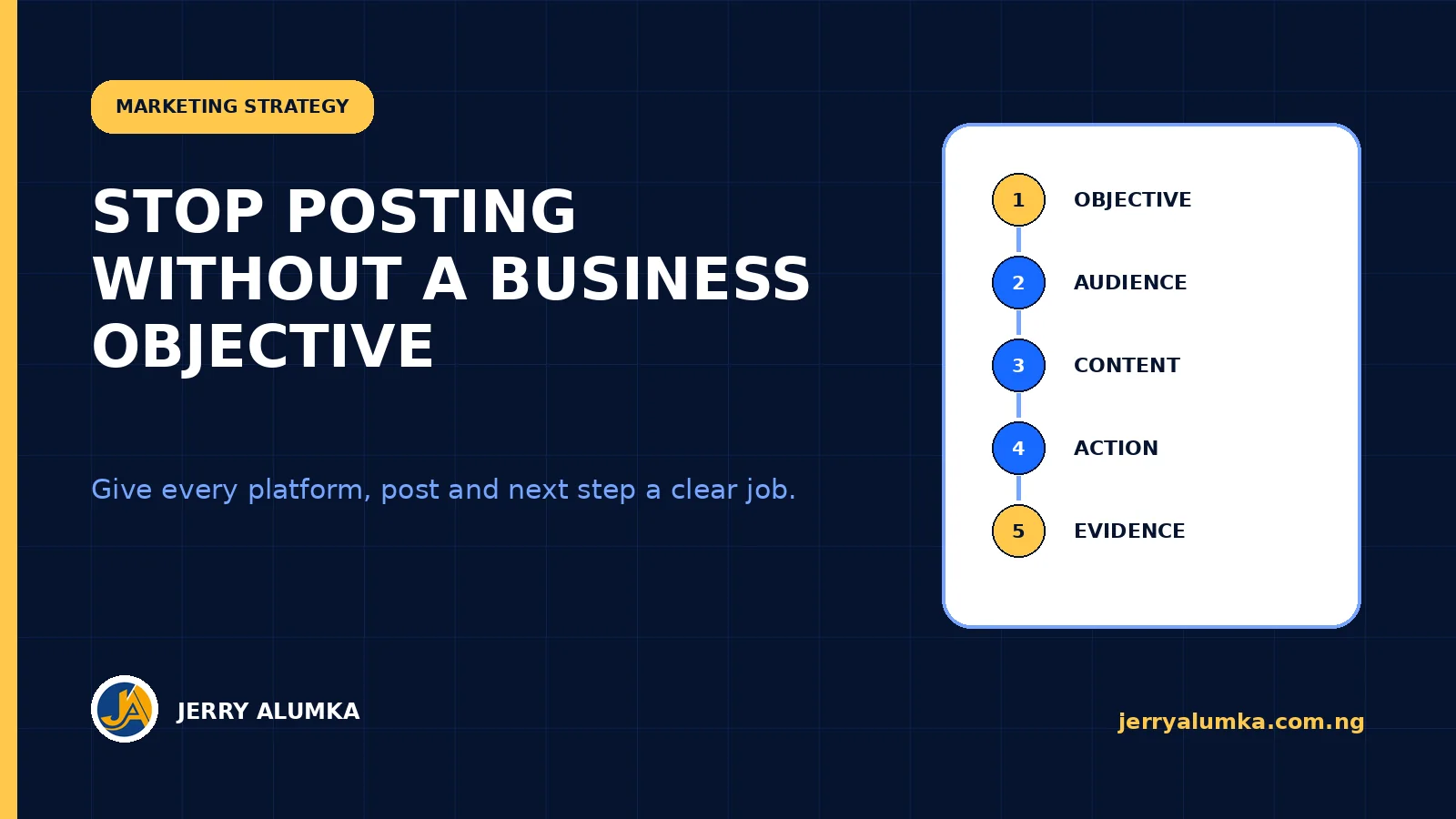
A social media marketing strategy is a clear decision about the business result you want, the people you need to reach, the role each platform will play, the content that will move those people and the evidence you will use to judge progress.
Posting every day is not a strategy. It is a publishing schedule. A business can remain busy on Instagram, Facebook, TikTok or LinkedIn for months and still struggle to explain what the activity is meant to achieve.
The problem usually starts when the team treats content volume as the goal. They count posts, followers and likes because those numbers are easy to see. Management, however, needs to know whether social media is helping the business become known by the right people, receive useful enquiries, support customers or generate sales.
A practical strategy closes that gap. It gives every post a job and makes it easier to say no to content that looks active but does not support the business.
Start with one business objective
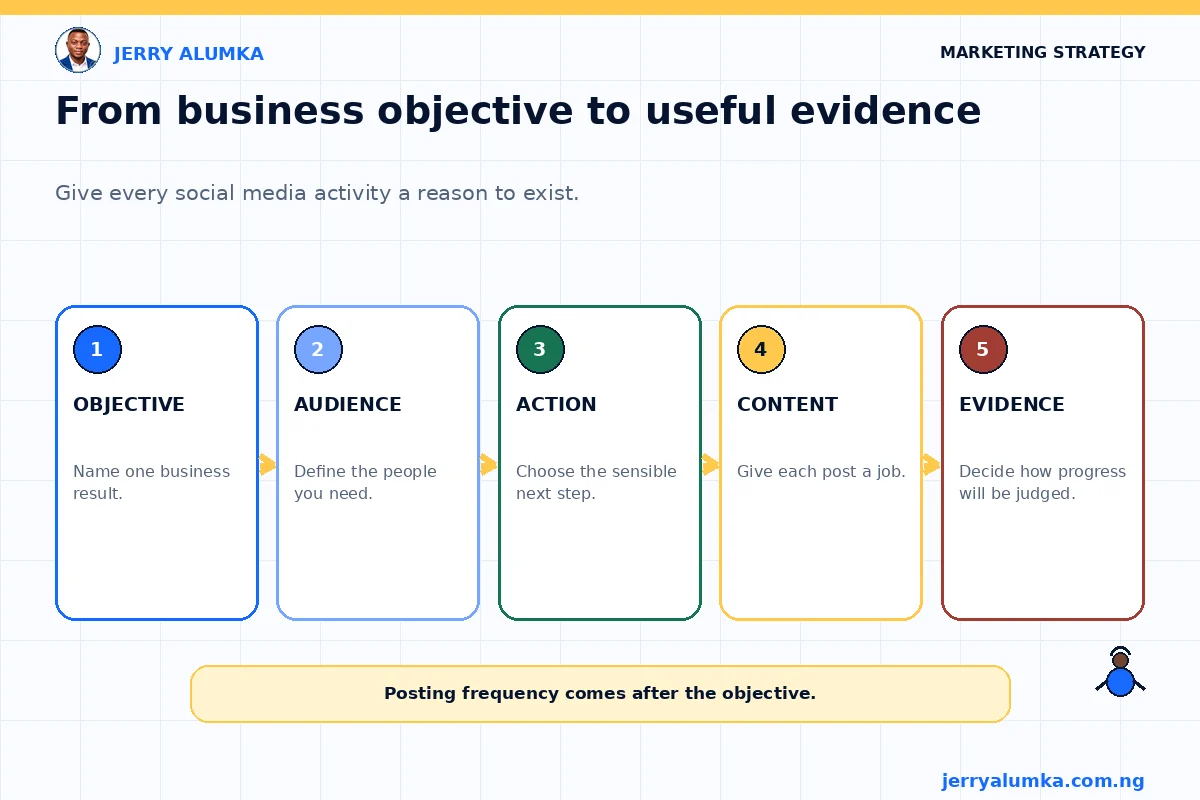
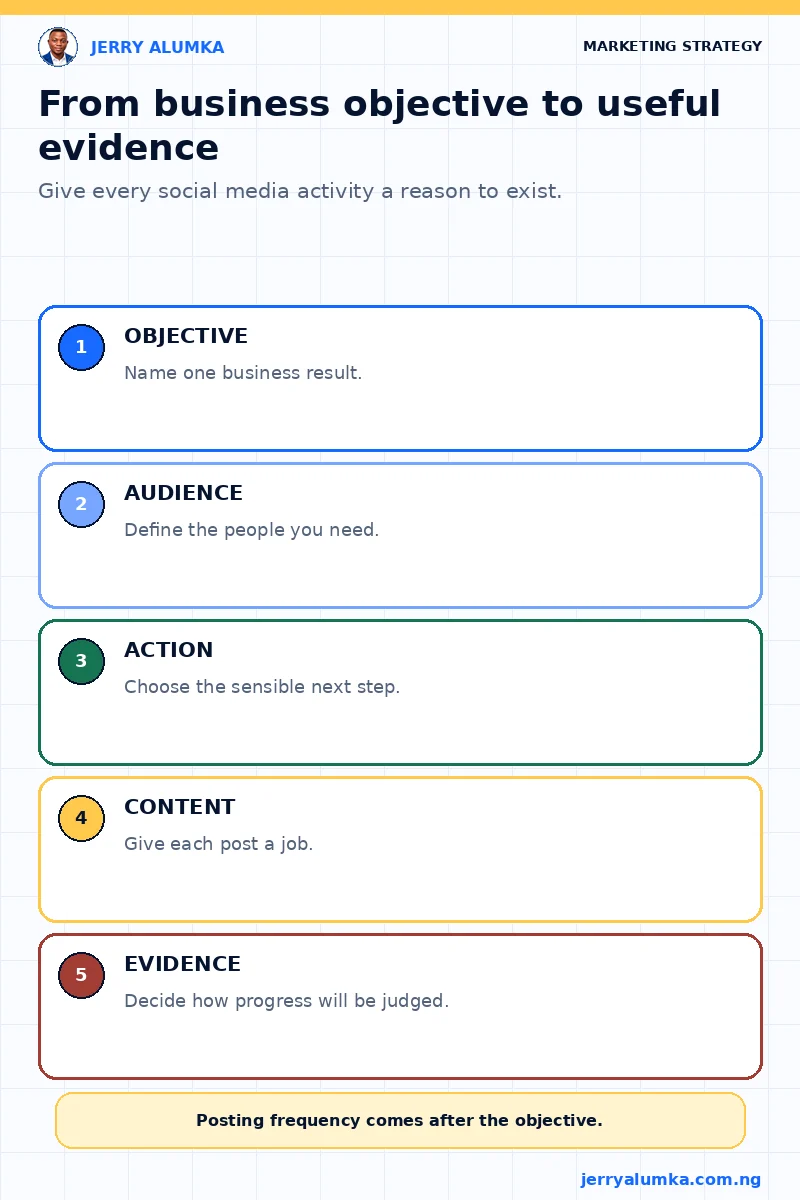
Choose one main business objective for the period. It may be to introduce a new service to a defined market, generate qualified enquiries, increase visits to a shop, help existing customers use a product or support repeat purchases.
Write the objective in plain language. “Increase engagement” is incomplete because engagement is a platform response, not the final business result. “Use educational content to attract owners of growing businesses, then direct interested people to a consultation page” is clearer. The team knows who it wants, what kind of content to create and what action should follow.
The objective also needs a time period and a realistic capacity check. There is no point asking social media to produce hundreds of enquiries if only one person can respond. Marketing should create demand the business can handle well.
If the wider business has not decided which customer and problem to focus on, settle that before building a channel plan. My guide to choosing where your business should compete gives you a practical starting point.
Define the audience and the next action
Describe the audience narrowly enough for the team to recognise them. “Nigerians online” is not an audience. “Lagos business owners who already receive enquiries but lose track of follow-up” is much more useful.
Then write down the problem they are trying to solve, what may stop them from trusting your offer and the next action you want them to take. That action could be reading a guide, sending a message, visiting a product page, registering for an event or speaking to a salesperson.
This is where the customer path matters. A person may discover the business through a short video, check the profile, read comments, visit the website and return later through WhatsApp. The social post opened the journey, but it did not complete the whole job.
Make the next step obvious and consistent. If a post promises a price guide, the link should lead to that guide. If it asks people to send a message, the team must know who will reply and what information to collect. Do not send every interested person to a busy homepage and expect them to find the right route.
Give each platform a clear role
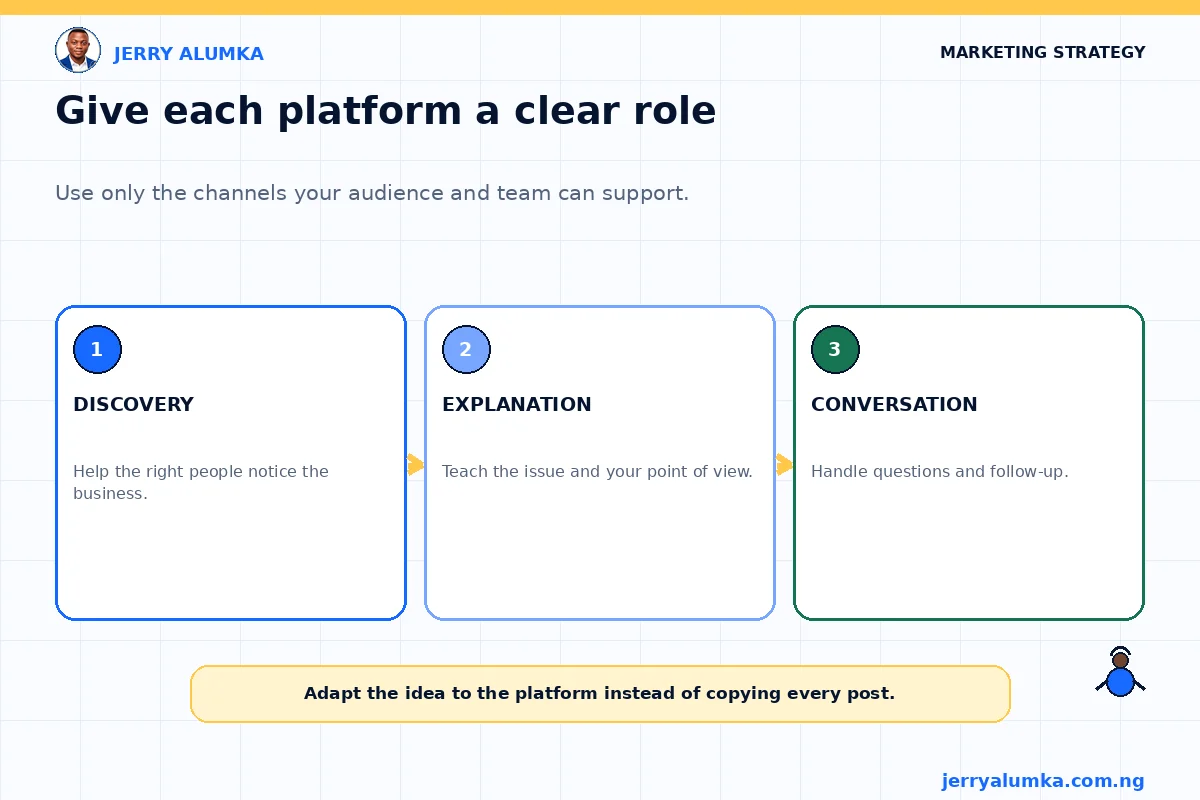
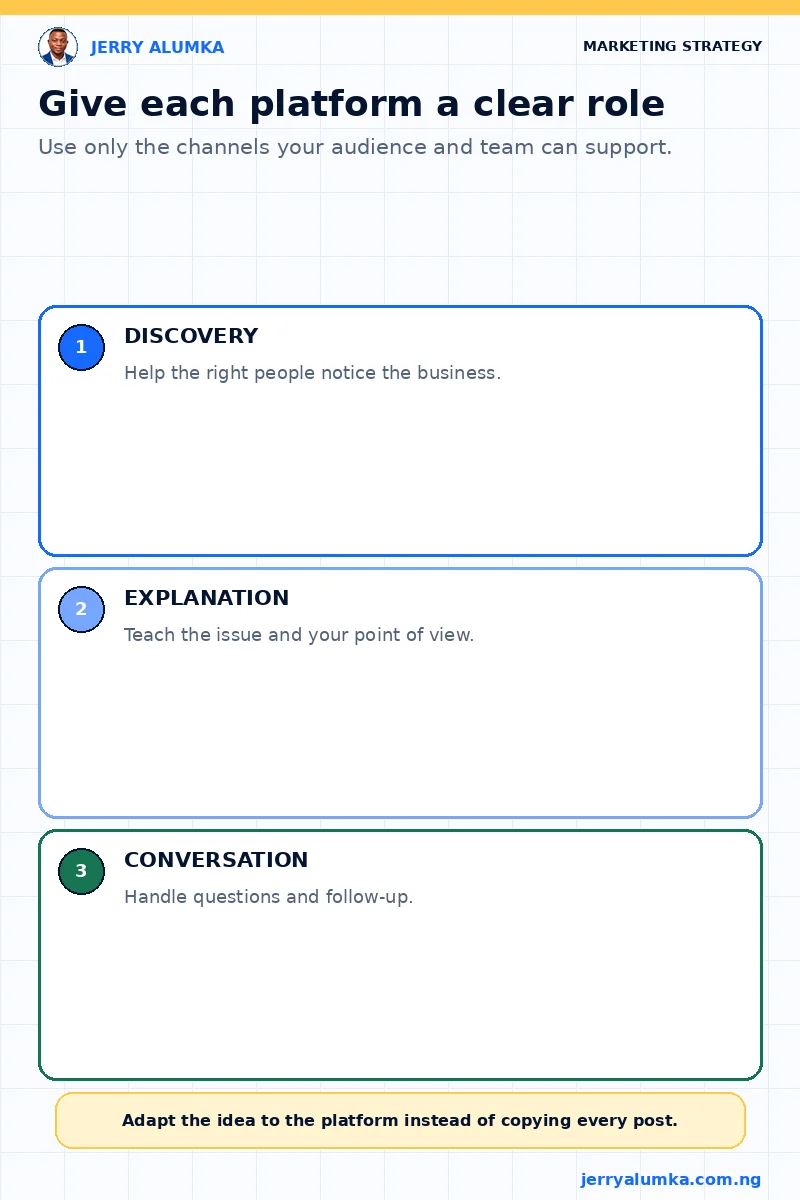
A business does not need to use every social network. It needs the platforms where the intended audience pays attention and where the team can produce suitable content consistently.
Assign one main role to each selected platform. One may help new people discover the business through short videos. Another may carry detailed professional explanations. A third may handle direct conversations and follow-up. The same idea can be adapted across platforms, but copying the exact post everywhere often ignores how people use each channel.
Choose based on evidence, not fashion. Review where useful enquiries already come from, which content earns meaningful responses and what the team can sustain. A platform with a smaller but relevant audience may be more useful than a larger channel filled with people who will never buy.
Build content around four jobs
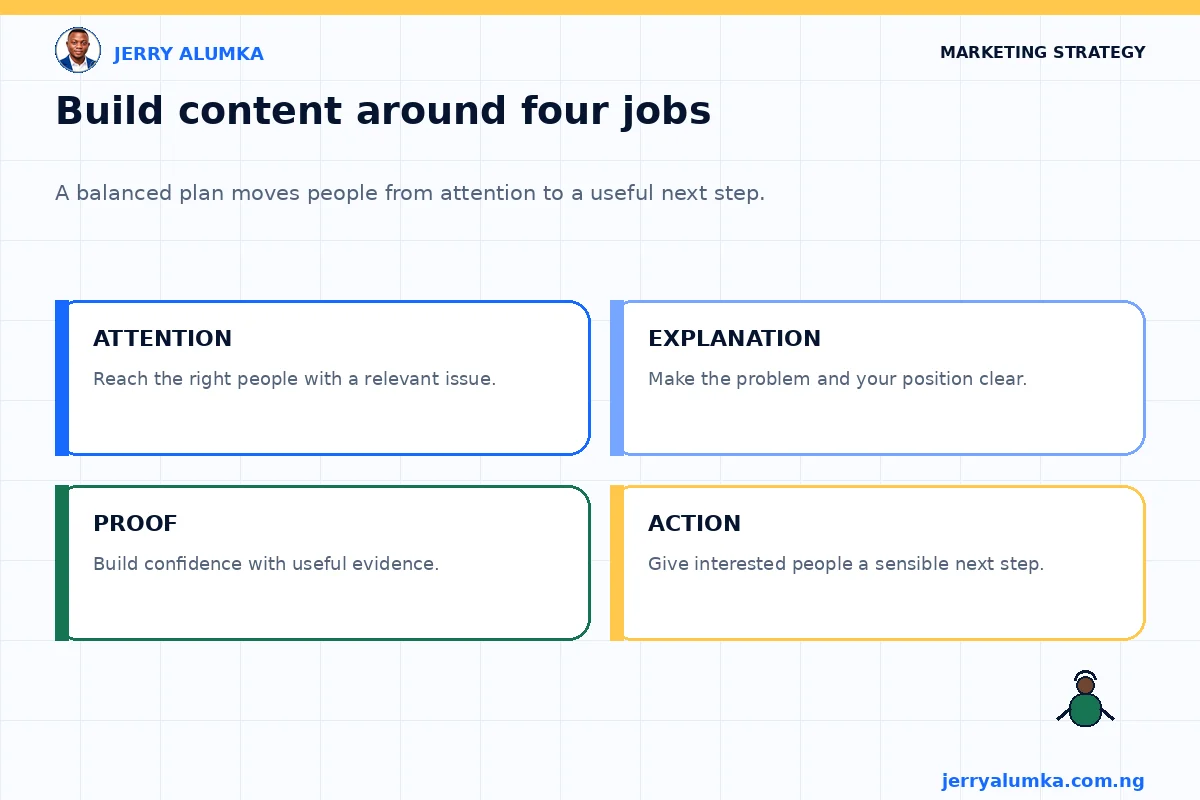
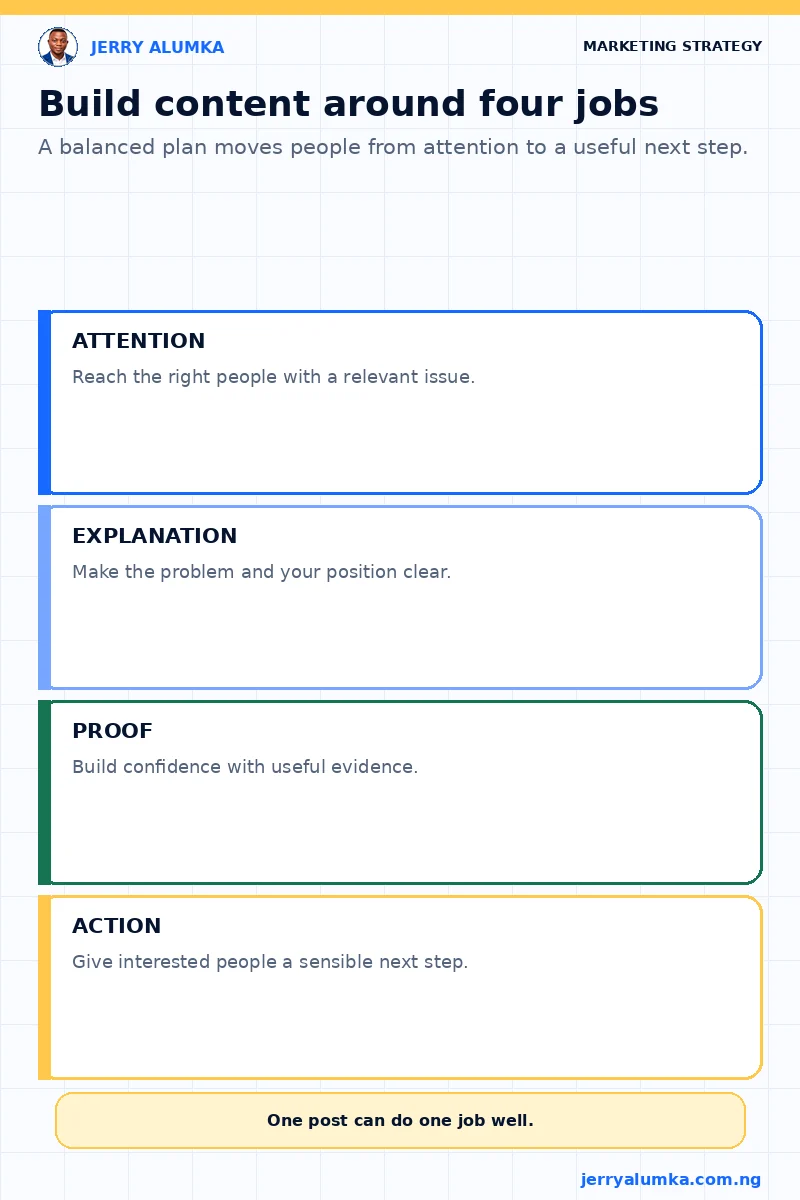
A balanced content plan usually needs four jobs: attract attention from the right people, explain the problem and your point of view, build confidence through useful proof, and direct interested people to a sensible next step.
One post does not need to perform all four jobs. A short demonstration may attract attention. A detailed article can explain. A customer review can provide proof when you have permission to use it. A clear offer post can ask for action.
Turn these jobs into repeatable content themes. A business selling accounting support, for example, might publish common bookkeeping mistakes, simple record keeping lessons, explanations of tax deadlines and guidance on choosing a service. The themes remain stable while the examples change.
Keep the calendar realistic. Three useful posts a week that the team can produce, review and follow up may outperform seven rushed posts. Consistency matters because people need repeated exposure, but repetition should strengthen the message rather than fill space.
Connect organic content, paid promotion and follow-up
Organic content helps the business learn which questions and messages people respond to. Paid promotion can take a proven message to more of the intended audience. Neither one repairs a weak offer or poor customer handling.
Plan the full route before spending. Confirm the advert or post, destination page, form or message path, response owner and record of what happened next. If people click but cannot understand the offer, the content path is weak. If good enquiries arrive but nobody replies promptly, the follow-up system is weak.
Use tracking links when social posts send people to the website. Google Analytics recommends campaign parameters such as utm_source, utm_medium and utm_campaign so traffic can be connected to its source and campaign. Keep the names consistent because different capitalisation or spelling can split one campaign into separate report rows. The official Google Analytics guide to campaign URLs explains the fields and naming rules.
Measure the business path, not likes alone
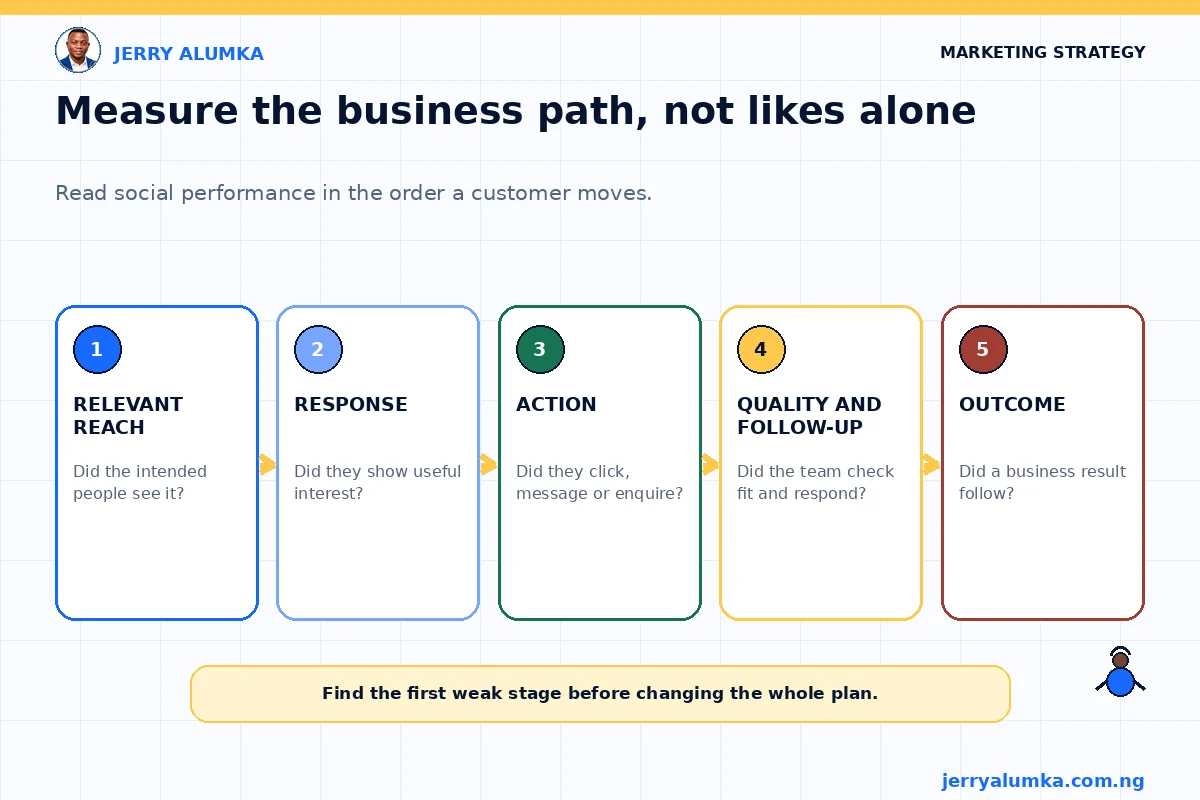
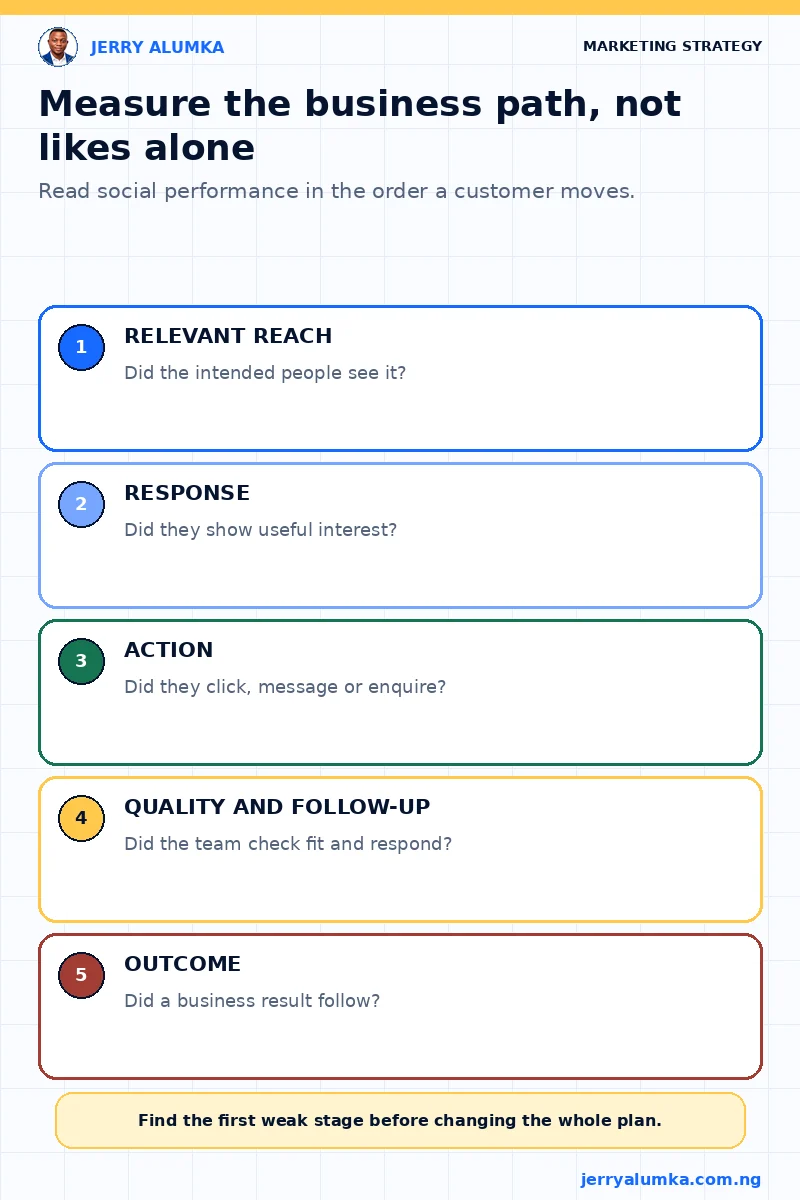
Choose a small scorecard that follows the customer path. Start with whether the intended audience saw the content. Then check meaningful responses, visits or messages, completed enquiries, lead quality, follow-up and the final business outcome.
The exact measures depend on the objective. An educational series may be judged by relevant reach, useful comments, profile visits and article reads. A lead campaign needs completed records, valid contact details, response time, qualified conversations and sales outcomes. A customer support channel needs resolution time and recurring issues, not applause.
Review the numbers together. High reach with weak action may mean the message attracted attention but gave people no reason to continue. Strong clicks with weak enquiries may point to the landing page or offer. Good enquiries with weak sales may require a closer look at qualification, follow-up or price.
My digital marketing analytics guide explains how to read attention, visits, action, quality and business outcome as one chain.
Use a monthly strategy check
At the end of each month, ask five questions. Did we reach the people we intended to reach? Which content helped them understand or trust the offer? Which path produced useful action? Where did people drop out? What will we continue, change or stop next month?
Do not change direction because one post performed badly. Look for patterns across enough content to make a fair judgement. At the same time, do not protect a weak plan because the team worked hard on it. Effort is not evidence.
A sound social media marketing strategy makes the next month easier to plan. The team knows the objective, audience, platform role, content jobs, customer route and scorecard. If your business needs help turning scattered social activity into a working plan, contact me.