
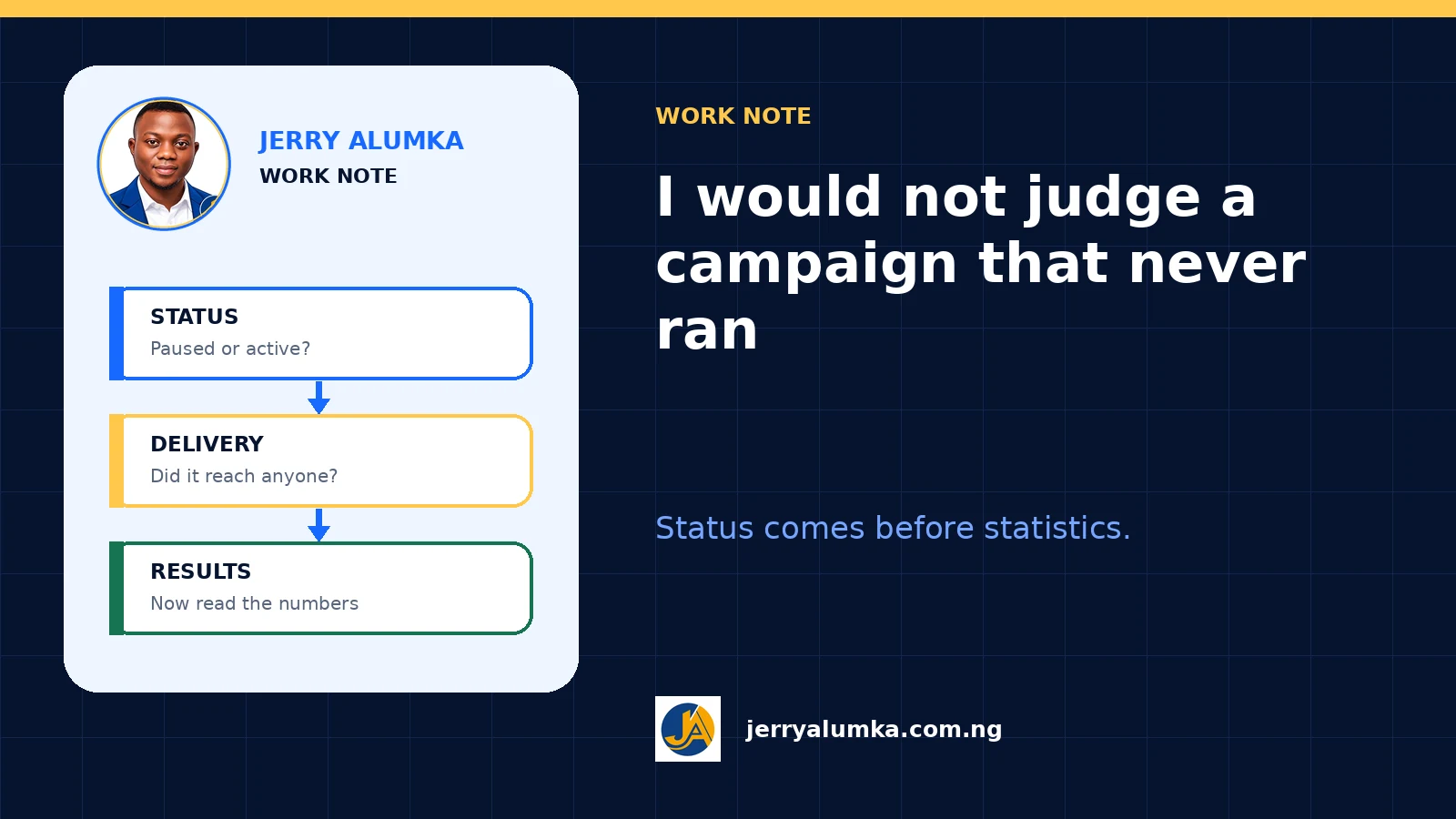
The campaign dashboard showed four zeros: no spend, no reach, no clicks and no leads. That looked like poor performance until I checked whether the adverts had delivered at all.
They had not. The campaign, ad set and advert were paused, so nobody had seen them. The zeros described an inactive setup, not an advert that people had rejected.
Two kinds of zero need different responses
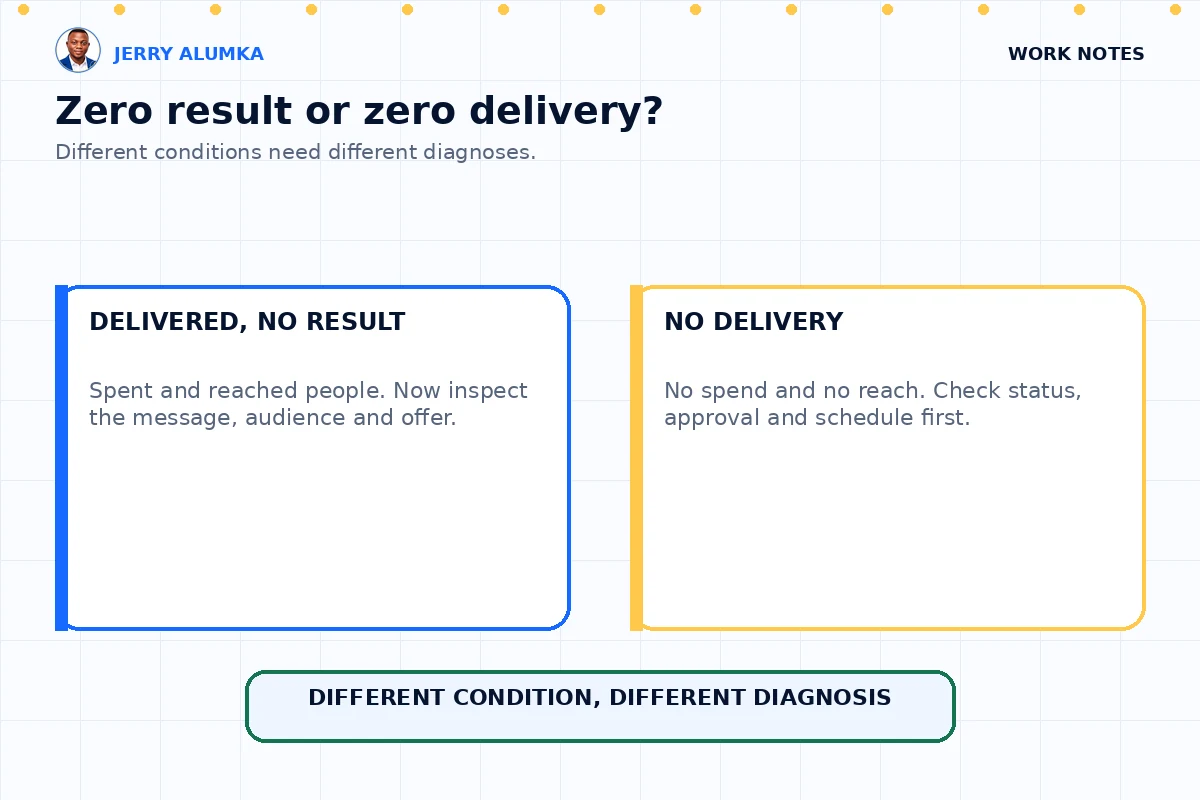
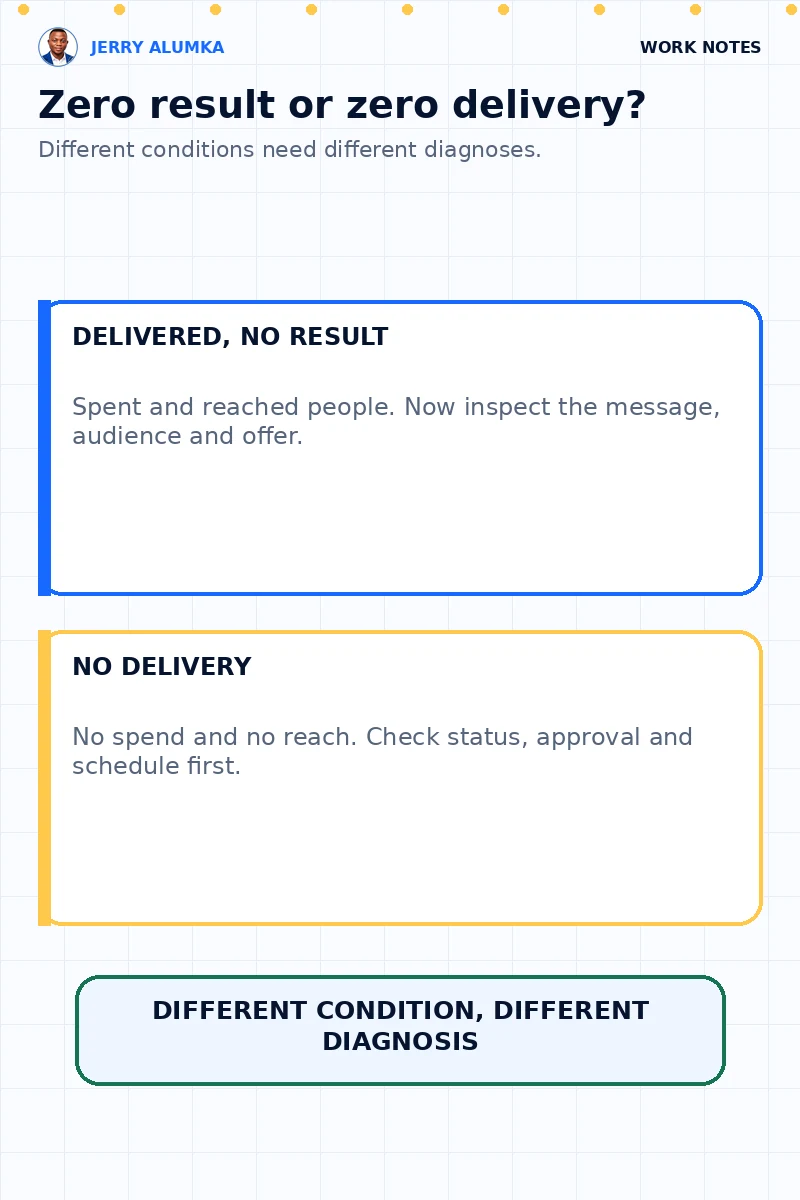
If a campaign spends money and reaches people but brings no enquiry, it has a performance problem. You can then check the audience, message, offer, page and follow-up.
If a campaign has spent nothing and reached nobody, you don’t yet know whether the advert is good or bad. You first need to find out why it did not deliver.
Imagine printing flyers for a shop and leaving every copy in the office. You can’t say the flyer failed to attract customers. Nobody received it. The first problem is distribution.
The same rule applies to online advertising. Don’t rewrite the advert before you confirm that the advert was active and able to run.
Check every delivery switch
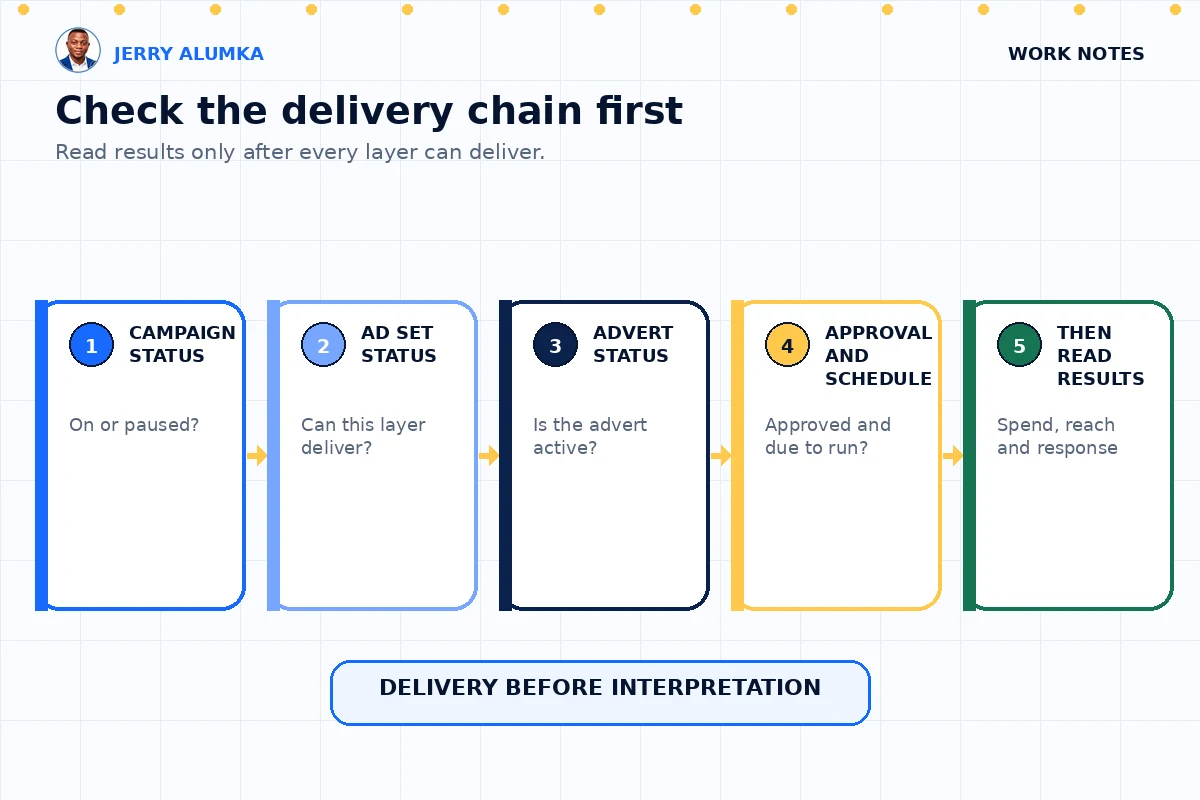
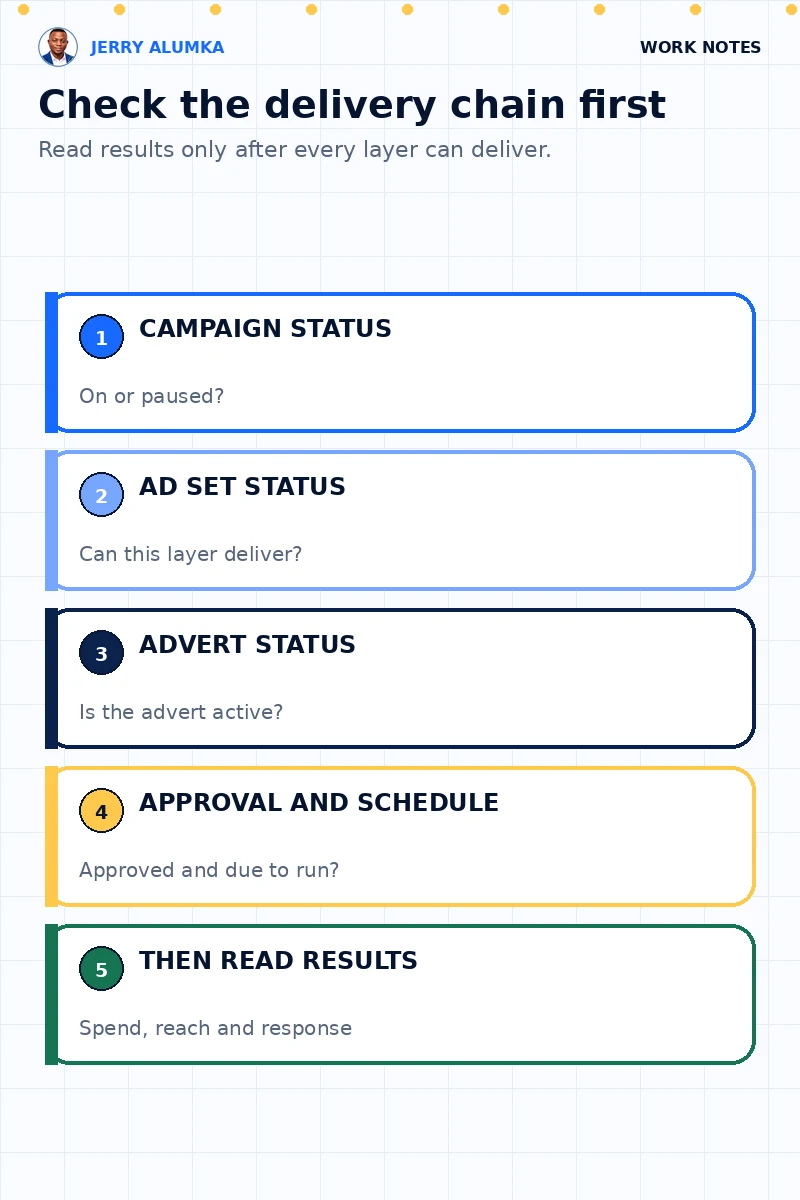
Meta Ads Manager has more than one level. The campaign can be active while the ad set is paused. The ad set can be active while the advert is still being reviewed. A future start date can also keep the figures at zero.
I now check the account in this order:
- Check whether the campaign is active.
- Check whether the ad set is active.
- Check whether the advert is active and approved.
- Check the start date, end date and spending limit.
- Check whether any money was spent and anyone was reached.
Only after these checks do I study clicks, leads and cost. If nobody saw the advert, the result column can’t tell me what the market thinks.
There are other reasons for no delivery. The payment method may fail. The account may have a spending limit. The audience may be too restricted. The advert may be rejected. The schedule may use a different time from the one the team expected.
Read the delivery message inside the account. Don’t assume every zero has the same cause. Take a screenshot or write down the status before making changes, so the team has a clear record of what was found.
Say only what the evidence supports
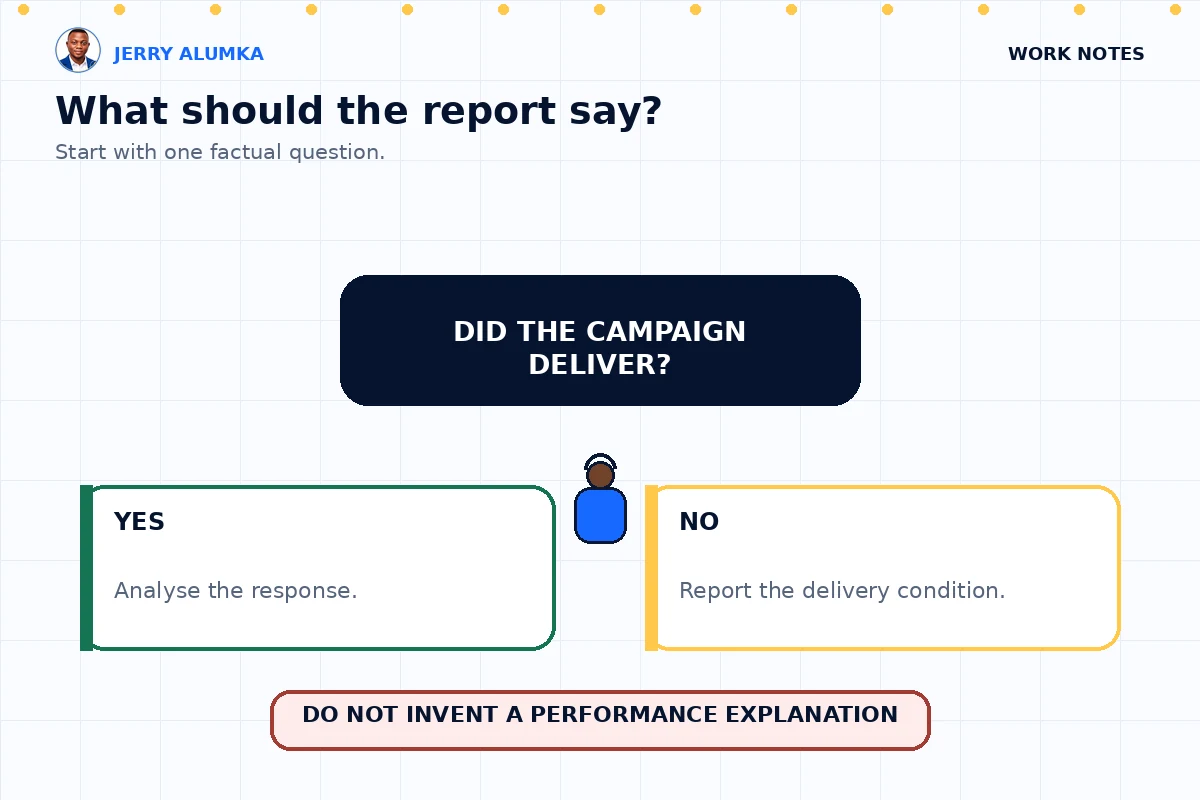
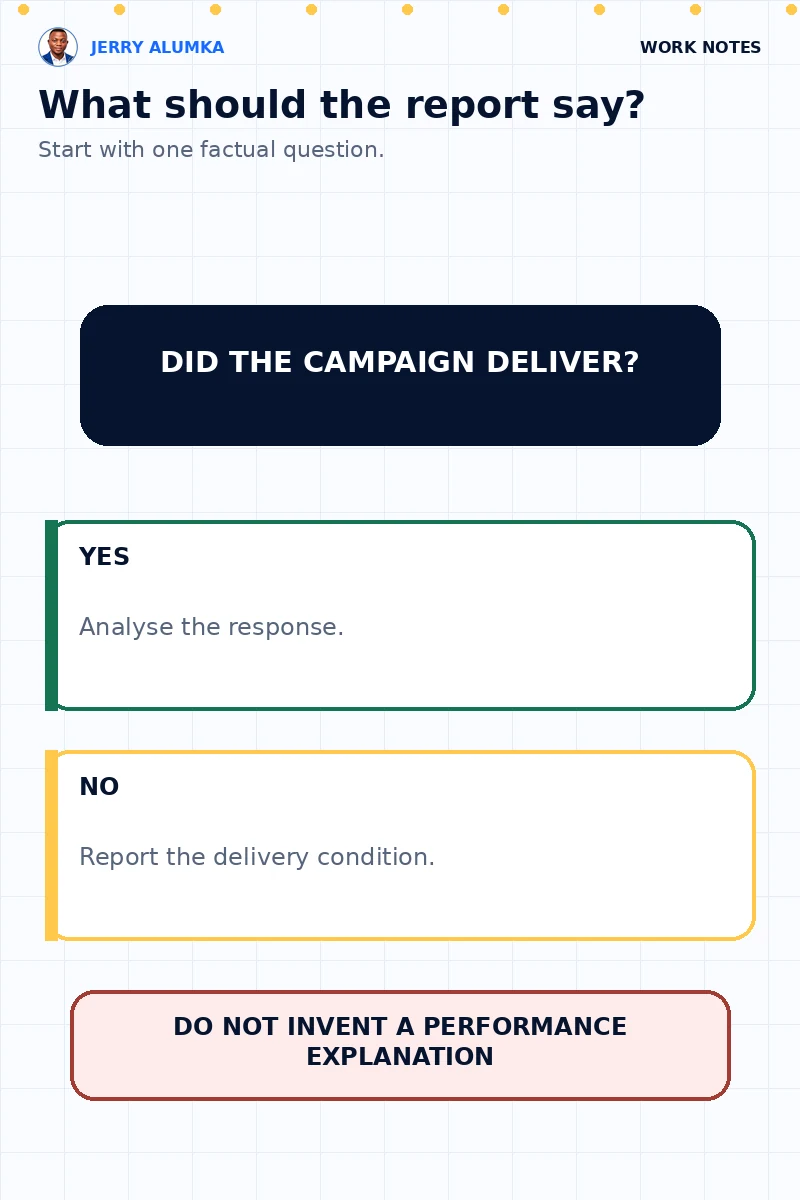
In this case, the correct report was simple. The campaigns had no delivery because they were paused. I did not add a long story about weak audiences or poor copy.
I also did not recommend new artwork. There was no evidence that the artwork was the problem. Changing it before the first test would only make the next review harder.
People sometimes feel that a marketing report must contain many recommendations. That pressure can lead to false conclusions. “There is nothing to judge yet” can be the most useful answer when the campaign did not run.
A good short report can state the period checked, the levels that were paused, the amount spent and the next action. It can also name the person who must decide whether the campaign should be turned on. That is more useful than several pages of guesses.
The order of the review
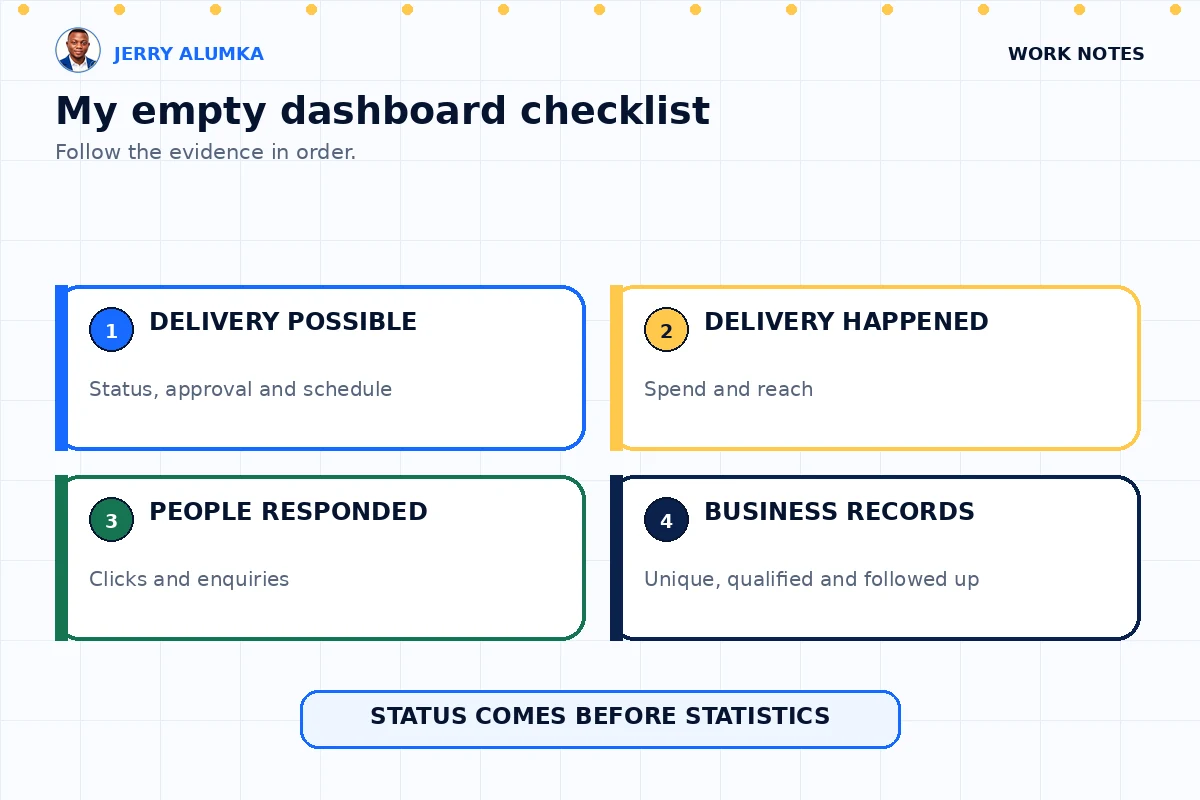
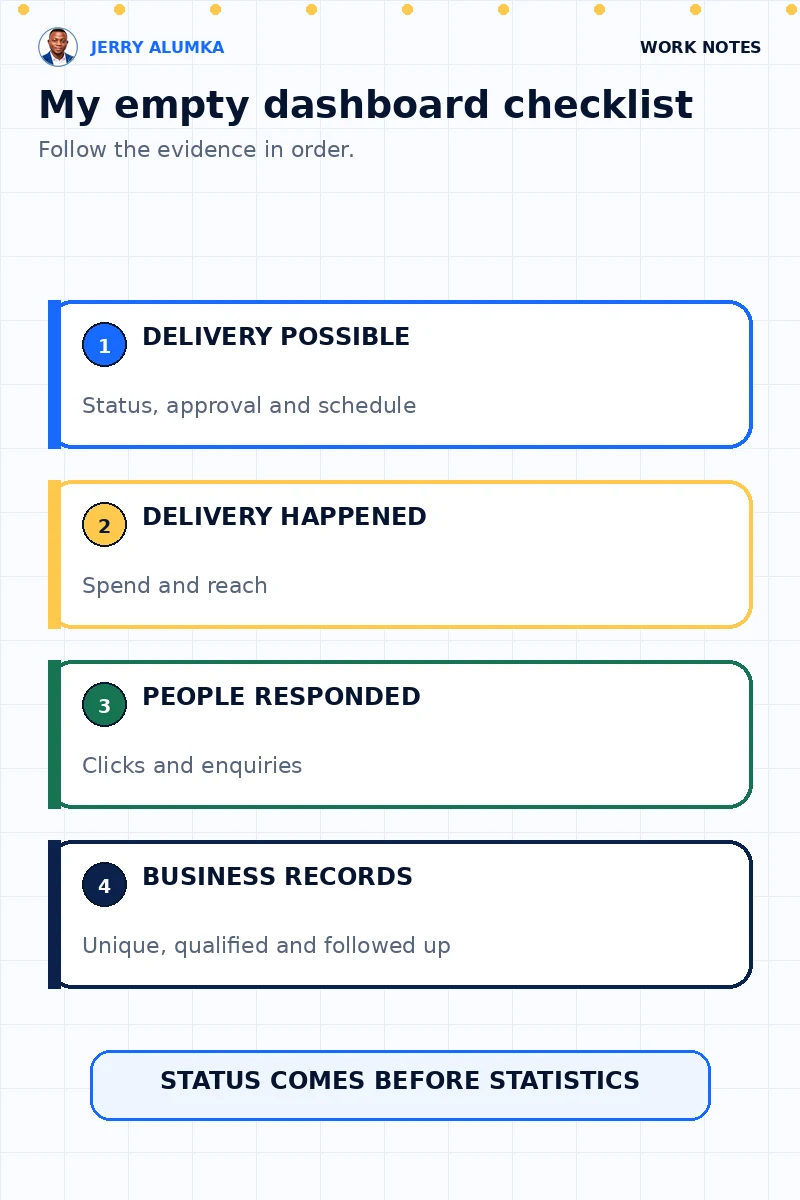
My order is status, delivery, response and business result.
First, could the campaign run? Second, did it reach anyone? Third, did people click, call or submit a form? Finally, what happened to those people inside the business?
If the check stops at the first step, fix or report the setup problem. Don’t talk about winners, bad leads or customer interest.
After correcting the setup, note when delivery began and use a fresh date range from that point. Old zero figures and new delivery should not be mixed without explanation. Only after people have had a chance to see and respond to the advert can its numbers support a performance judgement.