
An important opening video loaded badly during my review of a digital course. The rest of the build looked complete: lessons, exercises, media and structure were all present.
That interruption made another weakness easier to see. Some pages read like notes for the builder, not instructions for a person meeting the subject for the first time.
I changed the review position. Instead of checking only whether every component existed, I followed the course as a new learner and checked whether the instruction made the next action clear.
The build checklist had done its job
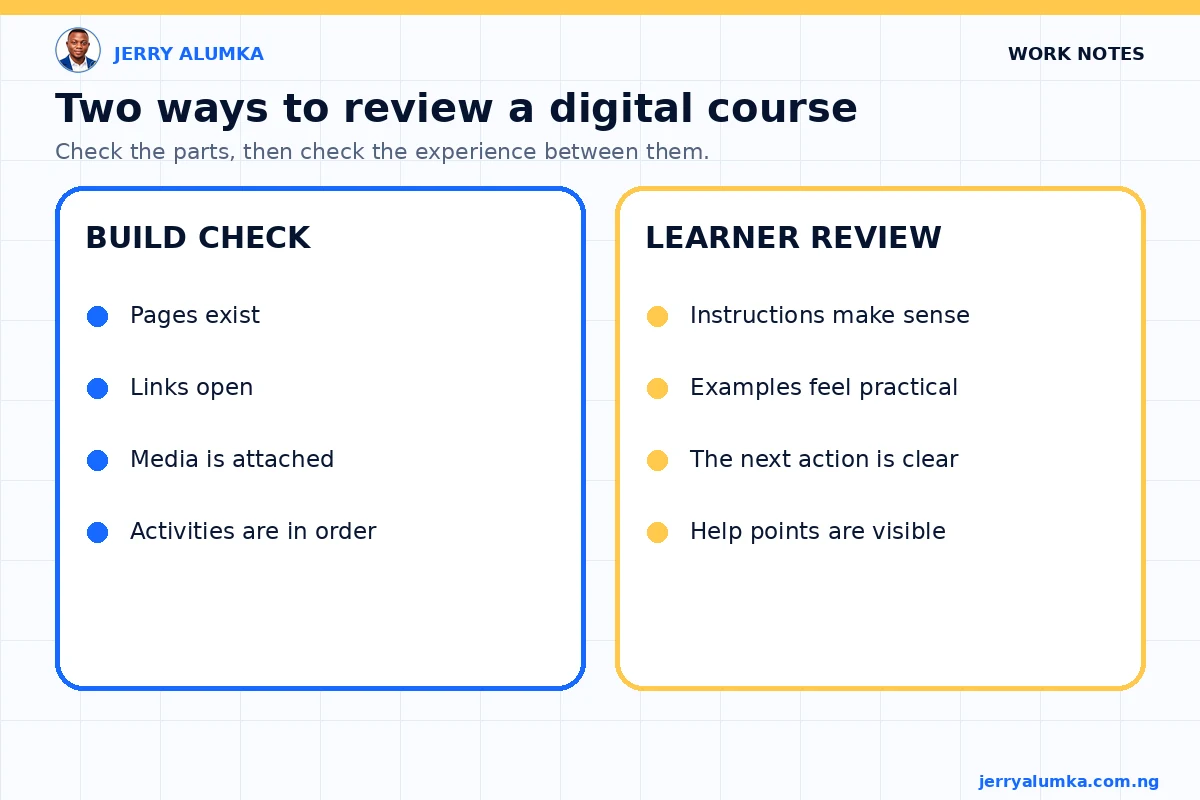
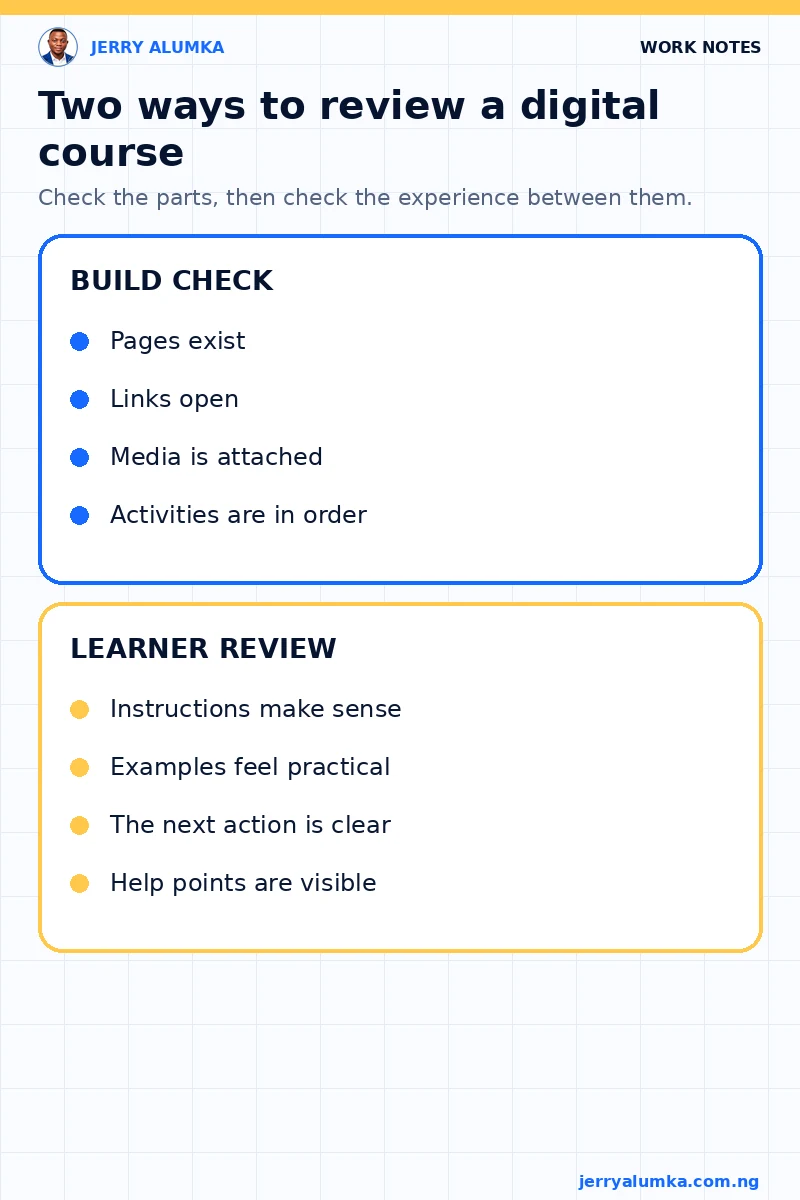
A build check is necessary. It confirms that pages exist, links work, media files are attached, activities open and the course follows the intended order. Without that layer, learners meet missing files and broken paths.
But a technically complete course can still feel unfinished. The builder already knows the background, the reason for each lesson and the meaning of every instruction. A learner does not. What looks obvious inside the project can feel vague from the outside.
I had been looking at the parts. The stronger review had to examine the experience between them.
Then I followed the learner’s next action
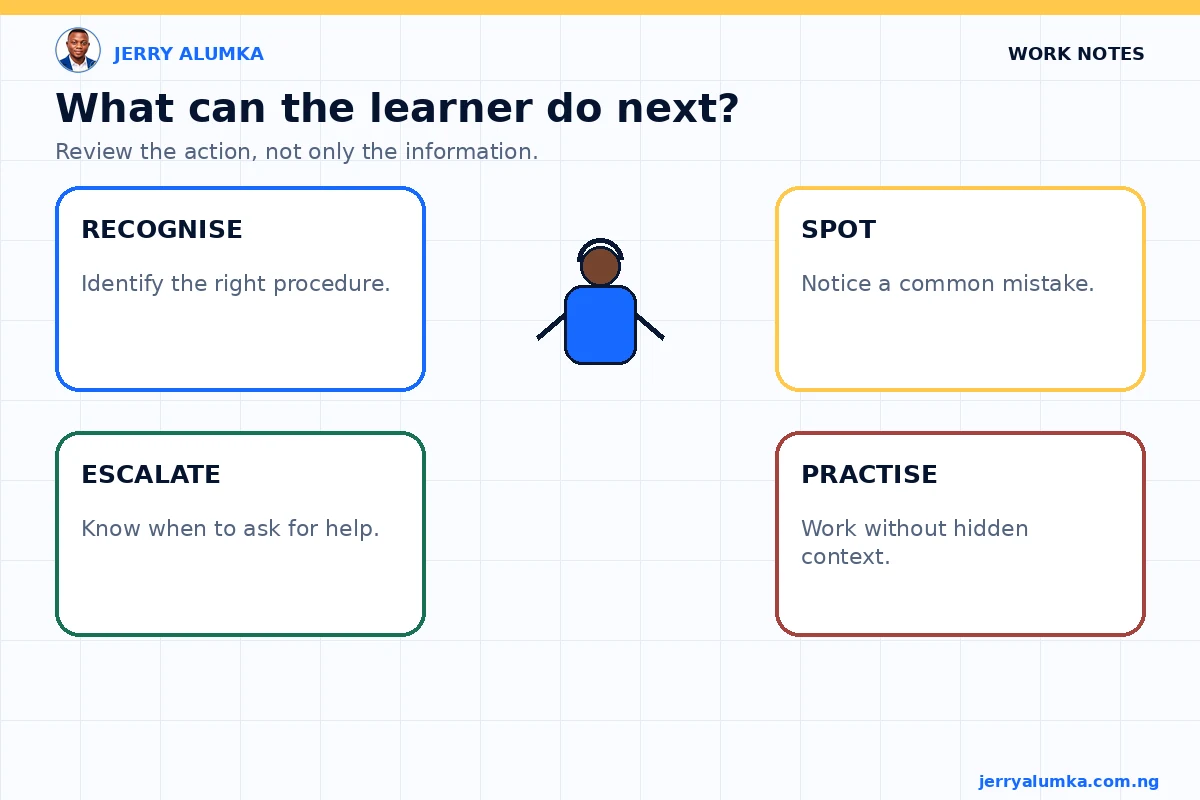
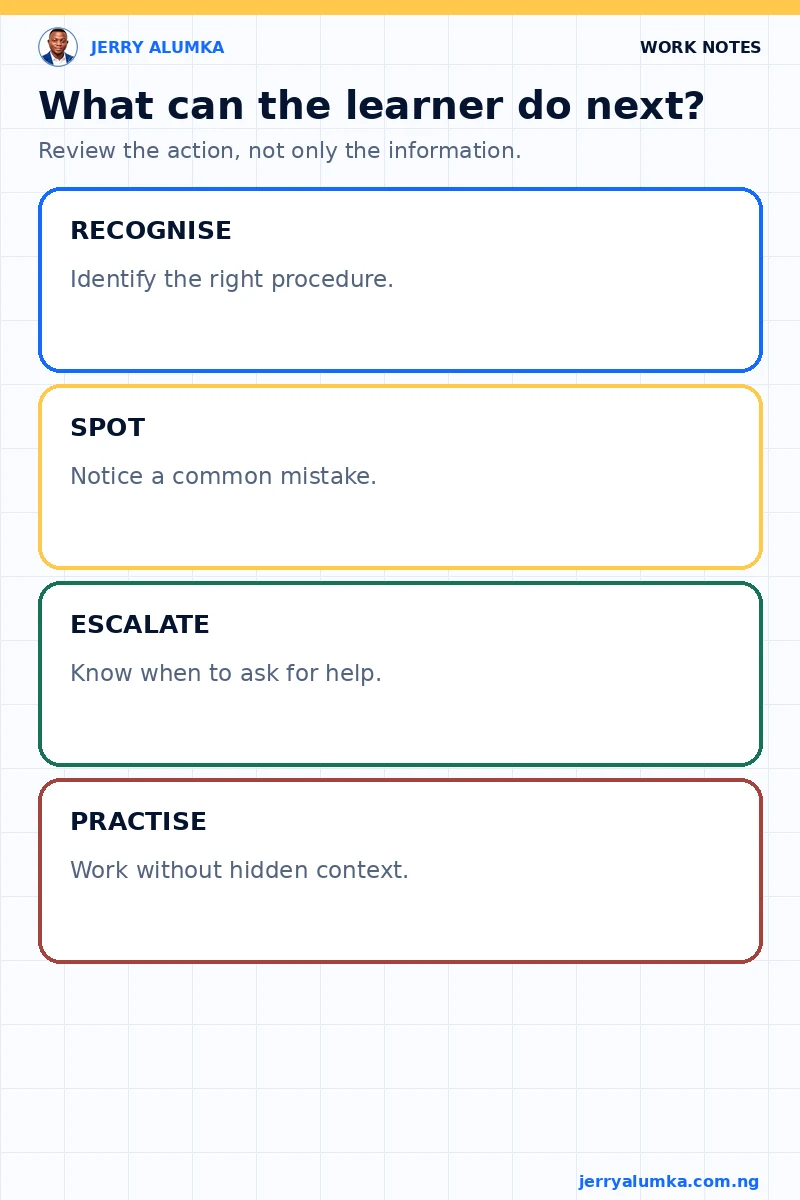
I read the course again as if I had just joined the organisation and knew nothing about its internal routines. That exposed a simple problem: some content explained what had been assembled but didn’t give enough practical guidance for the person expected to use it.
The useful test became action. After a lesson, could the learner recognise the right procedure? Could the learner spot a common mistake? Would the person know when to ask a supervisor instead of guessing? Could the exercise be completed without private background knowledge?
This changed the writing. General descriptions gave way to procedures, examples, mistakes to avoid and clear points for escalation. The aim wasn’t to make every lesson longer. It was to make each lesson useful on its own.
I fixed the weak layer without rebuilding everything
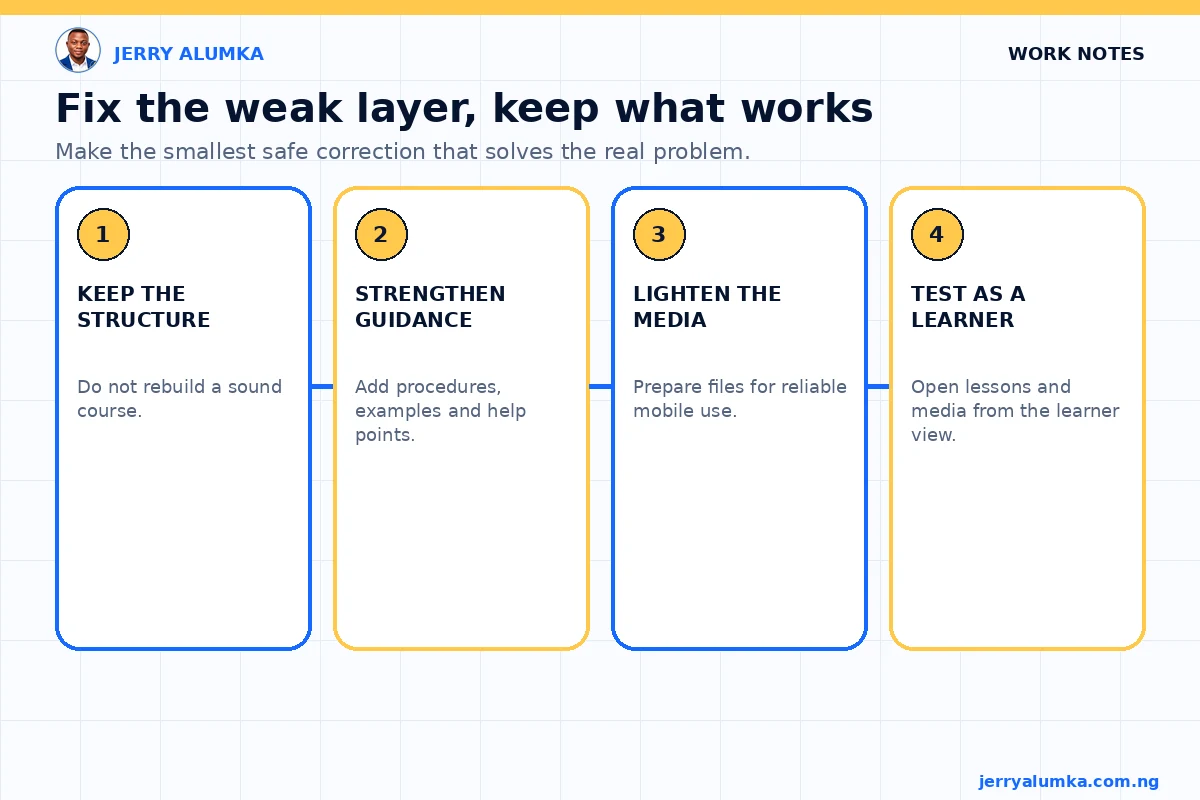
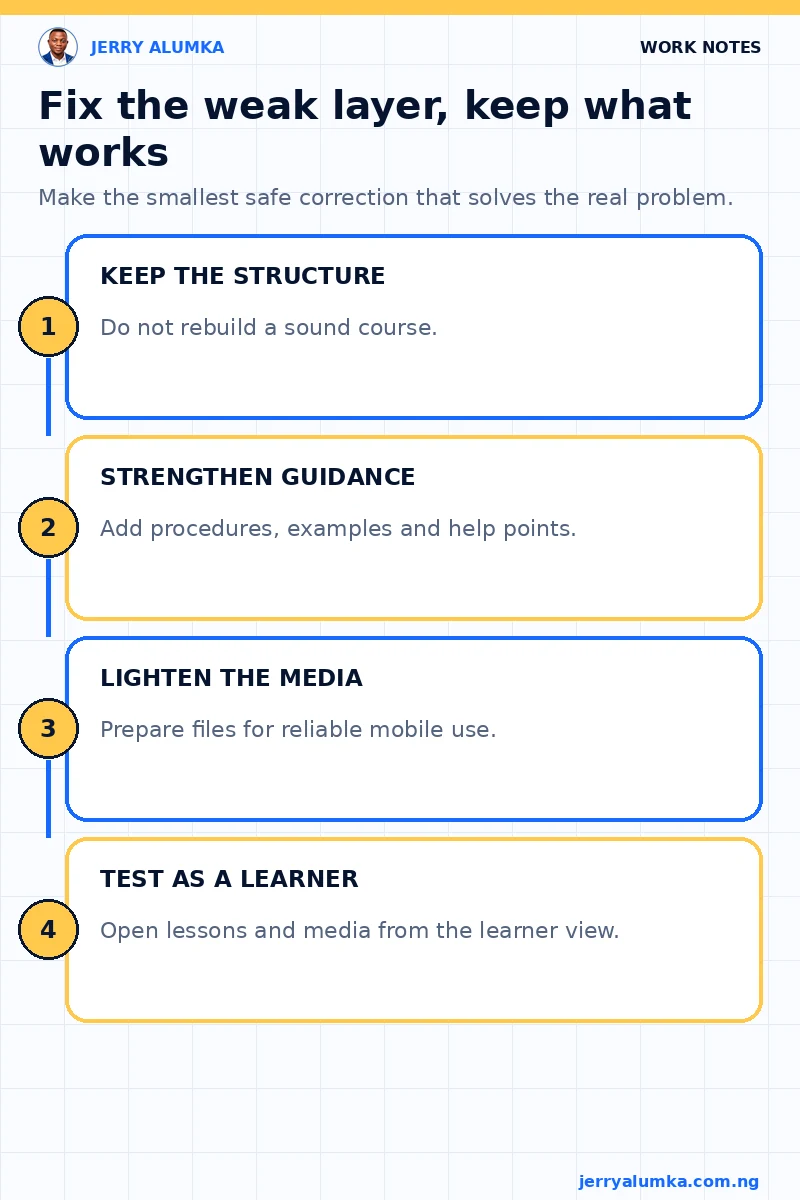
The course didn’t need a new structure. Rebuilding it would have introduced fresh risk and delayed the work. The structure was already sound, so I kept it and corrected the weaker layer inside it.
I supervised a rewrite of the thin sections, cleaned out wording that belonged in production notes and restored the lesson pages as proper training. The opening video was also reworked for more reliable mobile loading instead of being left as a heavy file that happened to exist on the page.
Then I checked the course from the learner view. I didn’t rely on an administrator message saying the update had saved. I opened the lessons, tested the media and confirmed that the original course order remained intact.
A clean review cannot prove learning
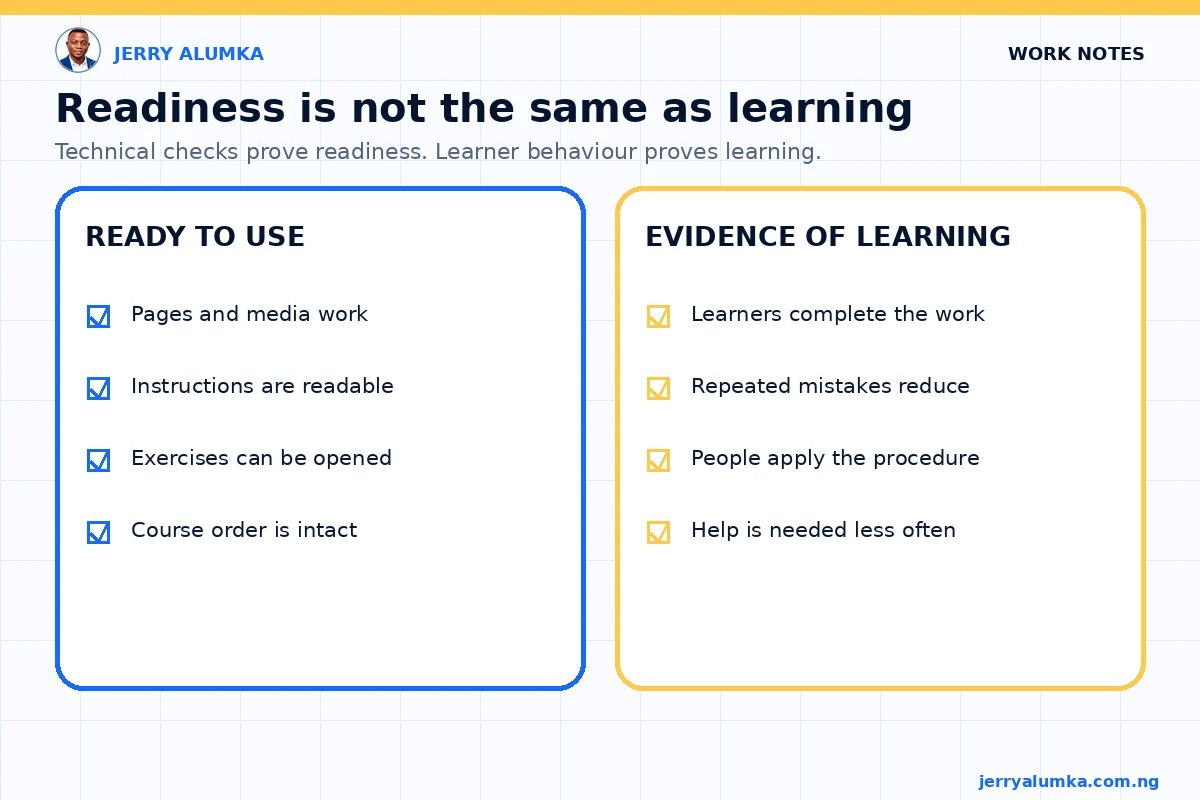
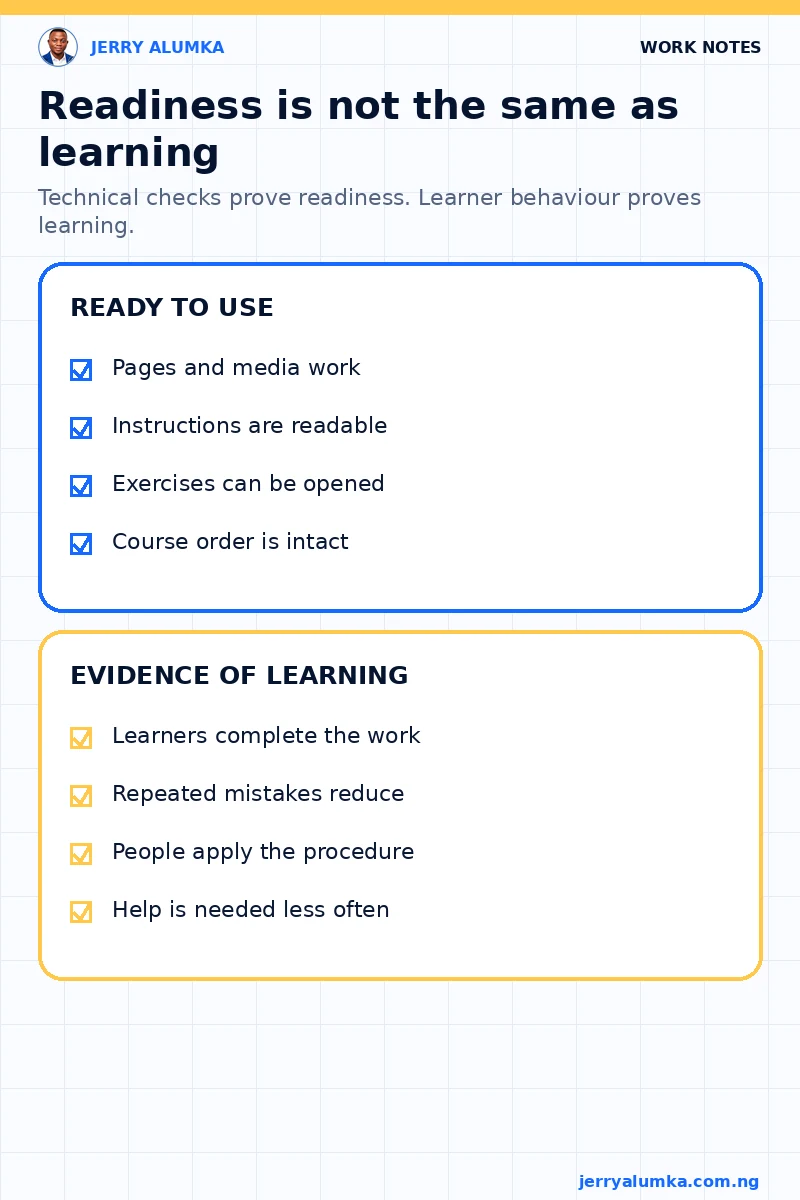
The corrected course is easier to follow, but I would not claim that a clean review proves people have learned. It proves the material is present, readable and usable. Learning needs a different kind of evidence.
The next signals are practical: where learners slow down, which questions they repeatedly miss, whether exercises are completed properly and whether people can apply the procedure later without constant help.
I now record two separate approvals. One confirms that the course is properly built. The other checks whether a learner can understand the instruction, practise it and find the next step. Later learner behaviour may still prove the second approval wrong, which is why I keep that limit visible.