
How could a group find people who had missed several weekly meetings and might need a call? The first suggestions were about an app: scan a code, tick names on a phone, then send reminders.
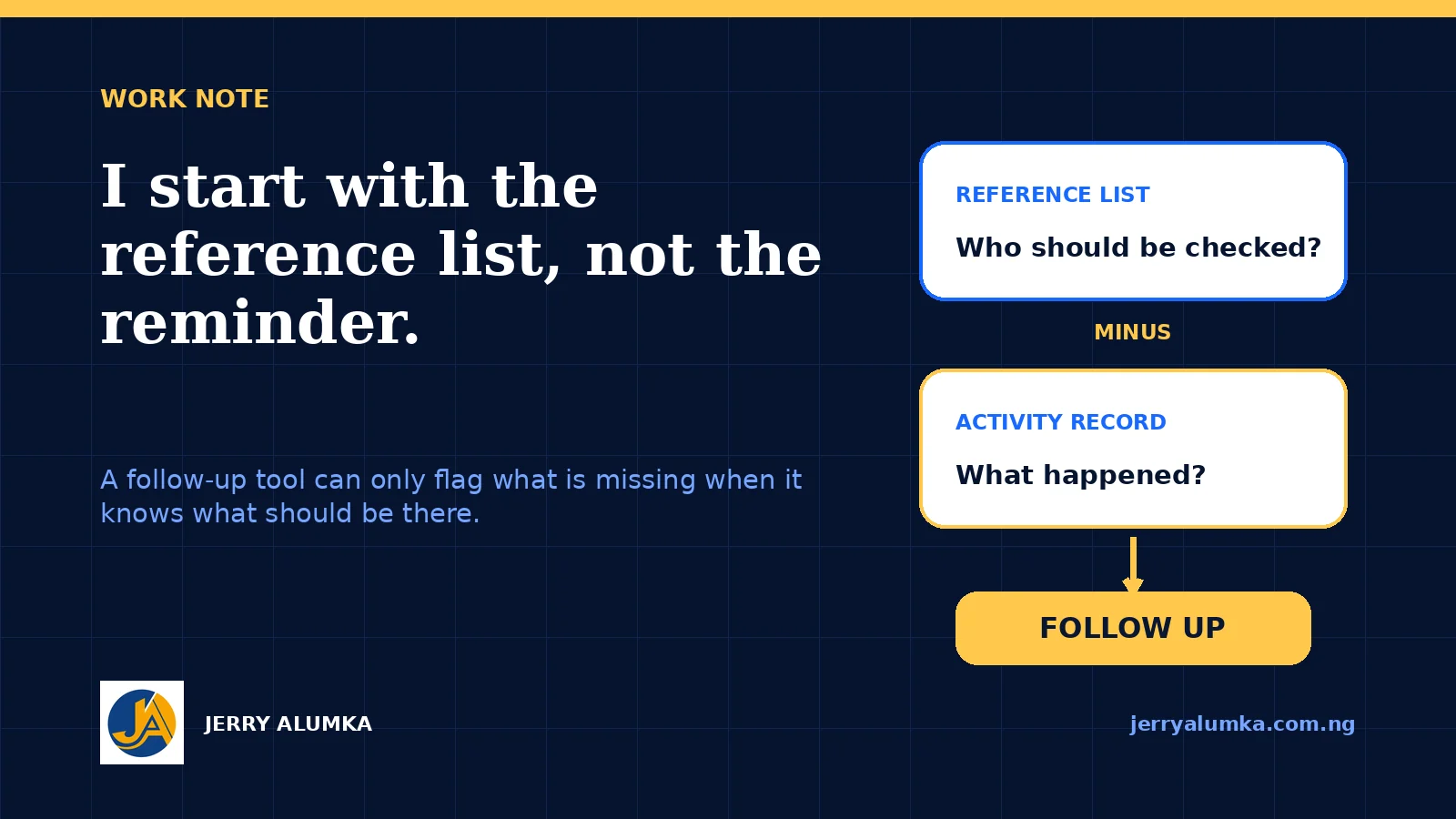
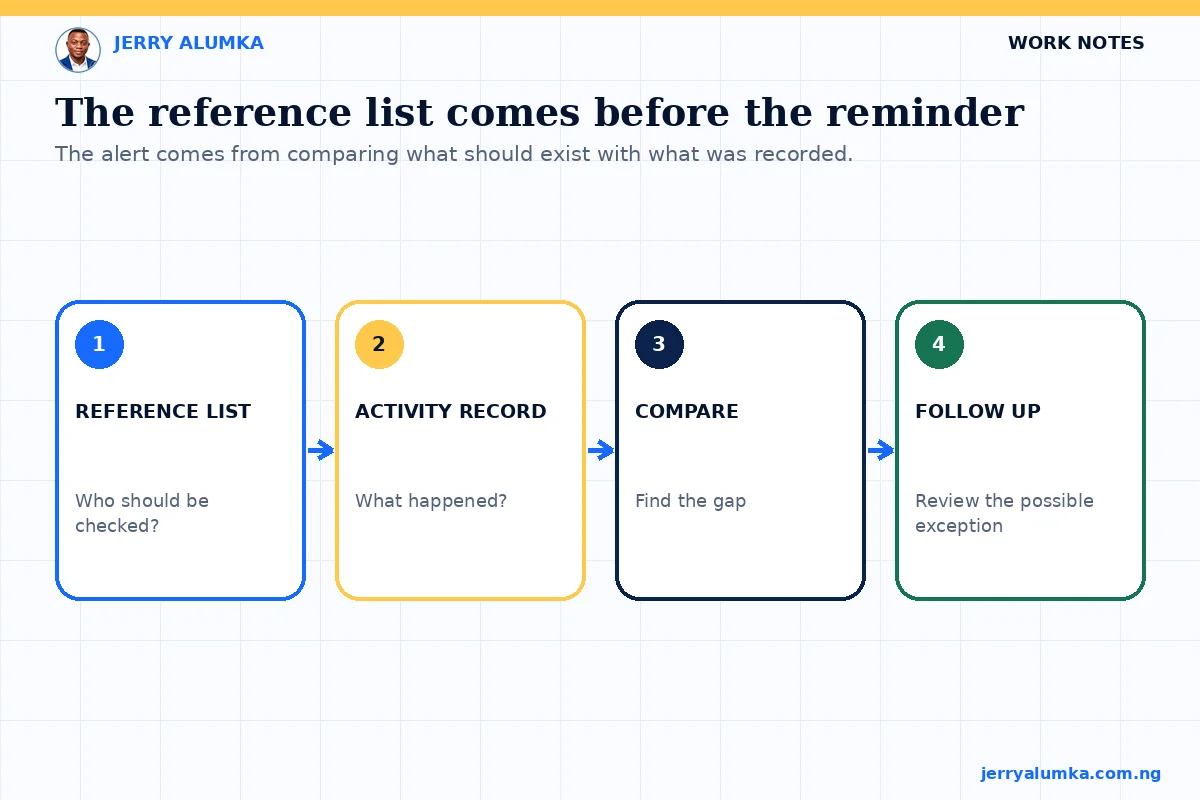
But the app was not the first problem. A system cannot tell you who is absent until it knows who should be present. I began with the complete list of expected people, then compared it with the attendance record.
The app was not the starting point
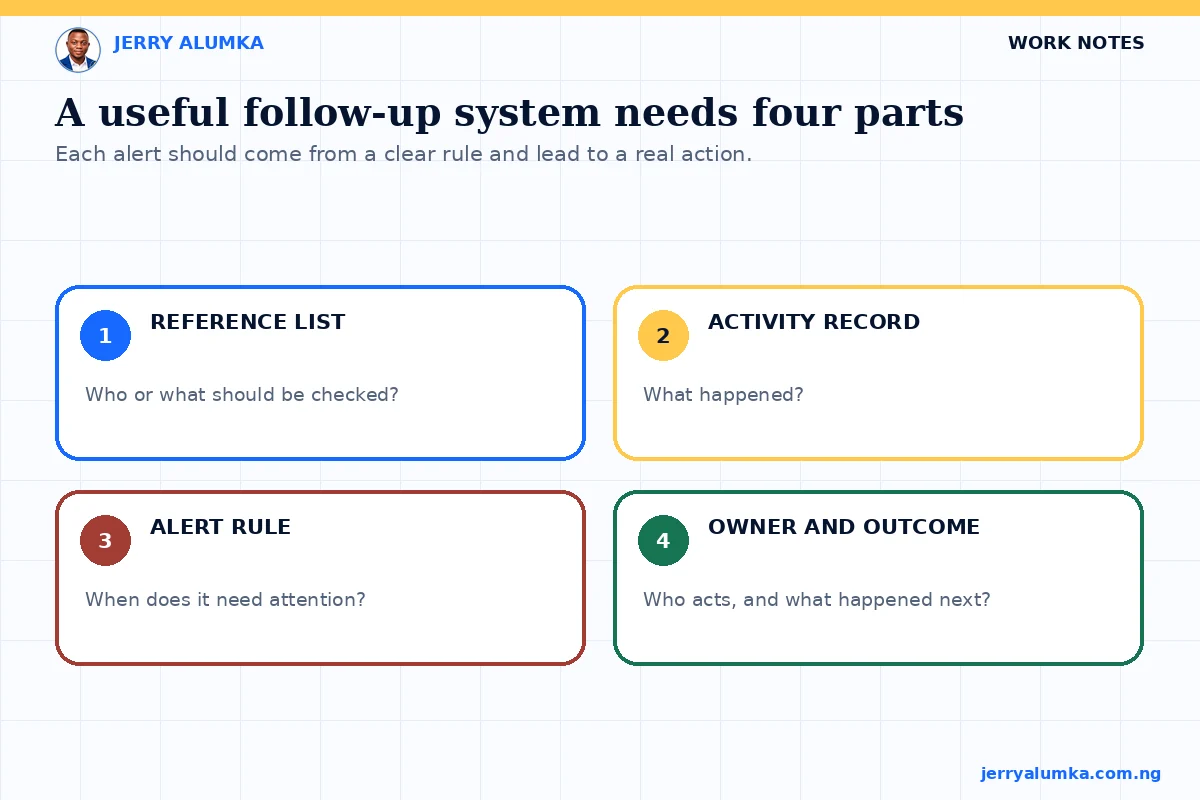
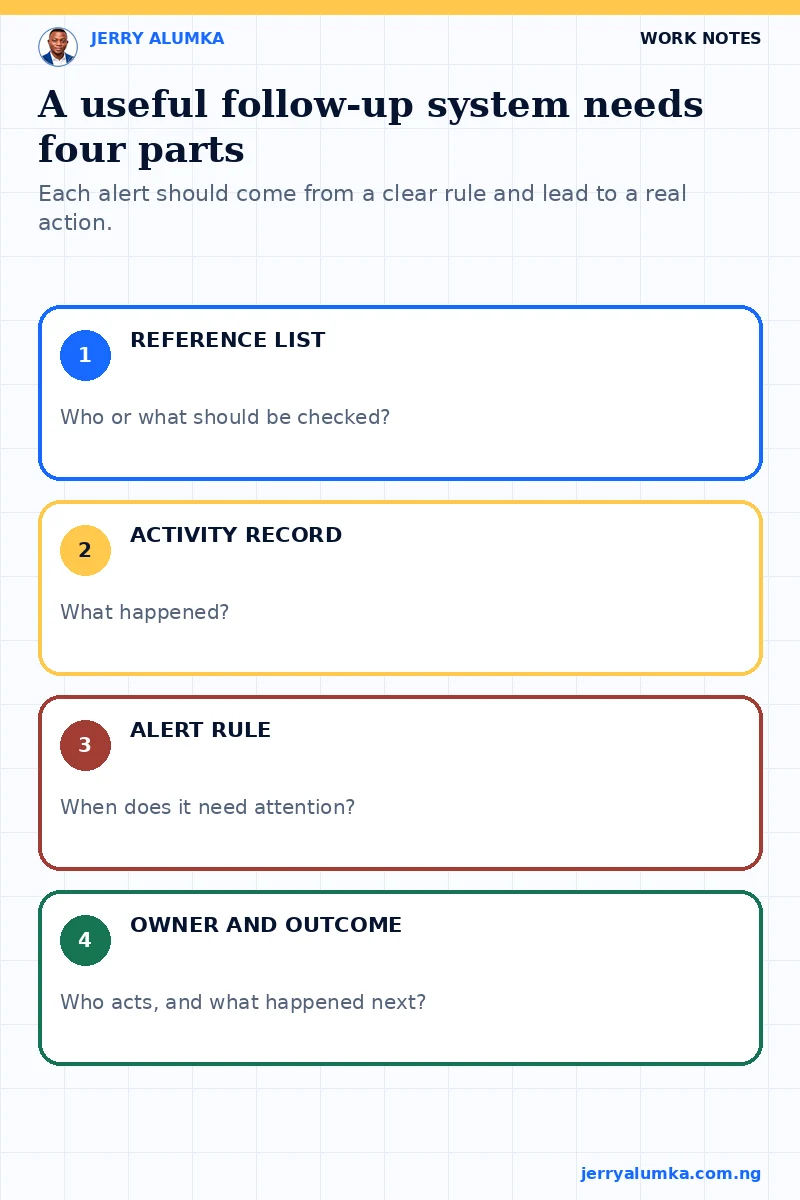
A reference list is the complete set of people or records the system should check. For attendance, it may be a member register. In marketing, it may be every lead assigned to sales. In customer service, it may be every open complaint waiting for a response.
An incomplete list can produce a clean report while leaving people out. The tool is answering a smaller question than the team thinks it asked.
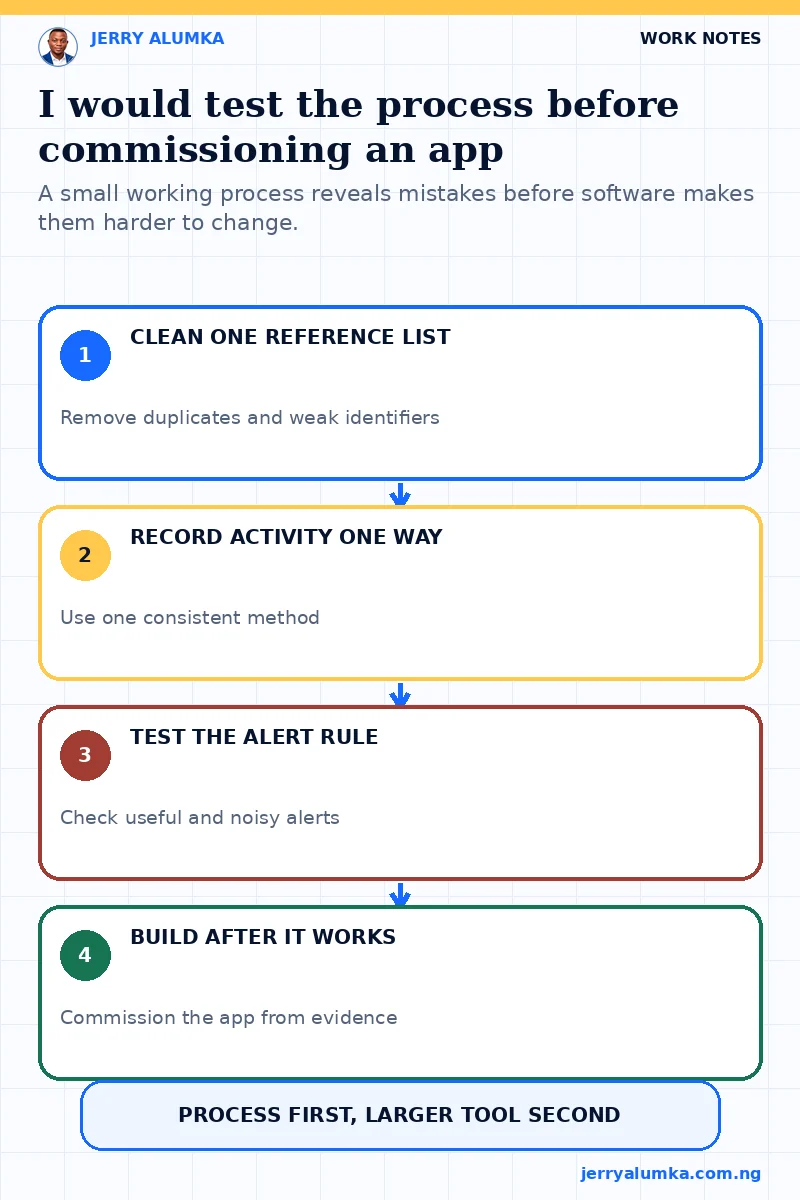
Before discussing automation, decide who belongs on the list, what activity should be recorded, how often to check it and what action should follow a real problem.
An activity record shows only one side
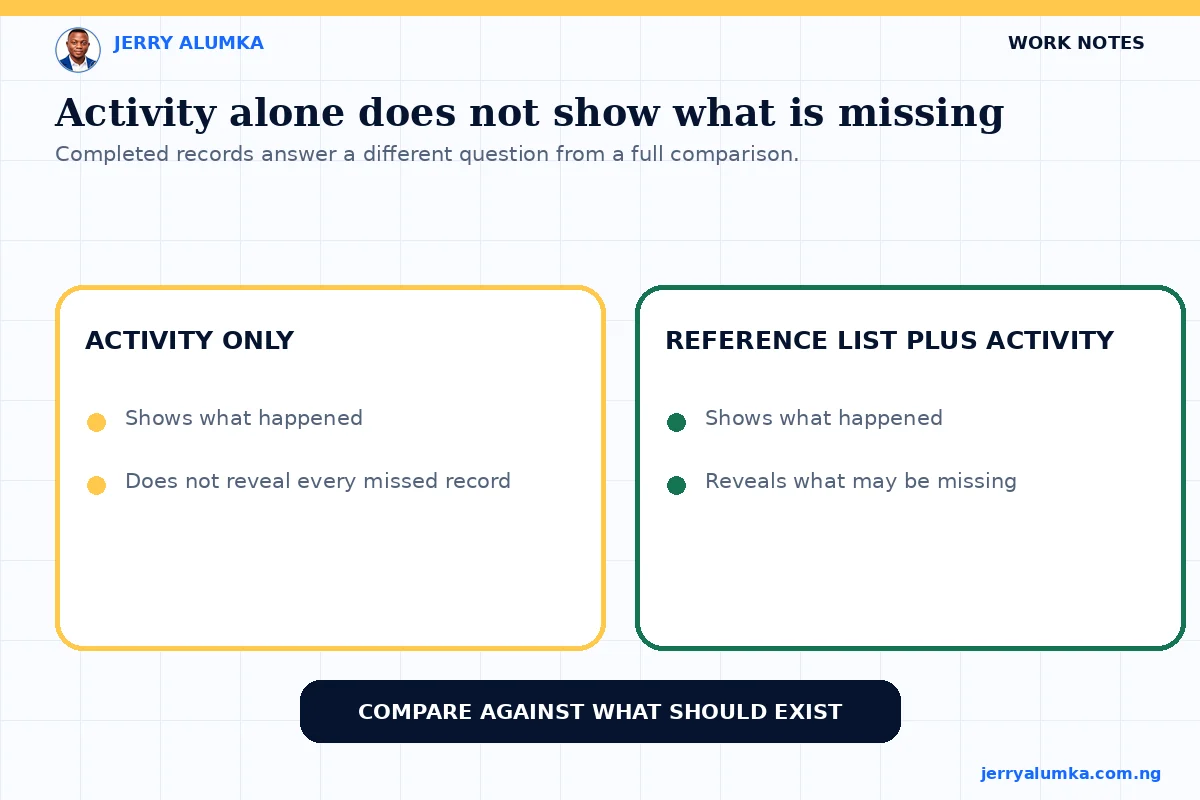
An attendance sheet shows who checked in. It cannot reveal every absence until you compare it with the member register.
The same problem appears in business. A sheet of leads contacted today shows completed activity. It does not show untouched leads unless there is a complete lead list beside it.
Completed work shows what happened. The reference list shows what should have happened. A reliable alert needs both.
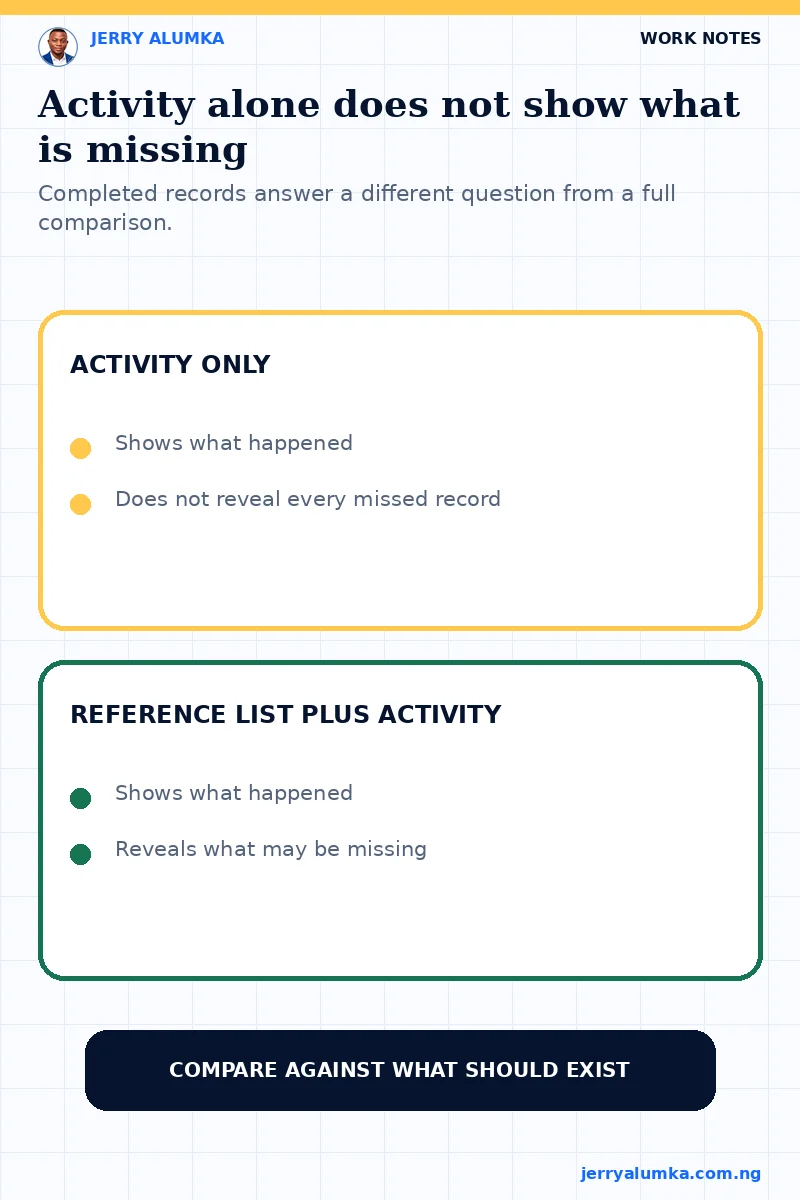
What had to exist before an alert
Each record needs a steady identifier. Names alone are weak because people shorten them, spell them differently or share the same name. A member number, phone number or enquiry ID can help.
The team also needs one consistent way to record activity. This can be an usher ticking a name, a salesperson changing a lead status or a customer care worker closing a response task.
Next, set the alert rule. One missed meeting may be normal; two in a row may deserve a call. A sales lead left untouched beyond an agreed time may need attention. The rule should match the risk without producing constant warnings.
Finally, assign every alert to a person and record the result. Without ownership, the dashboard only creates another list to look at.
A simple trial exposes ordinary problems
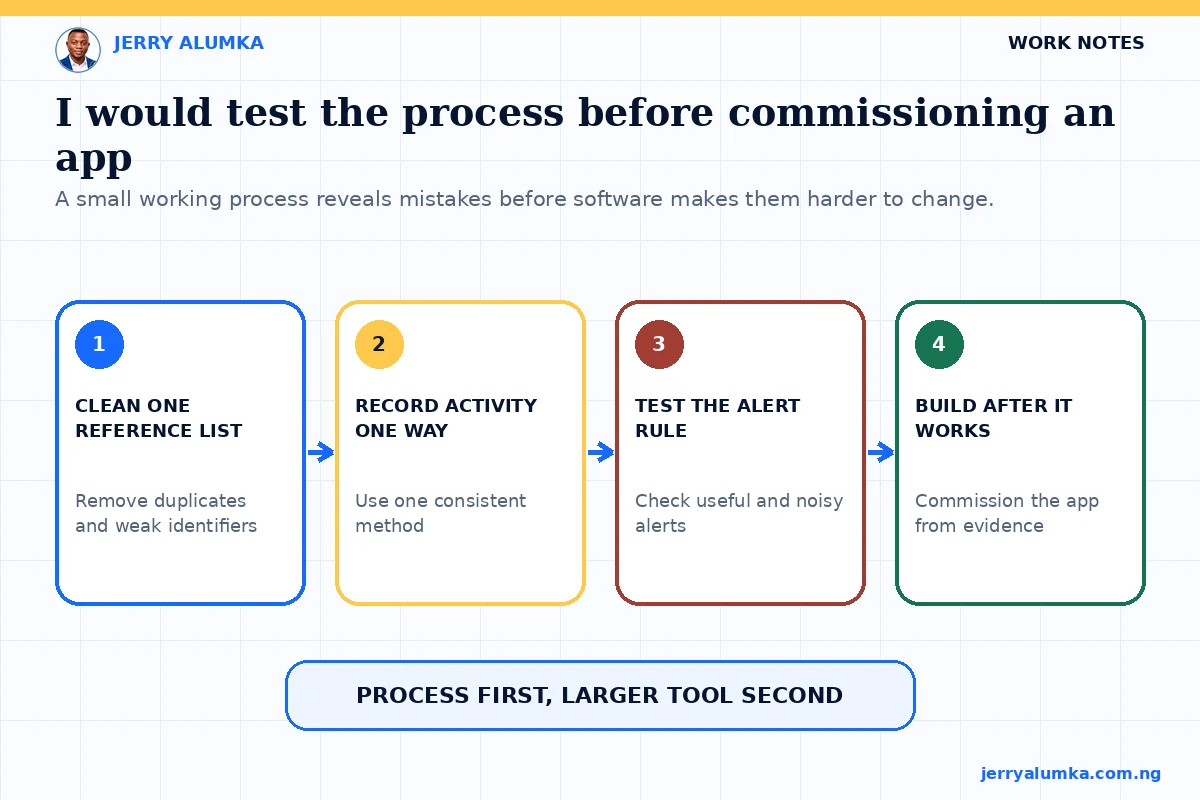
Begin with one clean reference list, a simple form and a comparison sheet. Run it long enough to find duplicate names, late updates and alerts that do not help.
Two people may share a phone number. A new member may not yet be on the register. Someone may record attendance a day late. Agree on how to handle these ordinary cases.
Build a larger app only after the list, recording method and alert rule work together. Otherwise, software will make a weak process run faster.
Why the reminder had to come last
Define the full group, the activity being recorded and the problem that needs attention. Then decide who will act and what result that person must record.
The reminder is the visible part, but it can only be trusted when the list is complete and the activity record is consistent. That is why I start with the reference list.