
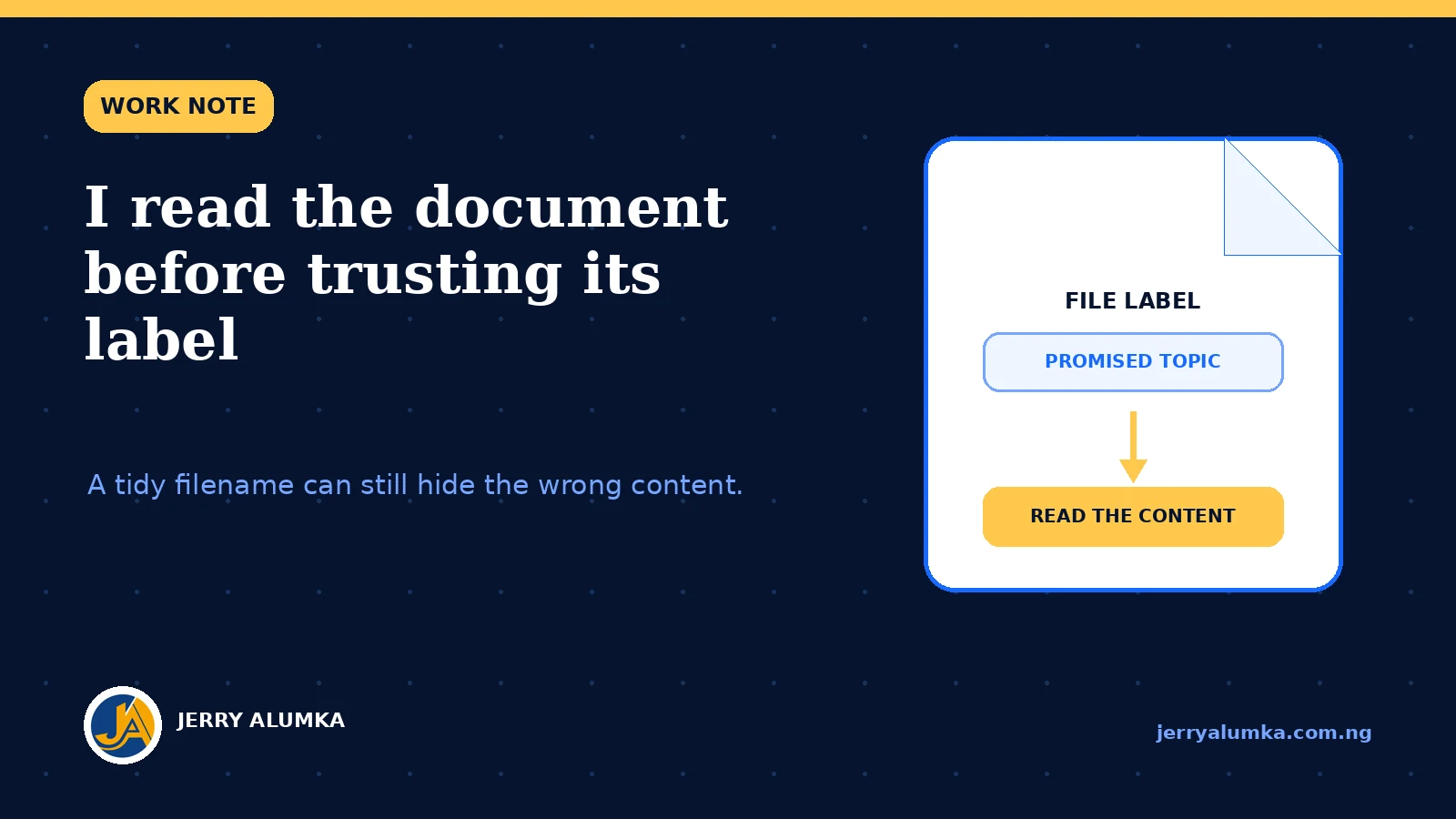
I was turning a folder of business documents into training content when two filenames failed a basic check.
One promised a subject that the document did not cover. Another looked separate but repeated an existing file and added a conflicting instruction. If I had trusted the names, both would have entered the training system under the wrong headings.
I stopped the build and read the documents properly. I needed to know what each file said, where it belonged and whether it was safe to teach.
The label was a clue, not evidence
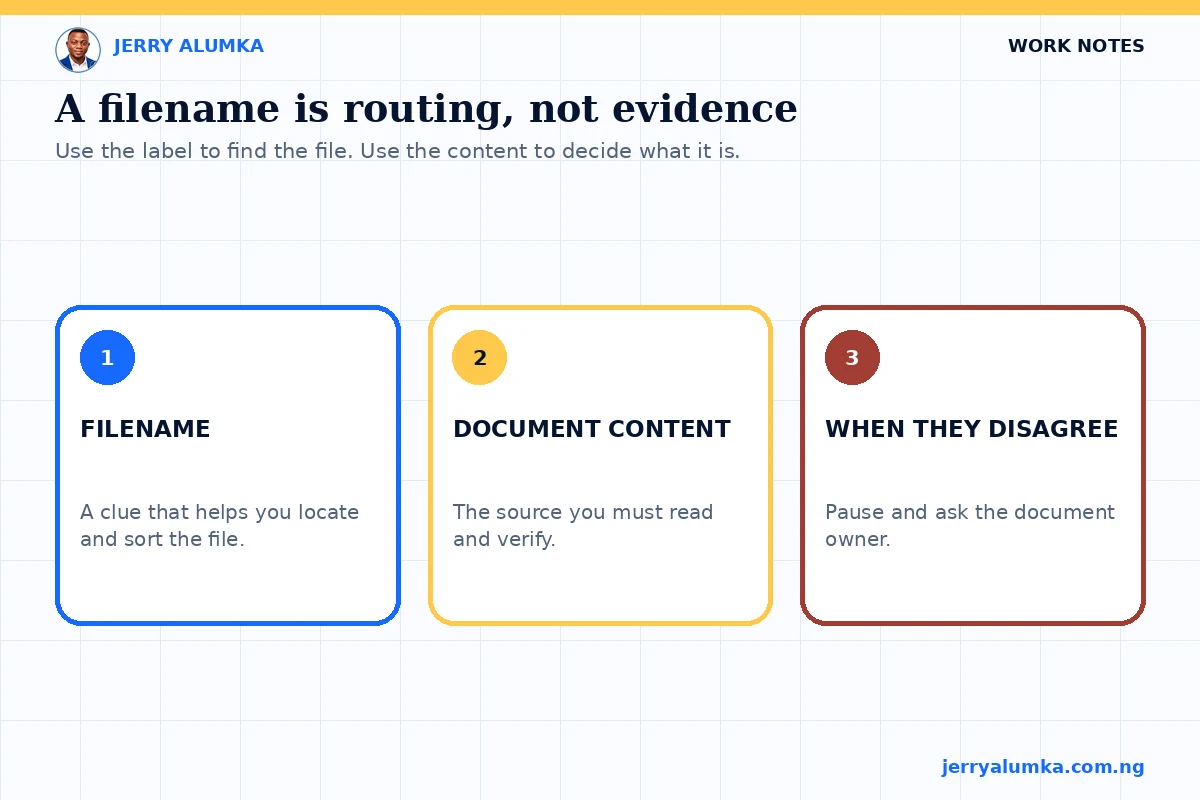
It does not prove what the file contains. Somebody may rename a document badly, copy an old version or leave a temporary label in place.
Once a wrongly labelled file enters a course, knowledge base or automated process, the error becomes easier to repeat. I treat the filename as a clue and the document as the source. If they disagree, I wait for the owner to confirm the intended title and version.
How I checked the folder
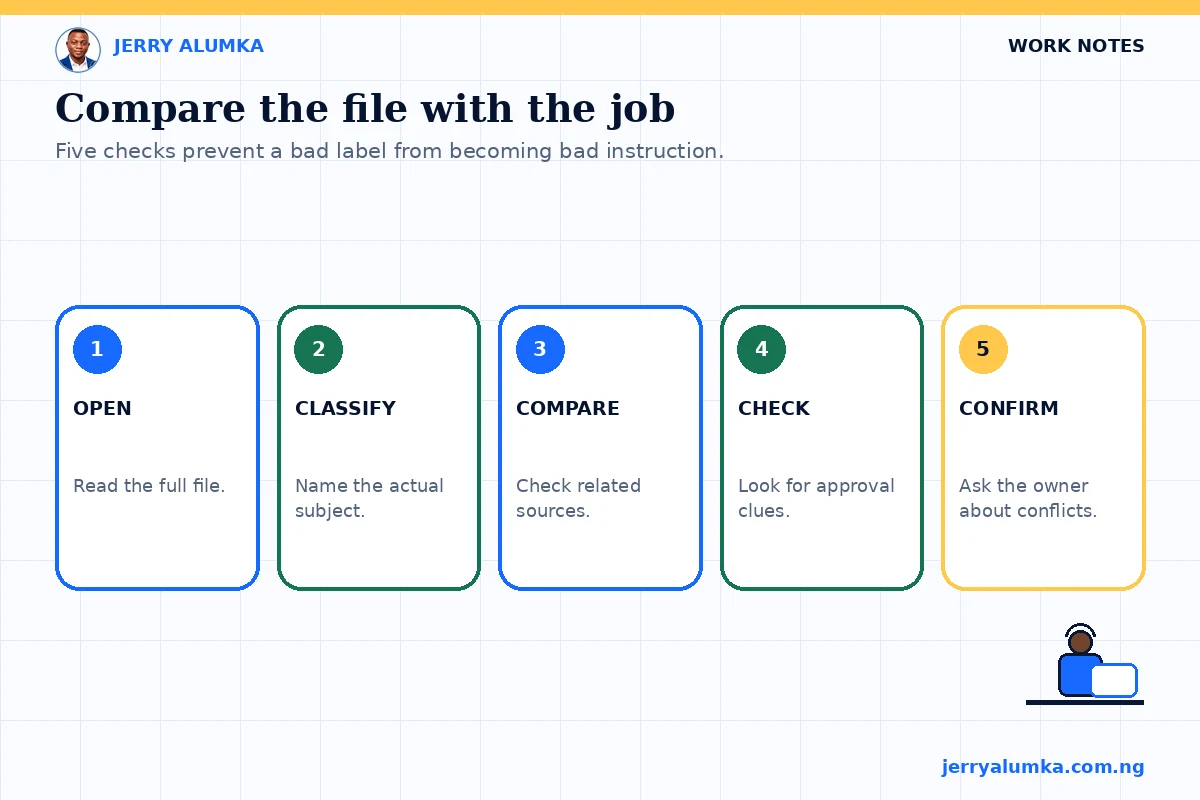
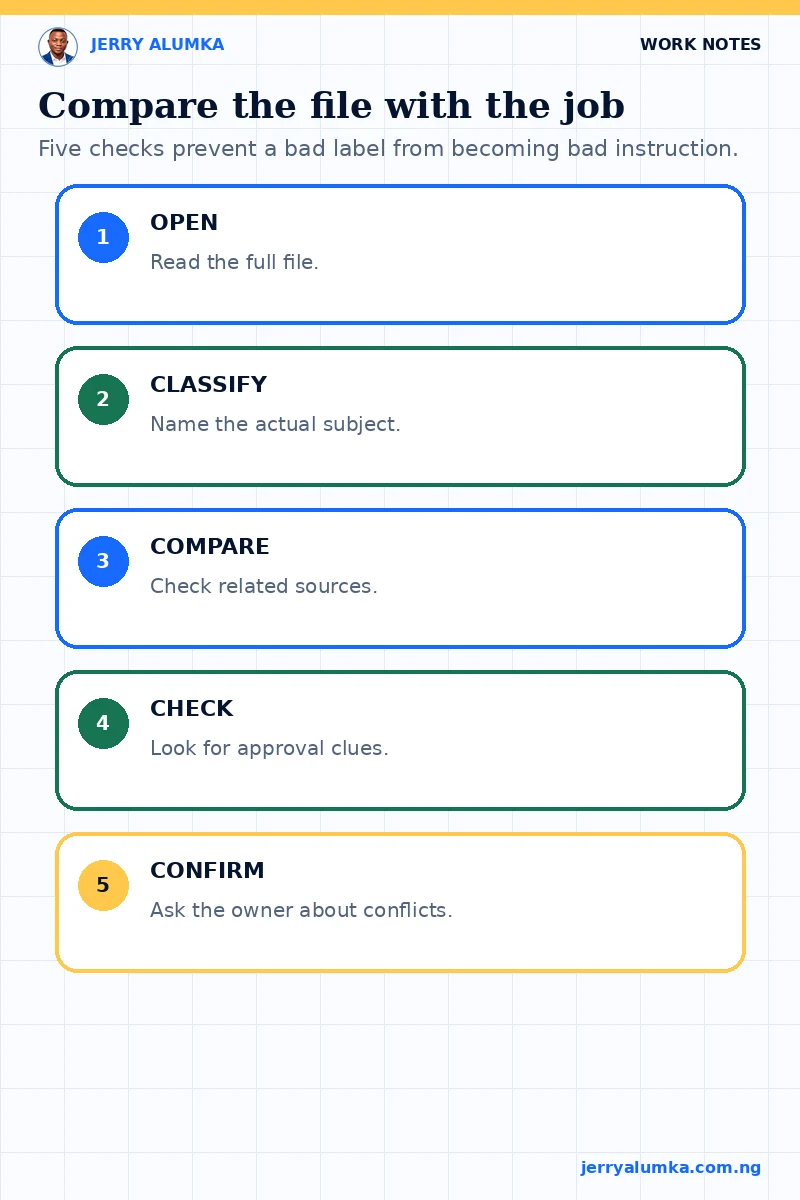
I opened every supplied file and recorded its real subject. Then I compared it with the filename, related documents and the place where it was meant to appear.
I checked approval dates, signatures, repeated paragraphs and instructions that conflicted with another file. I was not deciding which policy was correct. I had neither the authority nor the evidence. My job was to show the conflict before anybody relied on it.
Finding a conflict does not give me permission to settle it by guesswork. It tells me what to ask the document owner.
An incomplete build was the safer build
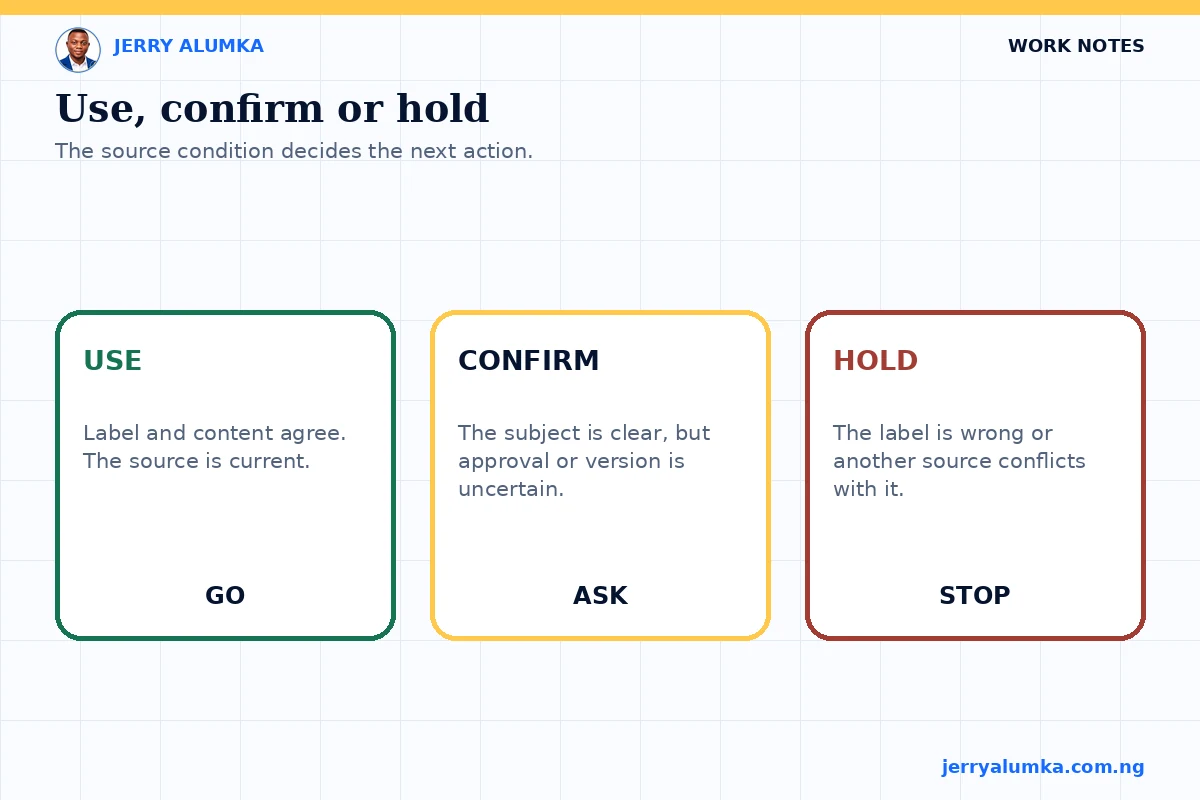
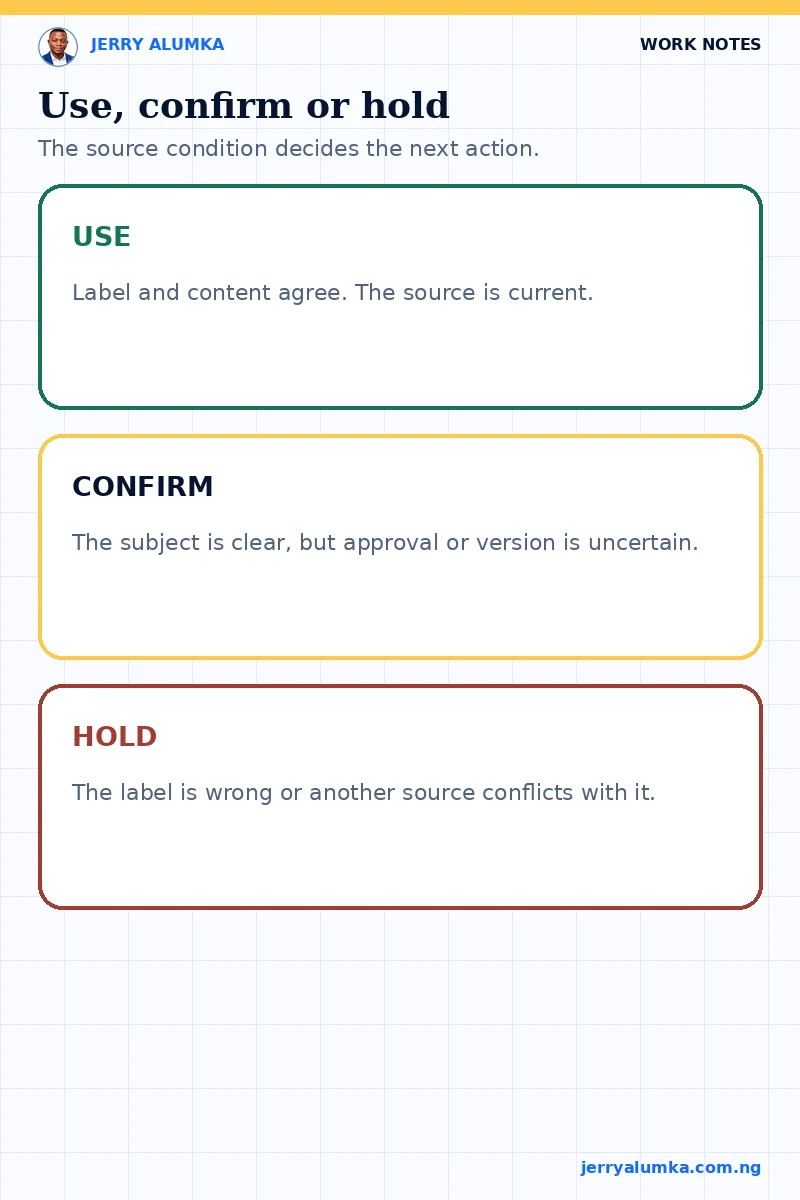
I used the documents whose titles and contents agreed, but kept the two mismatched files out of the live learning path. I recorded their contents, the duplication and the point that needed confirmation.
The first version became less complete but more reliable. A missing lesson is visible. A wrong lesson can look finished and teach the mistake with confidence.
I also kept the wider system hidden while the unresolved material was under review. Work could continue without presenting unfinished material to its audience.
“Final” can still be wrong
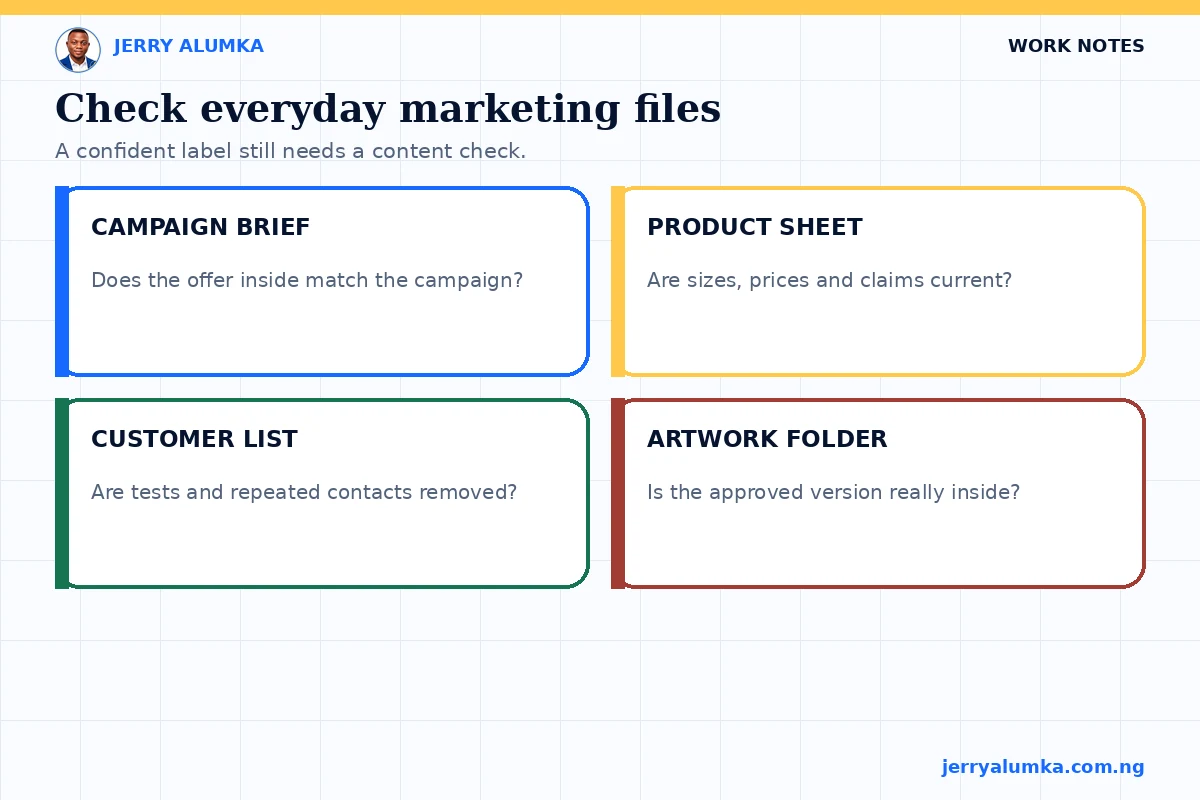
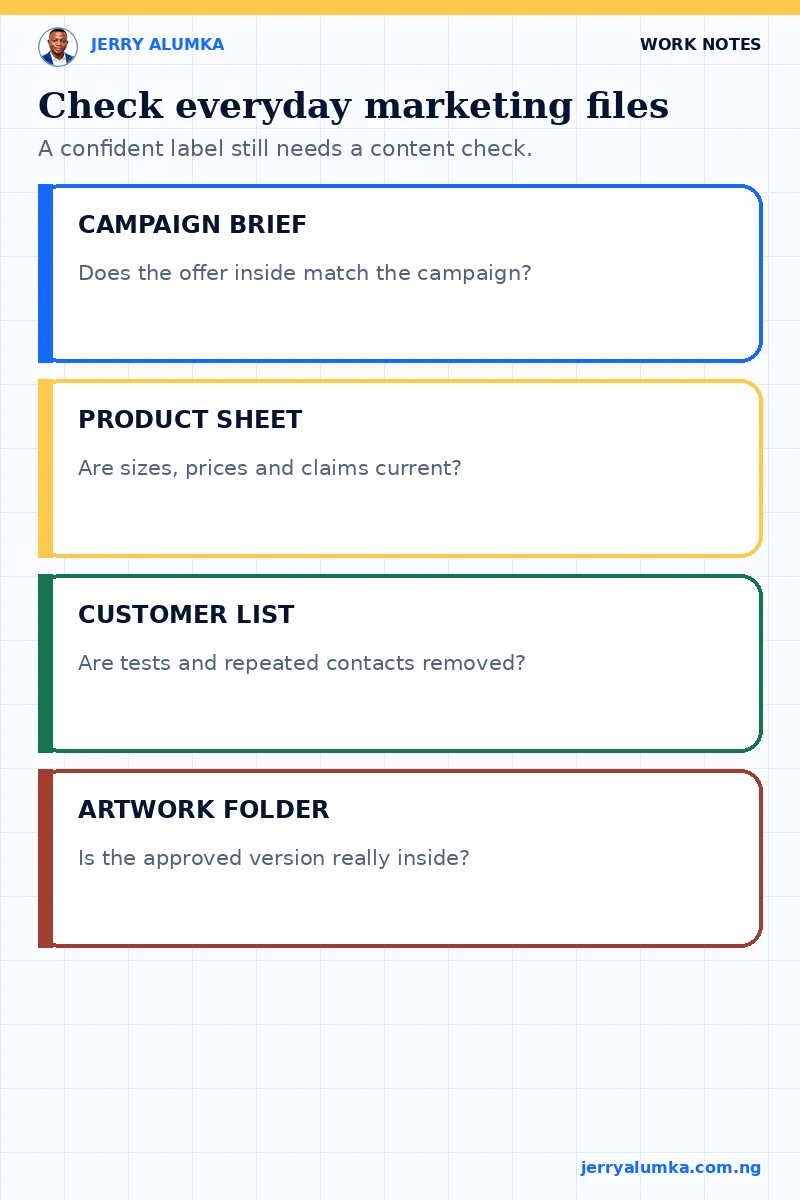
A file called final may still contain a draft. A sheet called leads may include tests and duplicates. An approved artwork folder may contain old prices.
Before publishing or automating from a supplied file, I ask what it is really about, whether it matches its label, whether another source disagrees and who can confirm what is unclear.
Imagine a price list called Final October Prices. The first page may still say September while another file gives different figures. Do not choose one price by guesswork. Hold the file back and ask the owner which version is current.
This check matters before uploading documents to a course, staff knowledge base or AI system. In this case, the two files remain unresolved. The useful result was finding the problem early and refusing to turn uncertain material into instruction.