
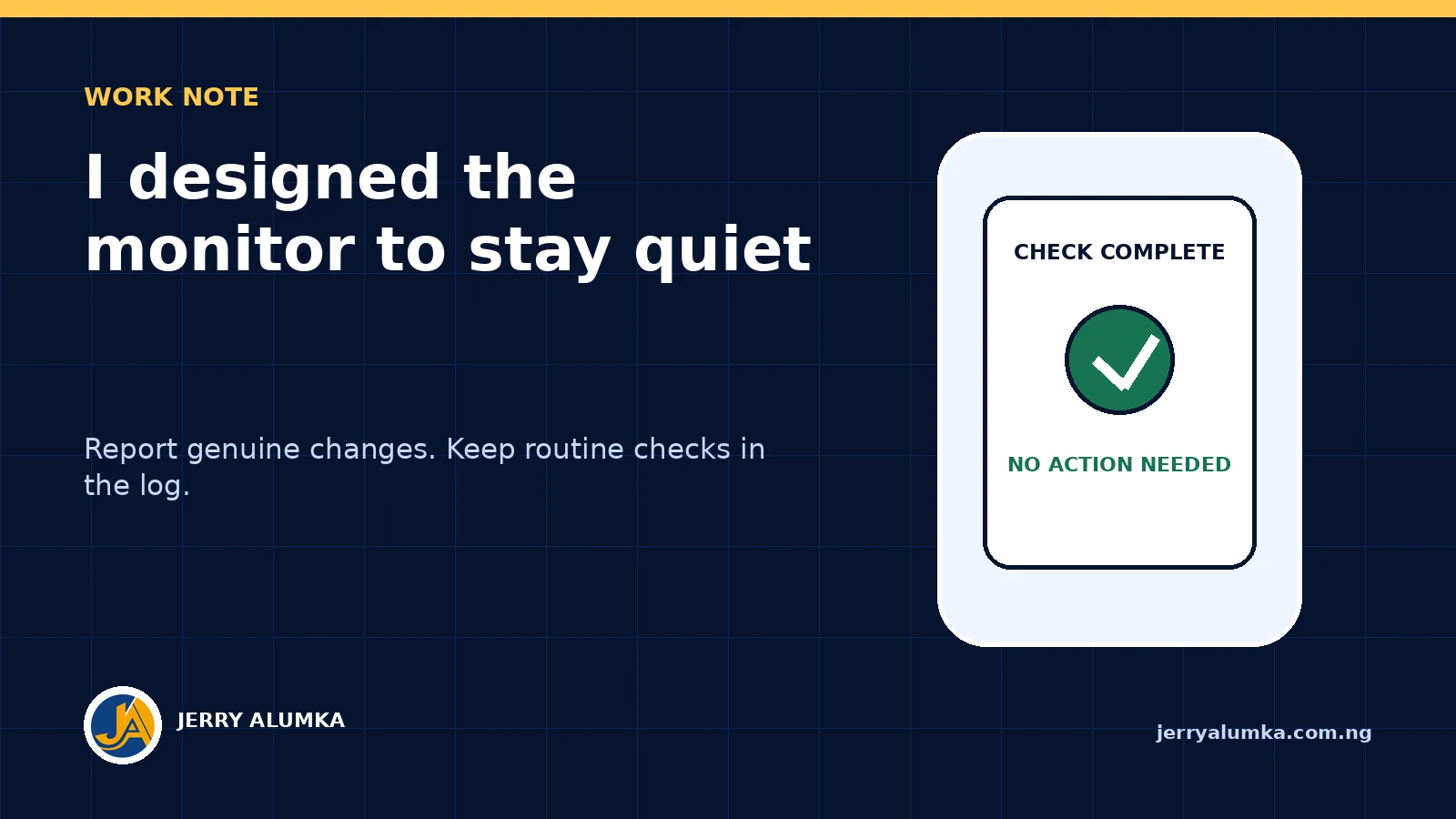
Several of my recurring social media checks finished today without sending an alert. They had not failed. They found no customer comment that had waited too long for a reply.
That silence was the intended result. If the system announces every routine success, its messages soon become background noise. The one warning that needs action then lands in an inbox people have learned to ignore.
The monitor has one reason to interrupt
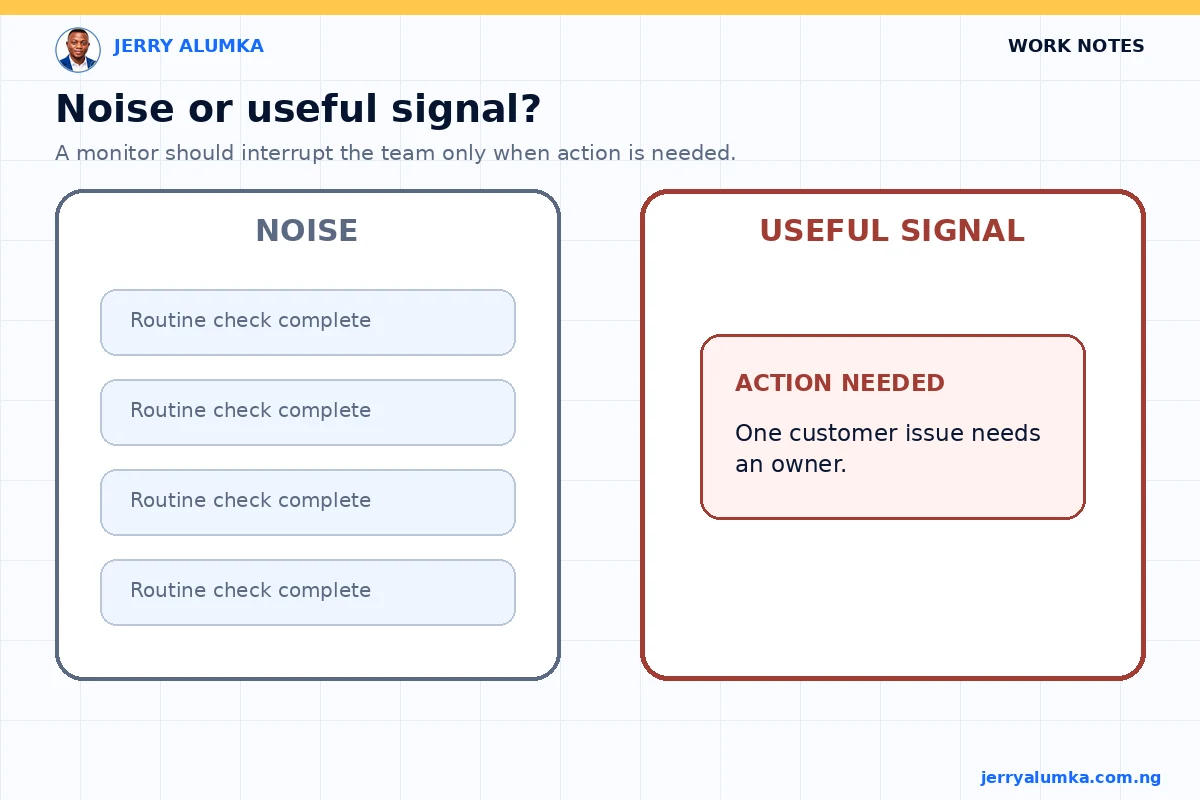
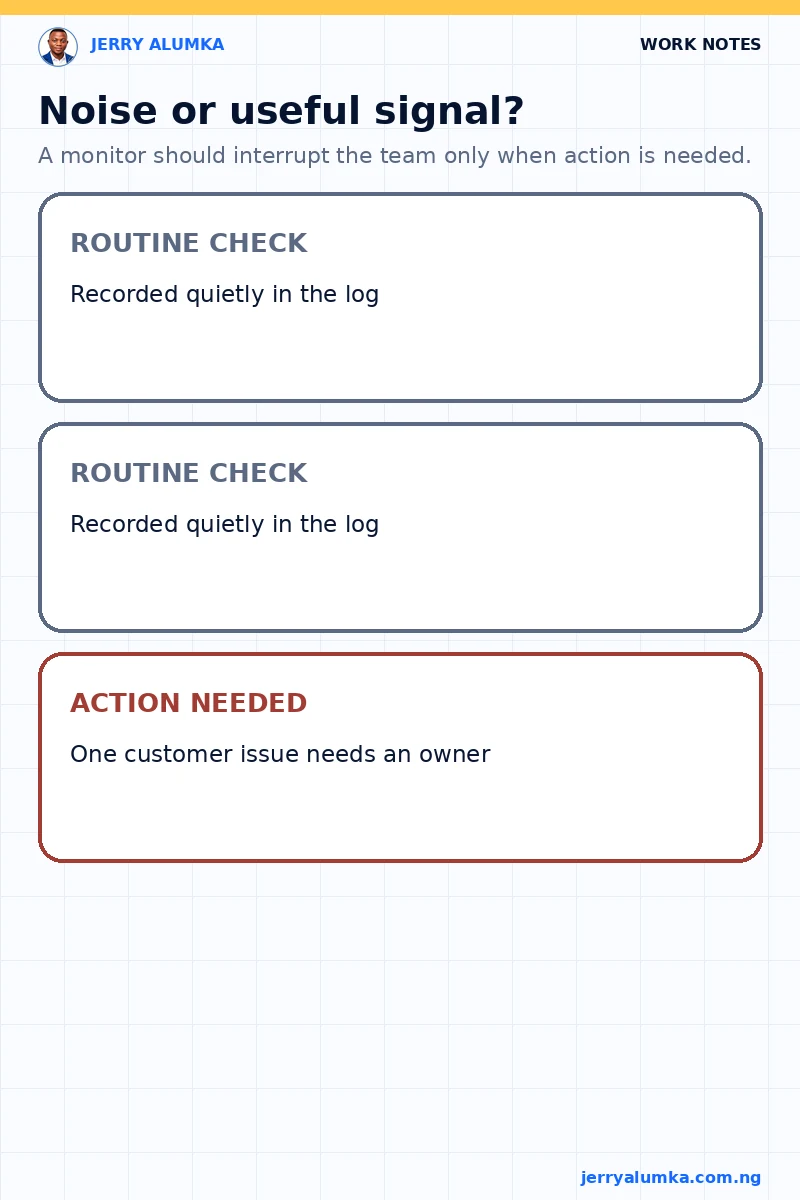
I want a monitoring system to earn attention. If a customer question has crossed the response limit, tell me. If access to a platform has failed, tell me. If a new issue needs an owner, tell me.
If the check ran properly and found nothing that needs action, it can stay quiet. The record of the check can remain in the system for audit, but it doesn’t need to interrupt the person responsible for the work.
This matters in marketing because we already work across several noisy channels. Ad platforms send next steps. Social platforms send engagement notices. Email brings reports, approvals and customer messages. Adding another stream of empty status updates doesn’t create control. It makes the real signal harder to see.
Silence only works with clear rules
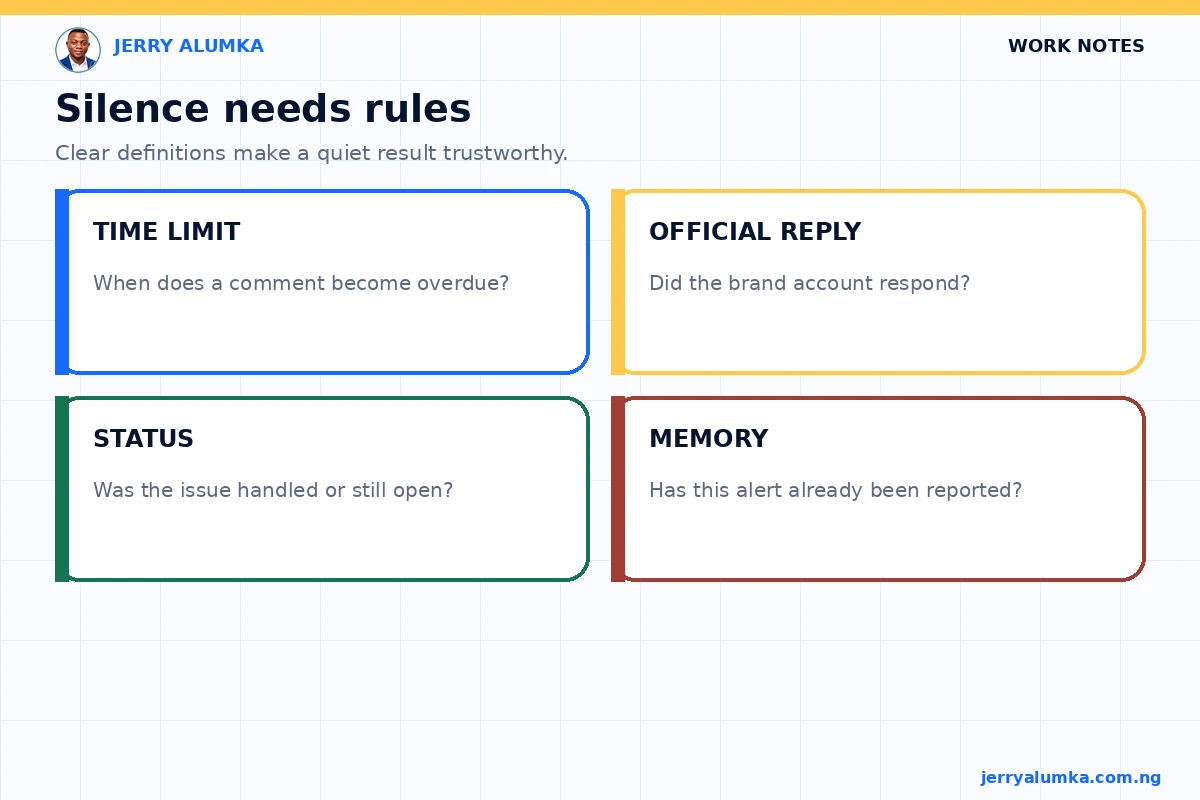

Quiet automation is only useful when the rules are clear. The system must know what counts as late, what counts as handled and which account is allowed to reply on behalf of the brand.
For example, a customer comment should not be marked as handled simply because another user replied underneath it. The monitor has to look for a reply from the official account after the customer’s message. It also needs a time rule. Without that, the words “overdue” and “unanswered” can mean different things to different people.
I also keep a small memory of alerts already reported. Otherwise, the same old comment can return every hour and create the impression of several problems when there is only one unresolved item.
A quiet result is different from a failed check
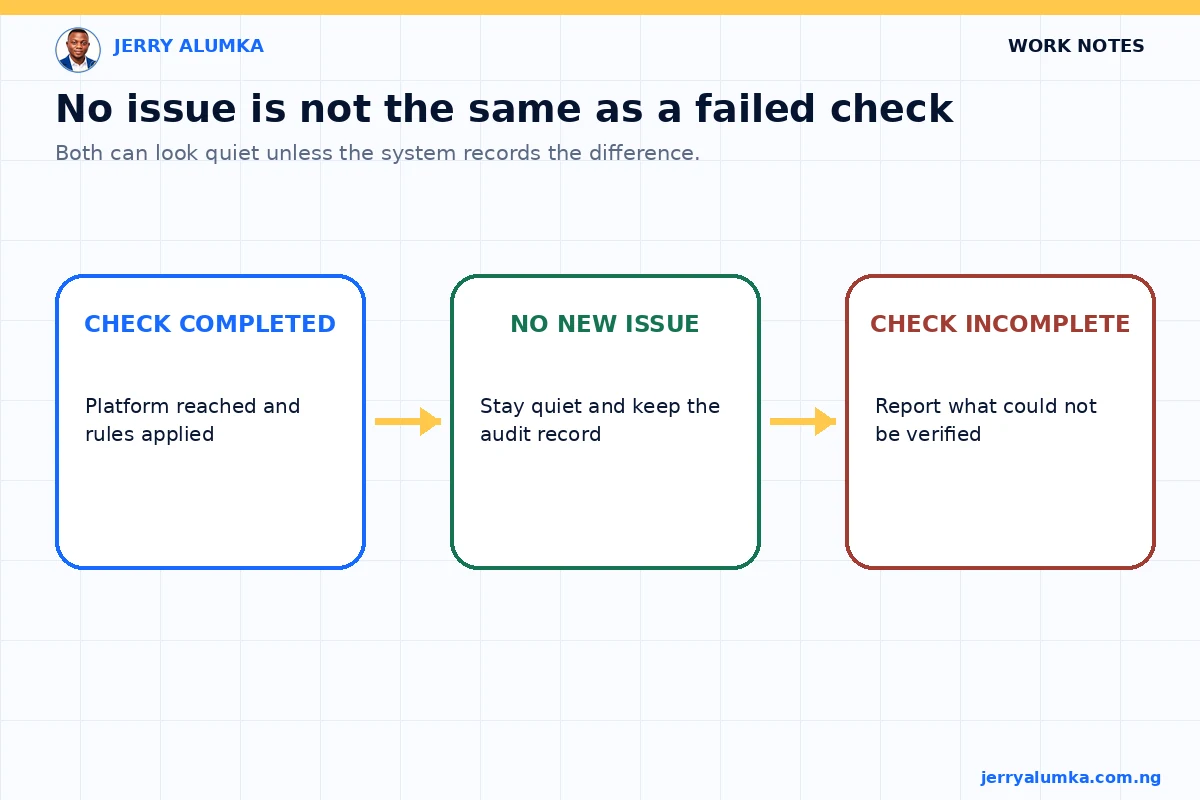
This is the part that can easily go wrong. A silent result and a failed check are not the same thing.
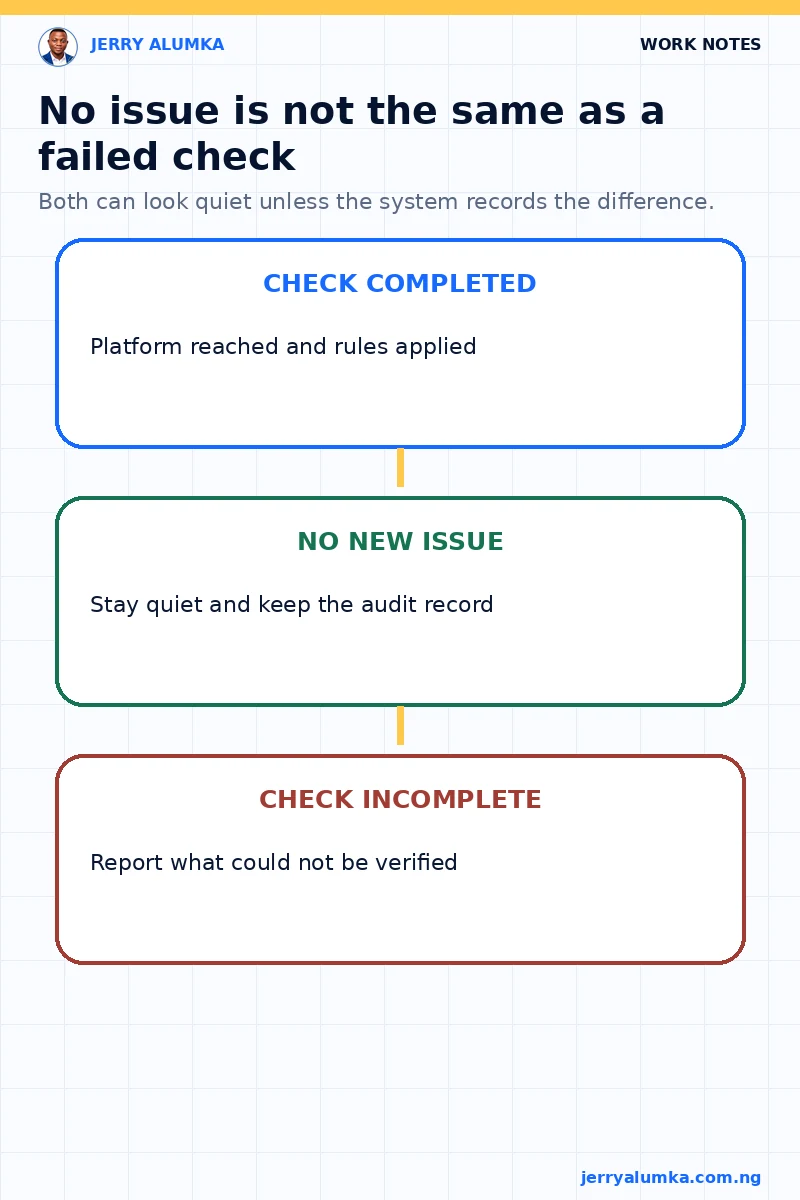
A healthy silent result means the system reached the platform, reviewed the available comments, applied the response rules and found nothing new to report. A failed check means it could not complete one of those steps. Perhaps access expired, a platform returned an error or part of the data was unavailable.
I never want a failure to hide behind silence. When a check is incomplete, the system should report the boundary plainly. It should say which channel was checked, which one could not be checked and whether the problem is new or still unresolved. That is far more useful than either pretending everything is fine or sending the same vague warning every hour.
Attention is part of the system
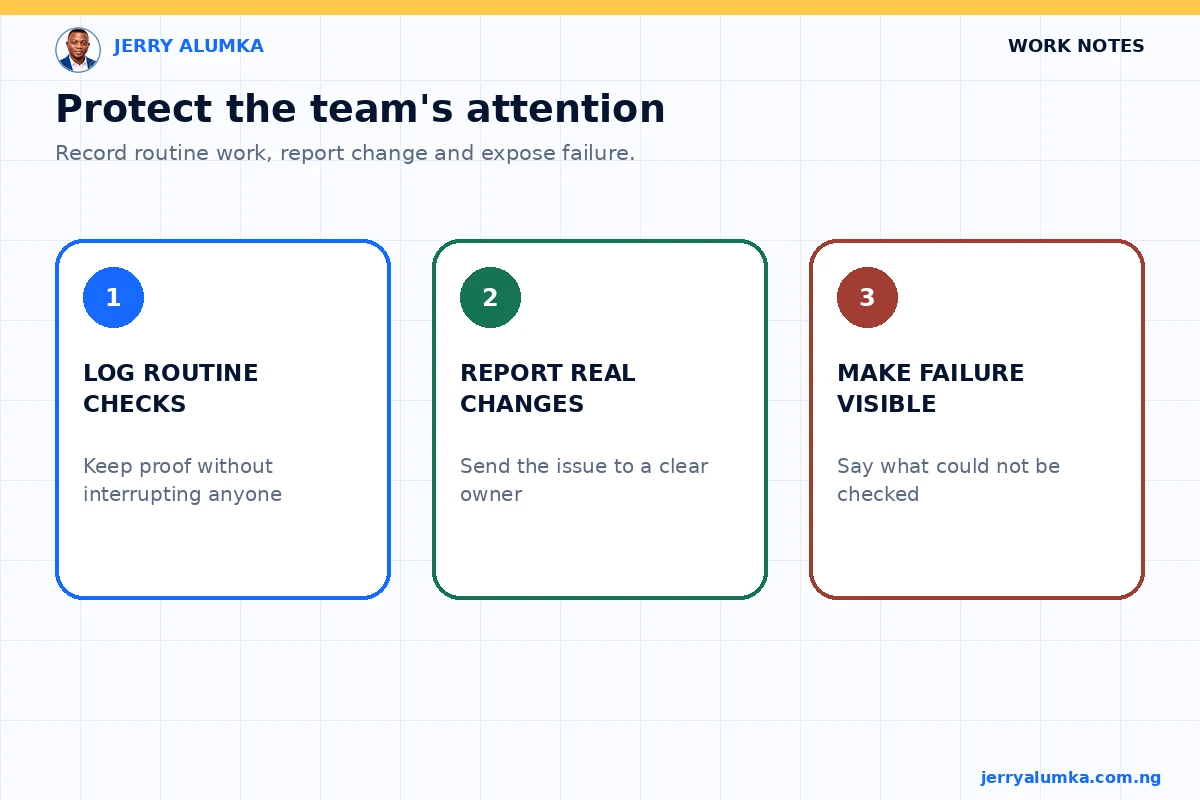

The main resource I am protecting is not computing time. It is human attention.
A good marketing operation doesn’t send more information than the team can use. It sends the right information early enough for someone to act. That means every alert needs a reason, a clear status and an obvious next step.
My rule is now simple: record routine checks quietly, report real changes, and make failures visible. When a monitoring system follows that rule, silence becomes meaningful. It tells me that the check finished and there is nothing new demanding my attention, while the system keeps watching in the background.
When an alert is worth sending
I ask one question: does somebody need to do something now? If the answer is yes, the alert should say what happened, where it happened and who should handle it. If the answer is no, the system can keep the result in its log.
For example, an unanswered Instagram question that is now two hours old may need a staff member. A successful check that found no new questions does not. An expired login also needs an alert because the system could not finish the check.
I also avoid sending the same warning again and again. The system should remember that it has already reported the issue. It can send another alert only when the status changes or the agreed waiting time has passed.
A completed check with no issue belongs in the log. A customer problem or a failed check belongs in front of the person who can act. That distinction is what makes the silence trustworthy.