
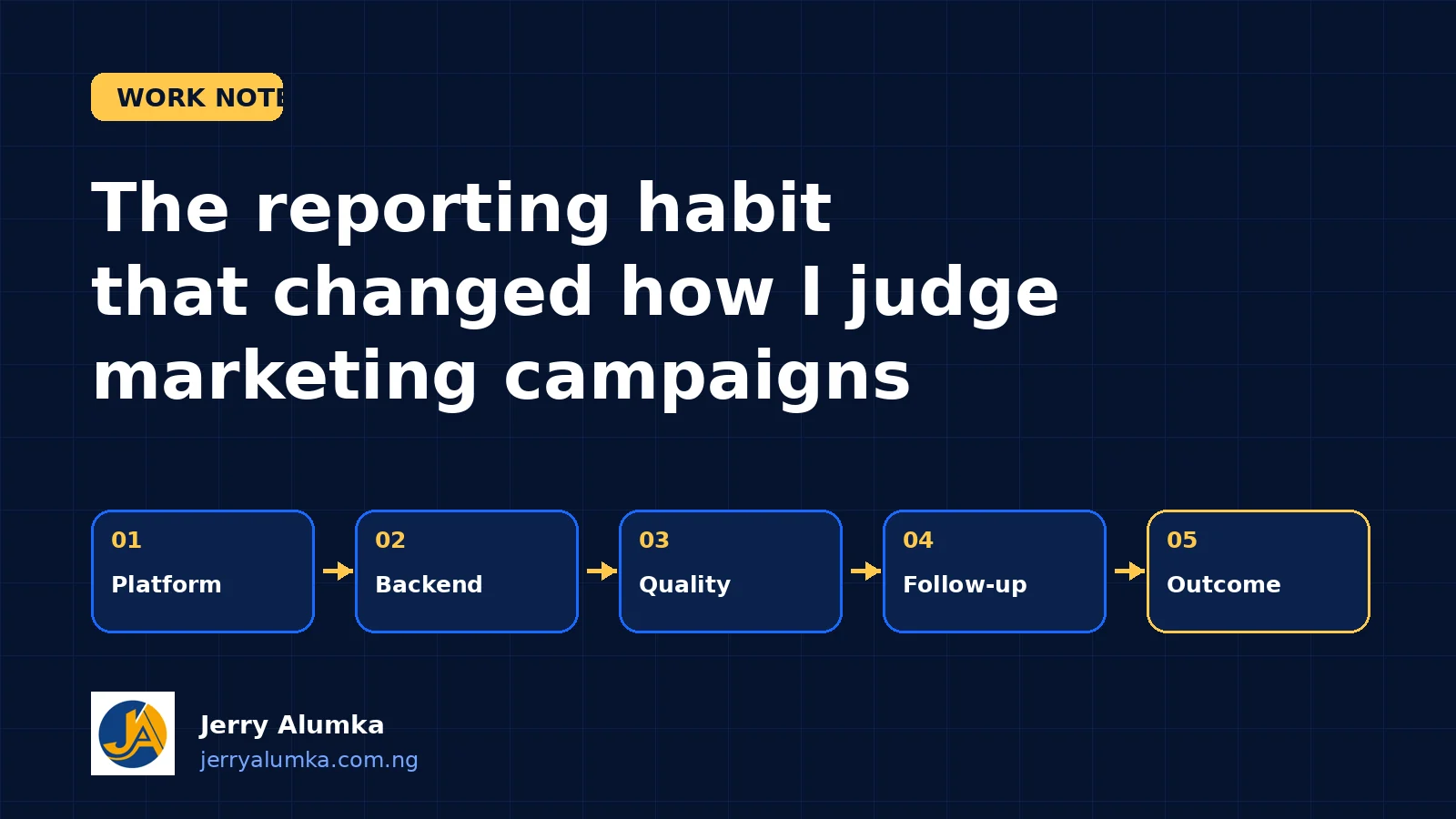
My campaign review used to end too early. I read the advertising dashboard, saw the recorded results and treated that as the answer. I still use Meta and Google for spend, reach, clicks and recorded conversions. Those figures describe platform activity, but they do not show every outcome inside the business. The sales team may receive repeated forms, wrong numbers or people who do not fit the offer. Genuine enquiries may also arrive another way. The habit that changed my reporting was simple: I began comparing the dashboard with the business record before reaching a conclusion.
I still begin with the platform
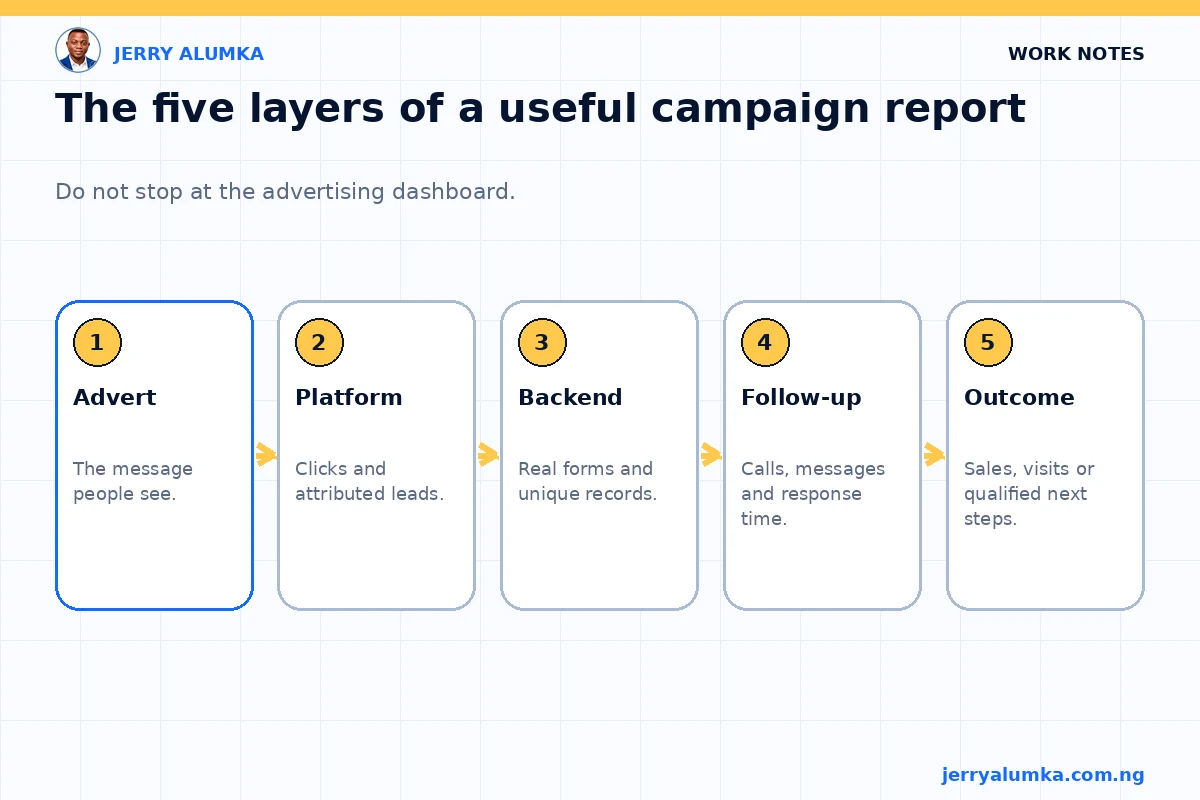
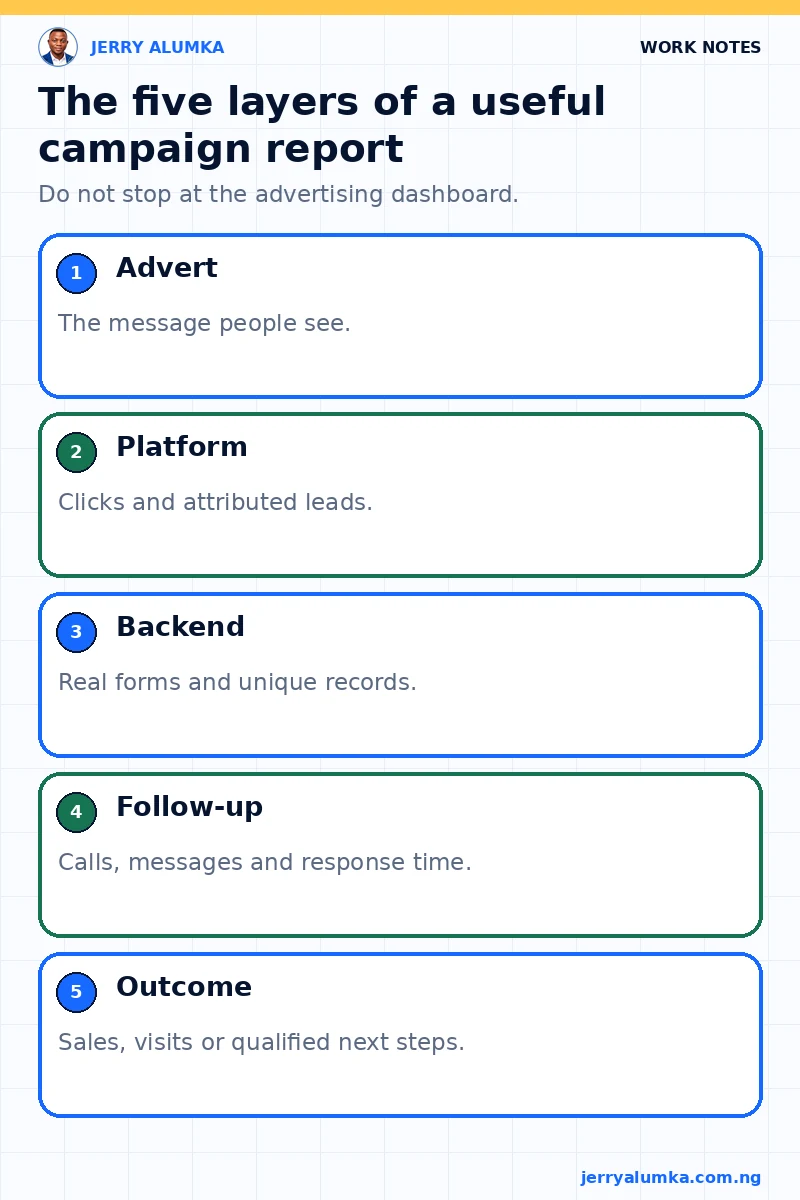
I still read the platform report. I check spend, reach, impressions, clicks, landing-page views, recorded actions and cost.
This tells me whether the advert reached people and whether they responded. It can also show which advert or audience brought more recorded actions.
But a recorded lead is not automatically a good lead. It may be a test, a repeated entry or a person who misunderstood the offer. The platform can’t confirm all of that.
So I treat the dashboard as the start of the report, not the end.
Then I check the business register
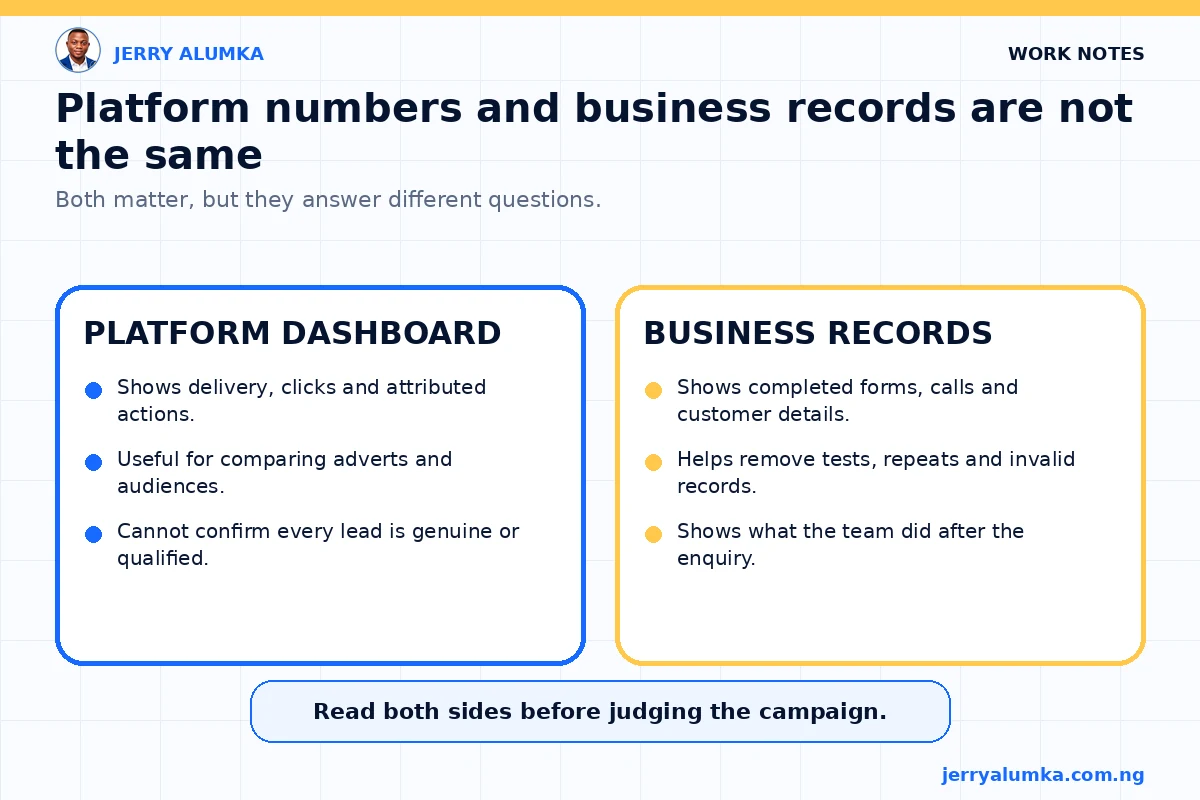
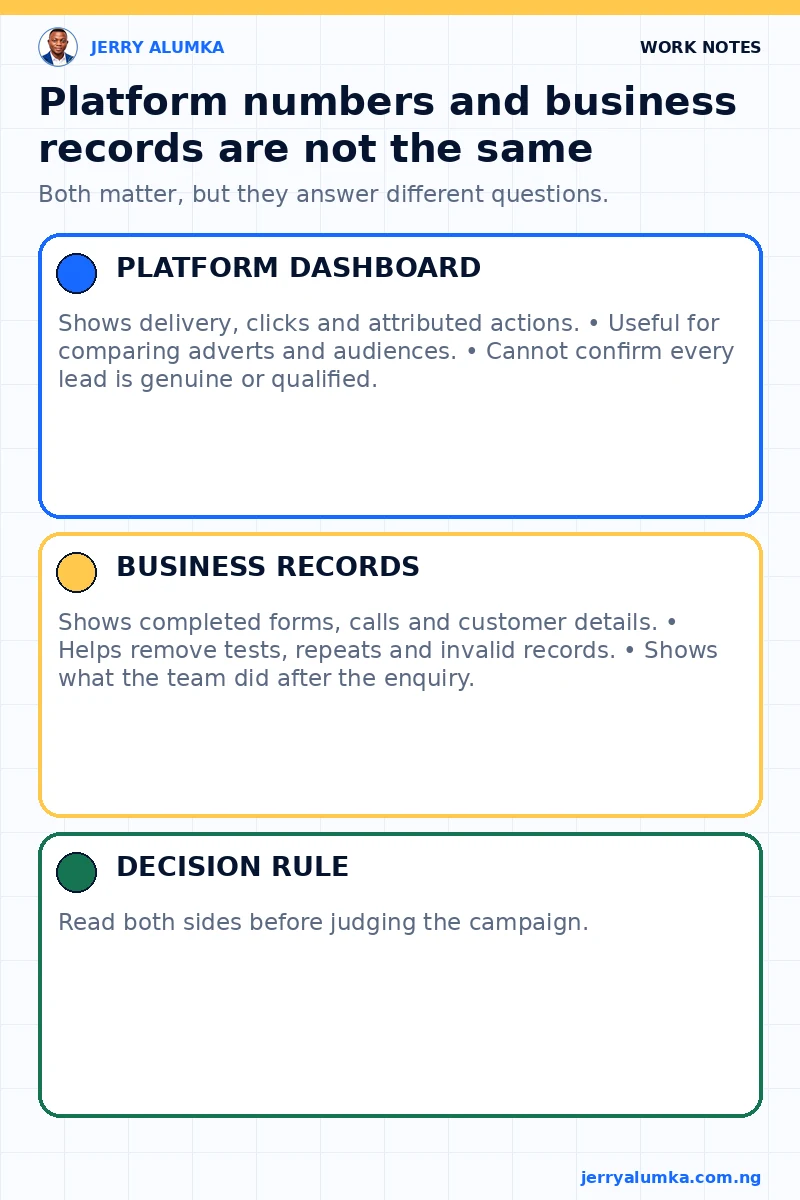
The next check is the place that received the enquiry. That may be a website form, spreadsheet, CRM, WhatsApp register or online shop.
I compare the platform total with the completed records. Then I remove tests and clear duplicates.
The two totals may not match exactly. Tracking can be blocked. One person may visit more than once. Platforms and business systems can also count differently.
The important thing is to understand what each number means. If nobody can explain the difference, the report is not ready.
Then the audience result needs context
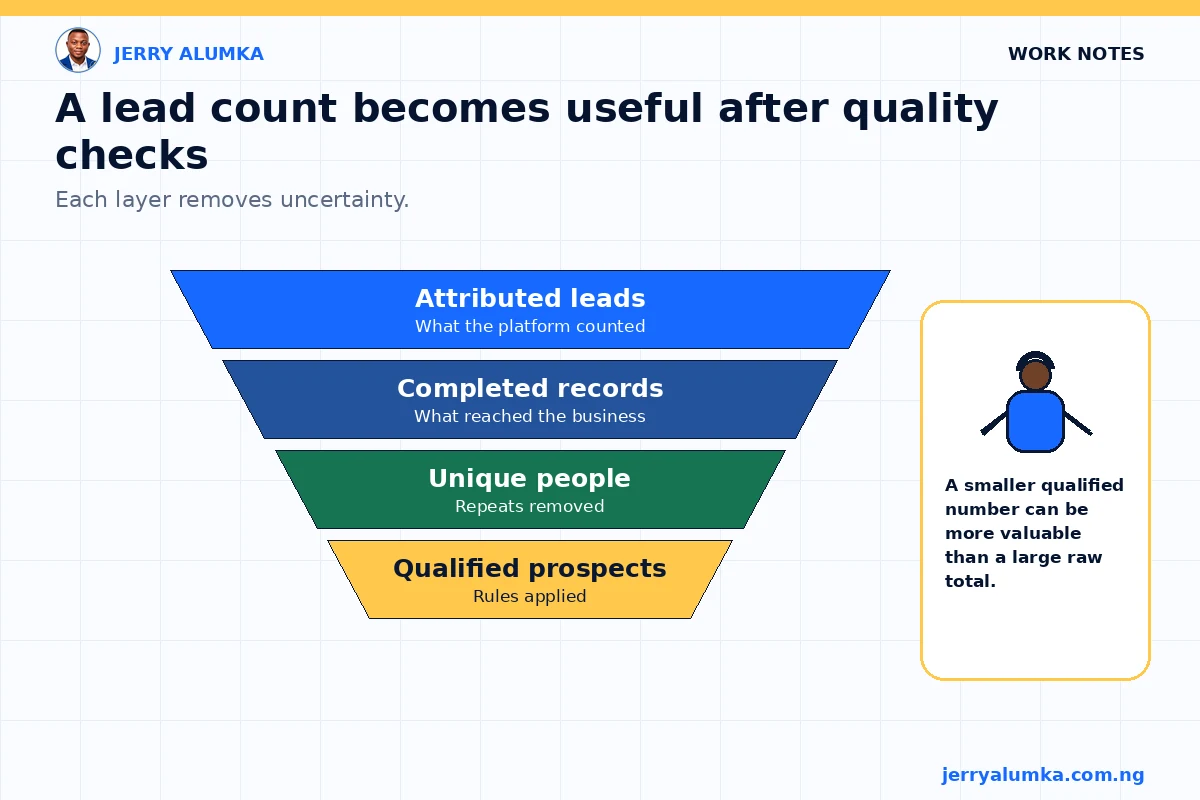
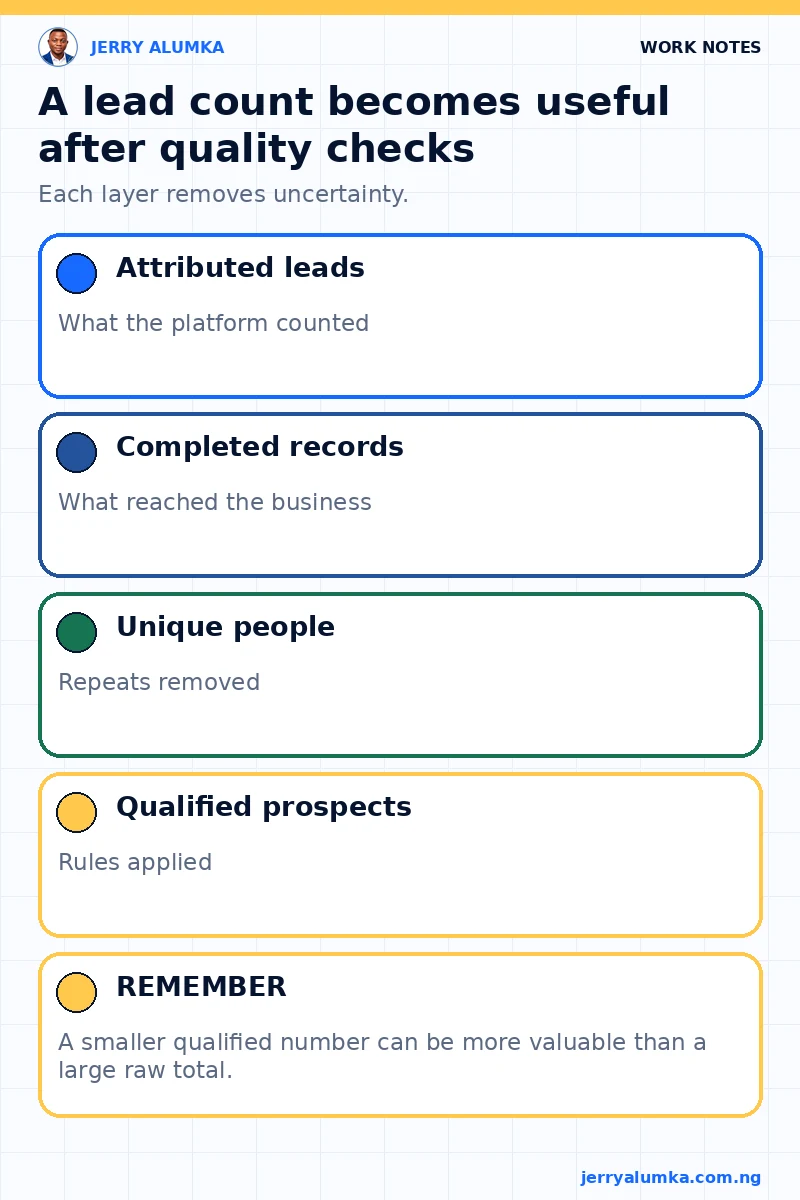
Next, I separate all enquiries from people who actually fit the offer.
For example, a local service may require the customer to live in the service area. A job campaign may require certain experience. A distributor campaign may require a shop, warehouse or delivery ability.
Set this rule before judging the campaign. Don’t change it later just to make the figures look better.
I also check what the team did. How quickly did someone call? How many people answered? Was another attempt made after a missed call? Did the person in charge record the result?
For a Nigerian business using WhatsApp and phone calls, this can be simple. Give each lead a row in a shared sheet. Record the first contact time, the staff member, the customer’s need and the next action. Don’t leave the result inside a private chat that management can’t review.
Good leads can be wasted by slow follow-up. Poor leads can also keep a team busy and make the campaign look more useful than it is.
I keep following the lead
The final result may be a sale, appointment, store visit, completed application or interview. This is where the business can judge what the campaign truly produced.
I use this order:
- Read the platform result.
- Compare it with completed business records.
- Remove tests and duplicates.
- Apply the agreed quality rule.
- Review the team’s follow-up.
- Confirm the final business result.
This sequence shows where the problem sits. The advert may be weak. The form may be confusing. The offer may attract the wrong people. Or the leads may be good while the team responds too late.
Review a small sample when the totals look strange. Open the last 20 records and read what happened to each one. A short manual check often reveals repeated forms, wrong locations or delayed calls that a summary chart hides.
Give every figure a source and period
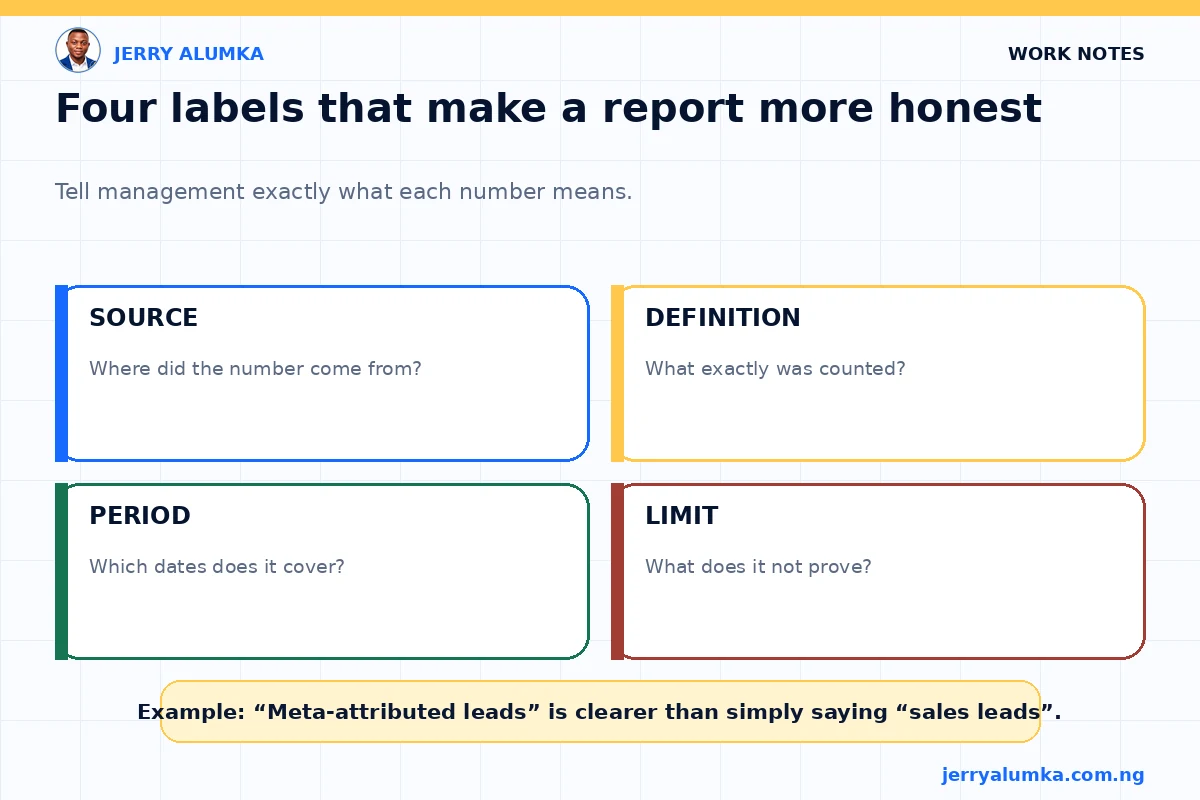
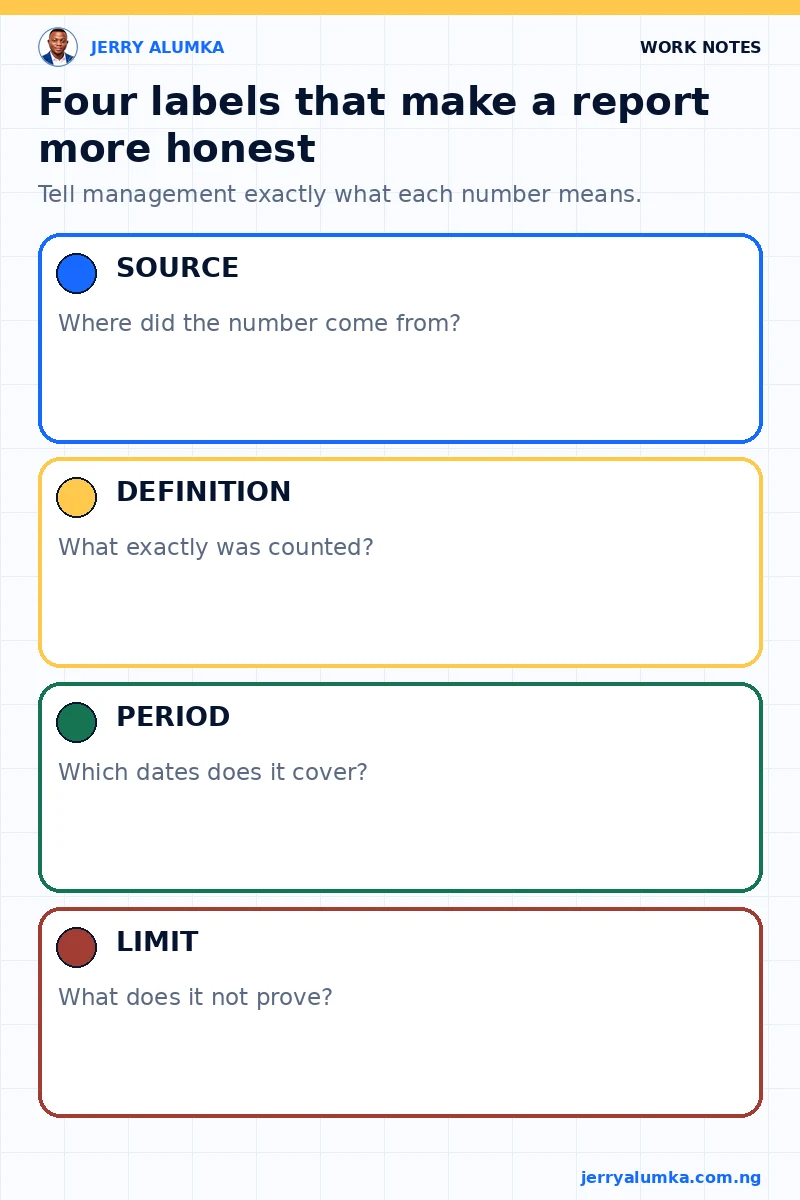
The labels now carry the distinction. “Platform leads” means the number reported by the advert platform. “Completed records” means forms found in the business system. I use “qualified leads” only after the stated checks.
Every important figure also carries a source and period. If the platform records 30 leads and the business register contains 20, the report shows both and explains the gap. The dashboard remains useful, but it no longer gets credit for an outcome the business has not confirmed.