
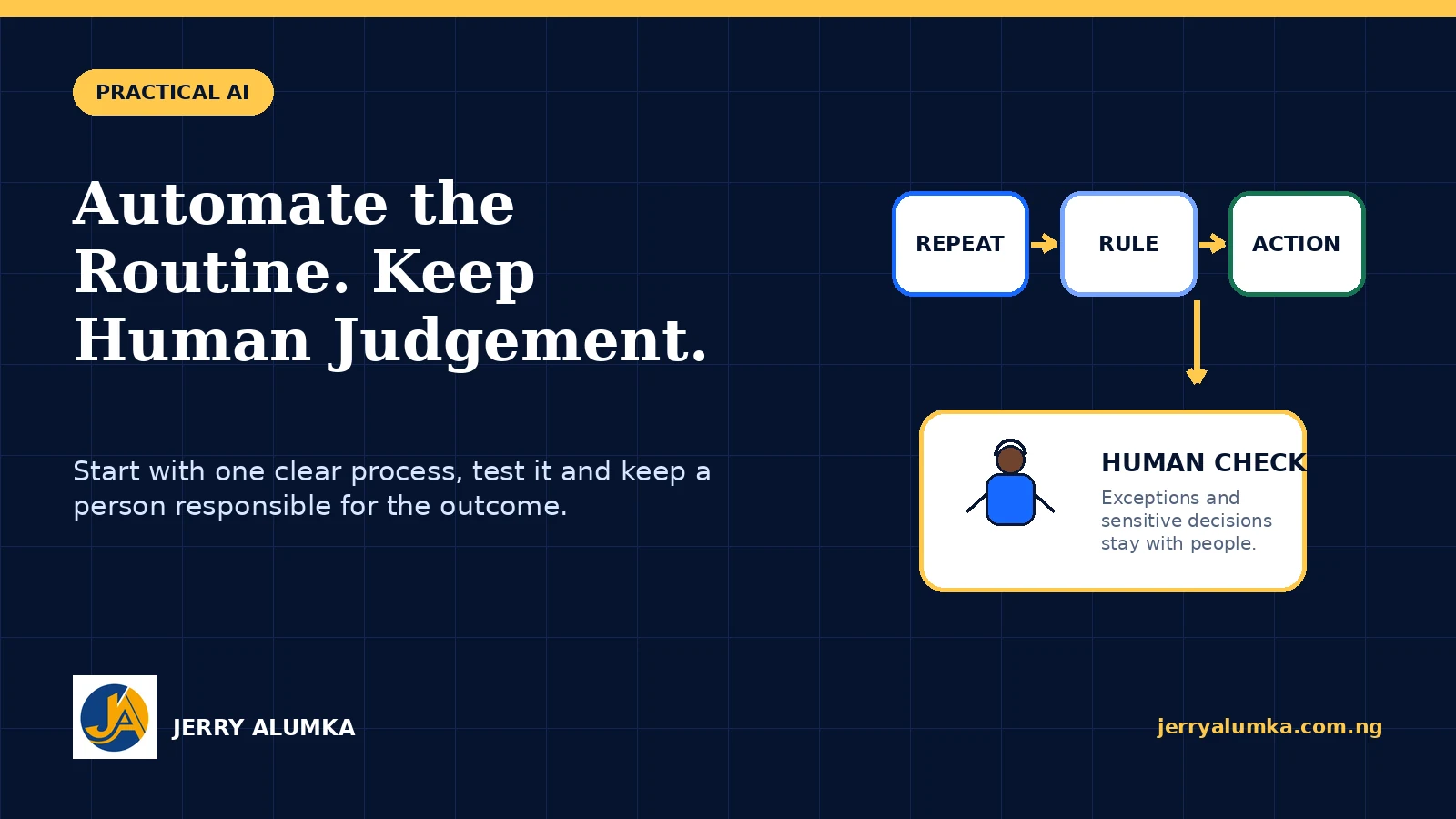
A confusing process does not become clear because software runs it. If staff rely on unwritten exceptions, automation may simply repeat the confusion faster. Business automation means using software to complete all or part of a work process with less manual effort. It can move information, send a reminder, assign an enquiry or prepare a report. It does not always involve artificial intelligence. IBM explains business automation as using technology for repeated tasks and work processes. Microsoft’s Power Automate guide includes examples such as moving files, sending notices and collecting information from different tools.
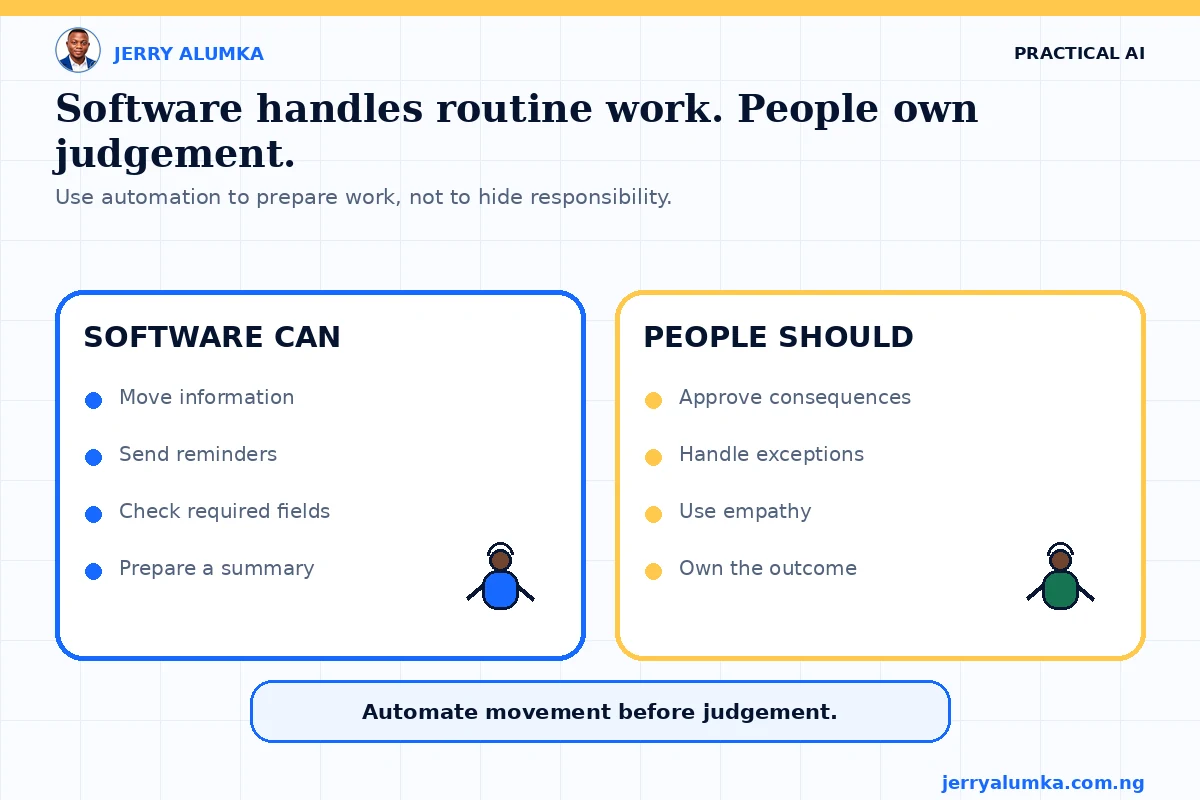
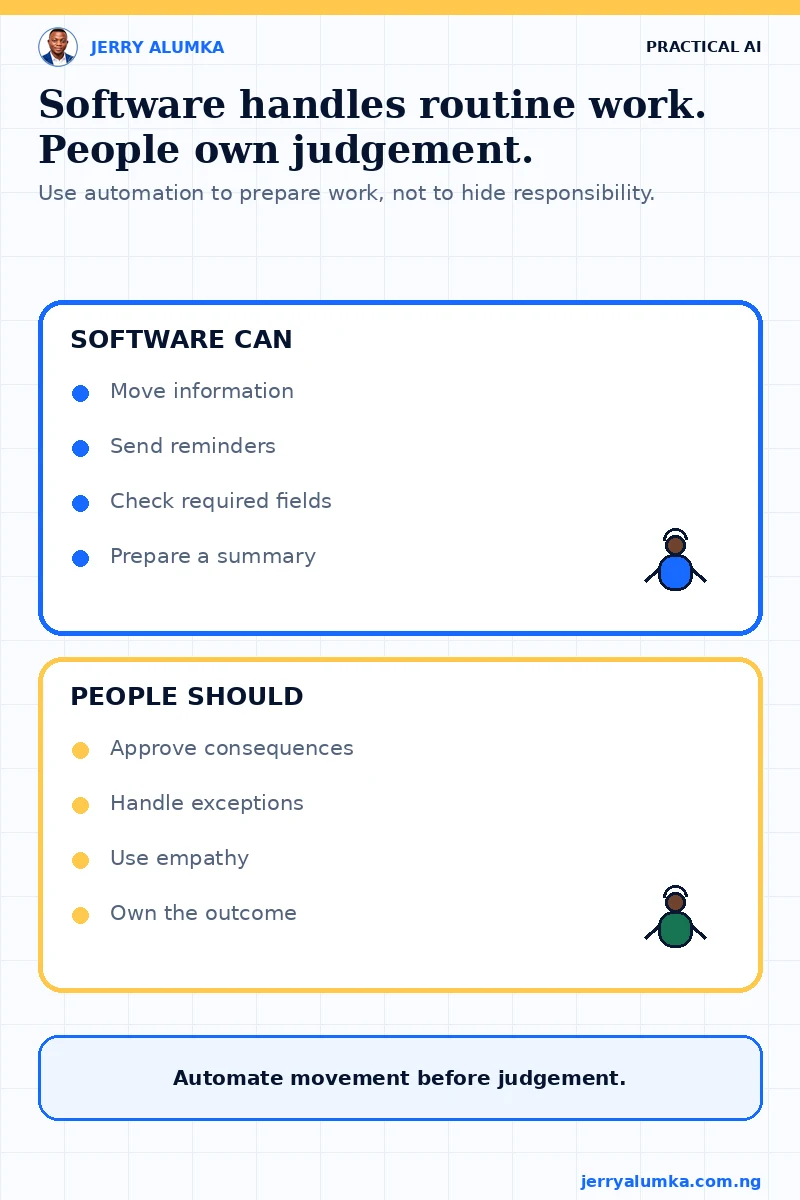
Movement is safer than judgement
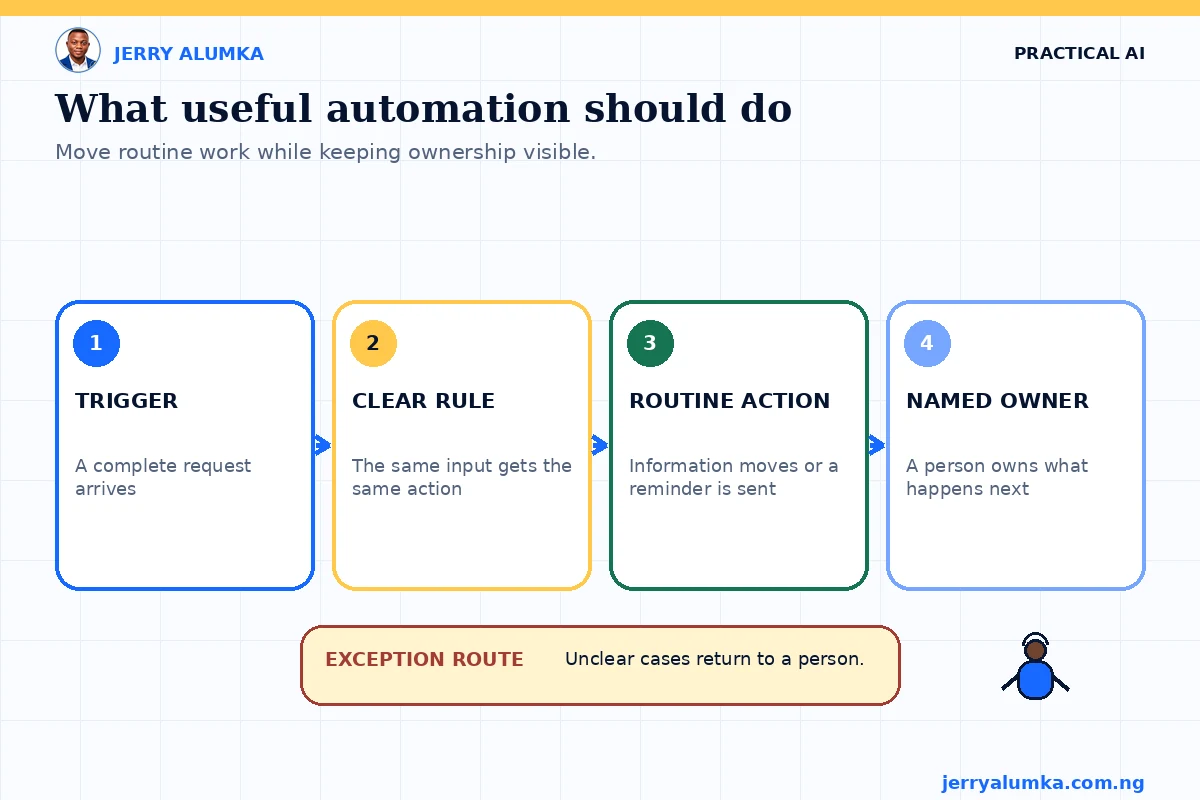
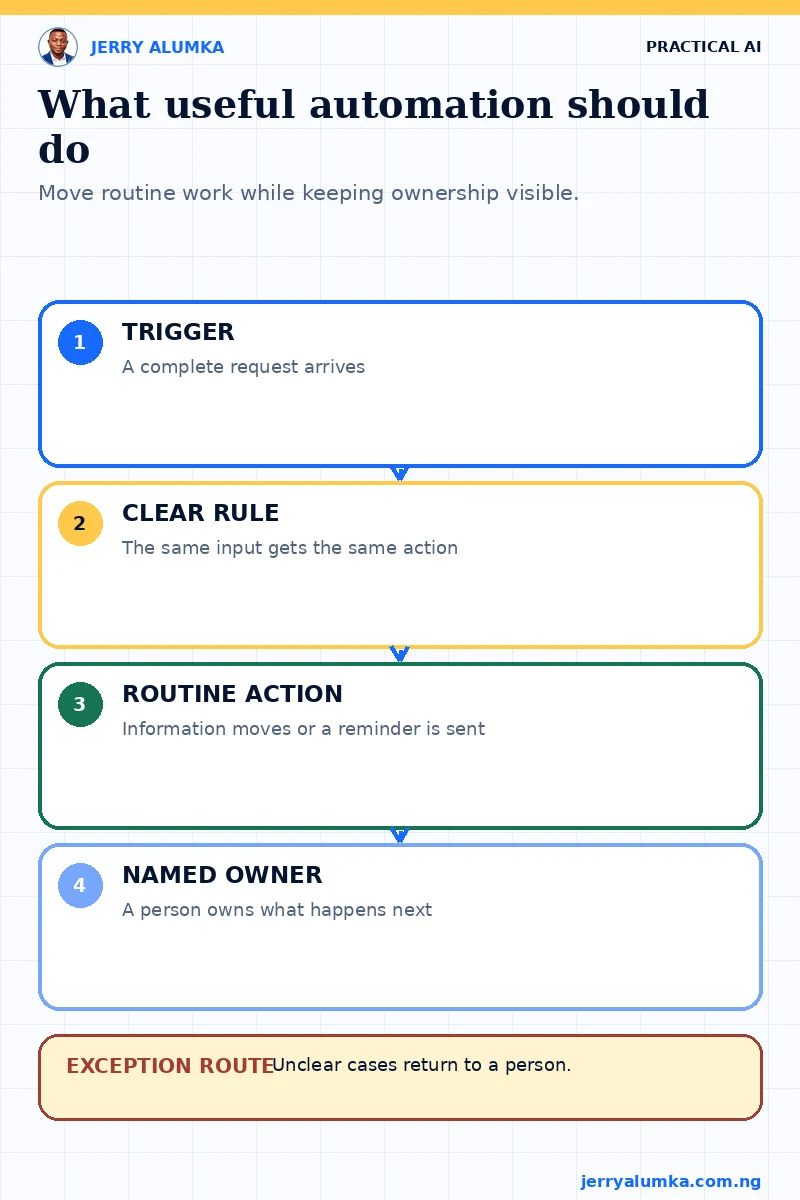
Suppose a website form receives an enquiry. Software can save the details in one customer record, alert the right staff member and create a reminder.
That is different from deciding that one person deserves attention while another does not. Sending a Lagos enquiry to the Lagos sales team follows a clear routing rule. Rejecting somebody because a short message sounds less serious requires judgement and context.
The team should know what starts the process, what the software changes, who owns the next action and what happens if the system fails.
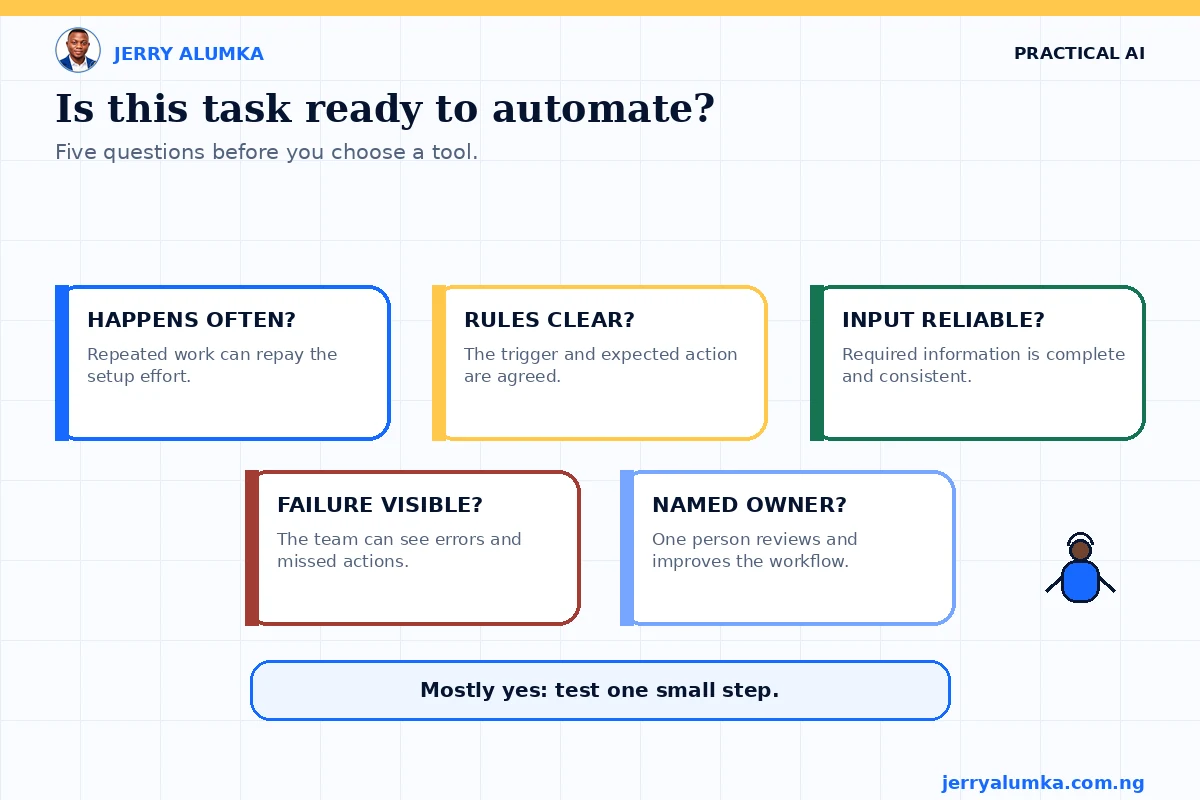
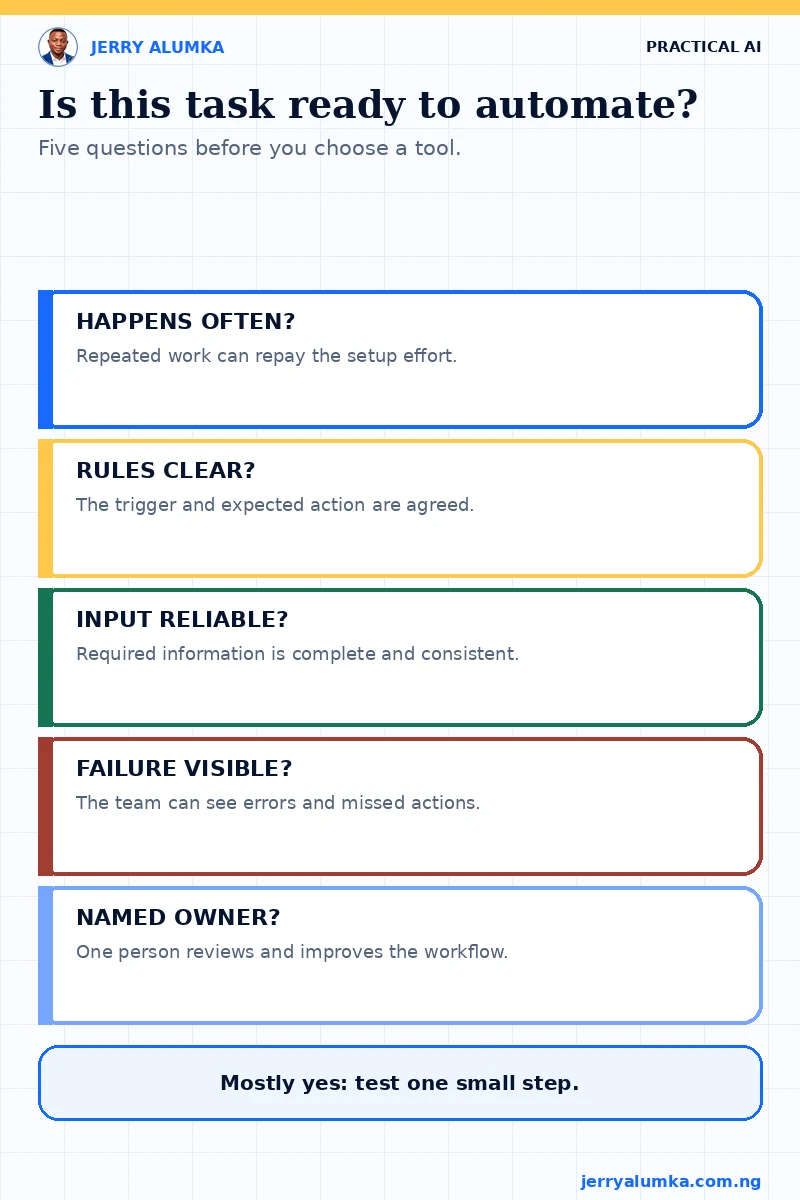
Five questions before choosing the task
- Does it happen often? A daily task may repay the setup time. A rare task may be faster by hand.
- Are the rules clear? You should be able to explain the start, action and correct result.
- Is the information reliable? Missing numbers, repeated records and mixed date formats will cause trouble.
- Will you see a failure? The system needs an alert or an error list.
- Who owns it? Somebody must check results, handle unusual cases and update the rules.
A first task should cause limited harm if a test goes wrong. Appointment reminders, routine notices and form routing may fit. Refund approval, staff discipline, legal promises and crisis replies do not.
Measure the time being lost as well. A frequent task that takes seconds may matter less than a weekly task that consumes half a day.
A sensible first job is easy to inspect
Look for repeated copying, checking, assigning or reminding. You might save website enquiries in one list, alert the correct staff member, assign by location or prepare a weekly summary from approved figures.
Each result is easy to inspect. Did the record arrive? Did it reach the right person? Did the report use the correct week?
If customer details are scattered across WhatsApp, notebooks and sheets, organise them first. My guide to CRM tools for Nigerian businesses explains the basics to put in place before adding software.
Test the process at its awkward edges
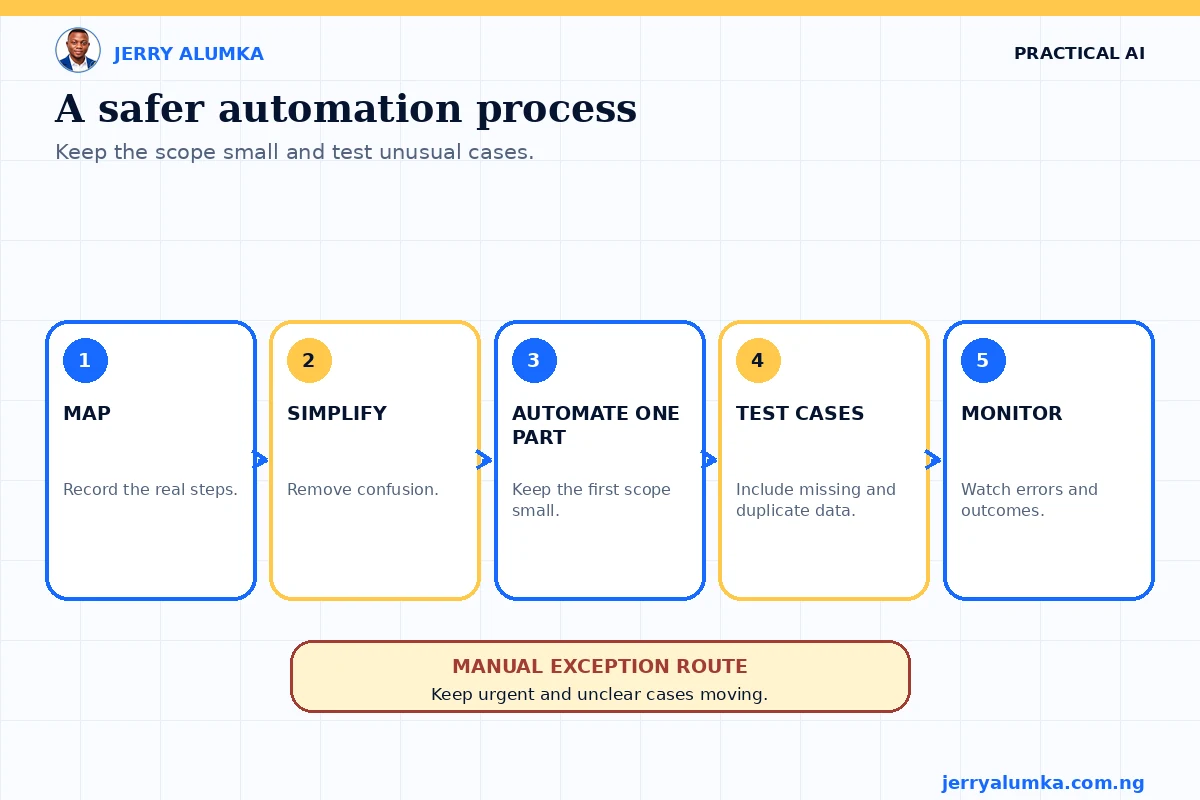
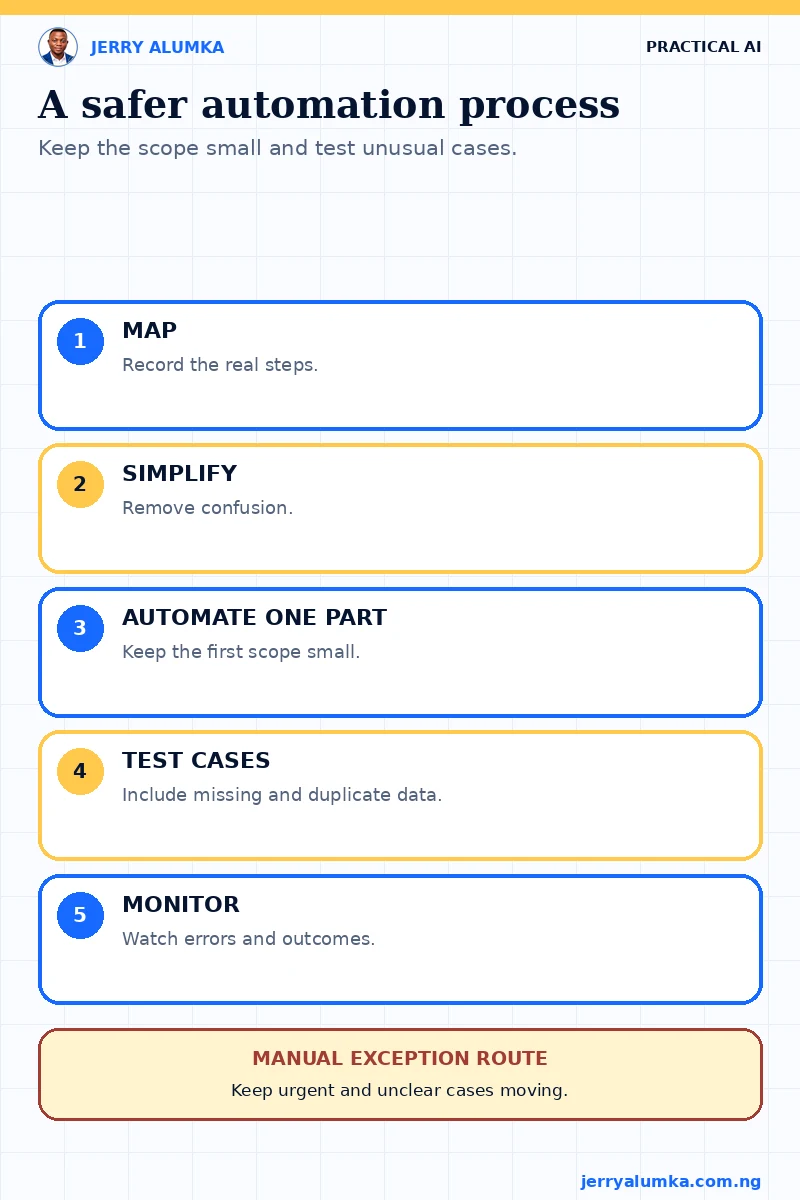
- Write down the current process, including its owner and finished result.
- Agree on the required information and remove avoidable confusion.
- Automate one section with clear rules.
- Test complete records, missing details, duplicates and wrong formats.
- Watch the live process for delays and errors.
Keep a manual route for urgent or unusual cases. Do not call the test successful because the software ran. Ask the person receiving the work whether the alert arrived on time and contained enough information.
If the system saves one person two minutes but creates ten minutes of correction for somebody else, it has moved the work rather than reduced it.
Where a person must remain responsible
A person should remain in control when a decision affects money, employment, safety, privacy, reputation or access to an important service. This includes financial and legal approvals, serious complaints, hiring, discipline and sensitive public messages.
Software can collect documents or prepare a draft. A responsible person should review the information and own the result.
AI needs extra care because it can sound certain while being wrong. The NIST AI Risk Management Framework offers guidance on AI risk. A small business should decide who reviews the output, what evidence that person sees and when the system must stop.
Did the work improve, or only move?
Compare the old and new process for a set period. Check time, errors and manual corrections. For customer work, also check response time and whether each enquiry received a recorded result.
Begin with a repeated task your team already understands. Clean up the process and automate one low-risk part. Keep an owner, an exception route and one useful measure.
If AI is part of the plan, read what AI agents can do for a real business. Whatever tool you use, keep the first task small enough to inspect every result. If the first workflow is still unclear, show me the current process.