
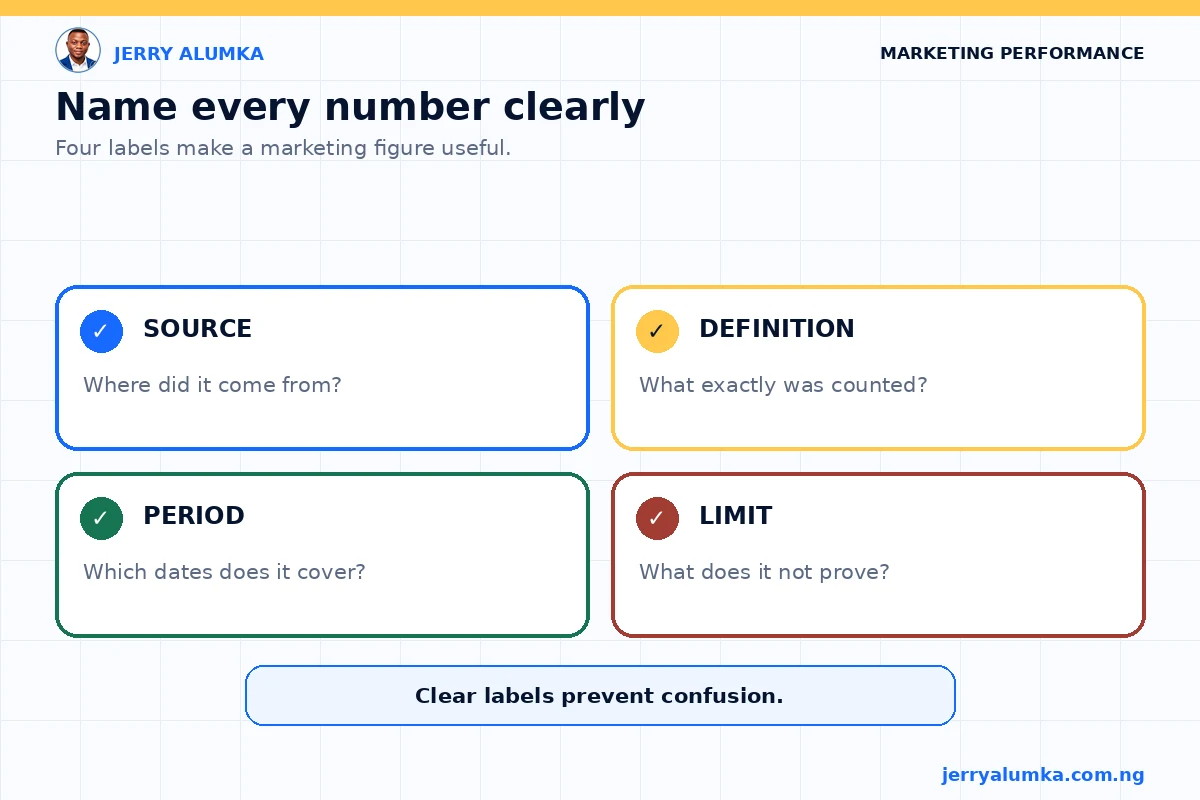
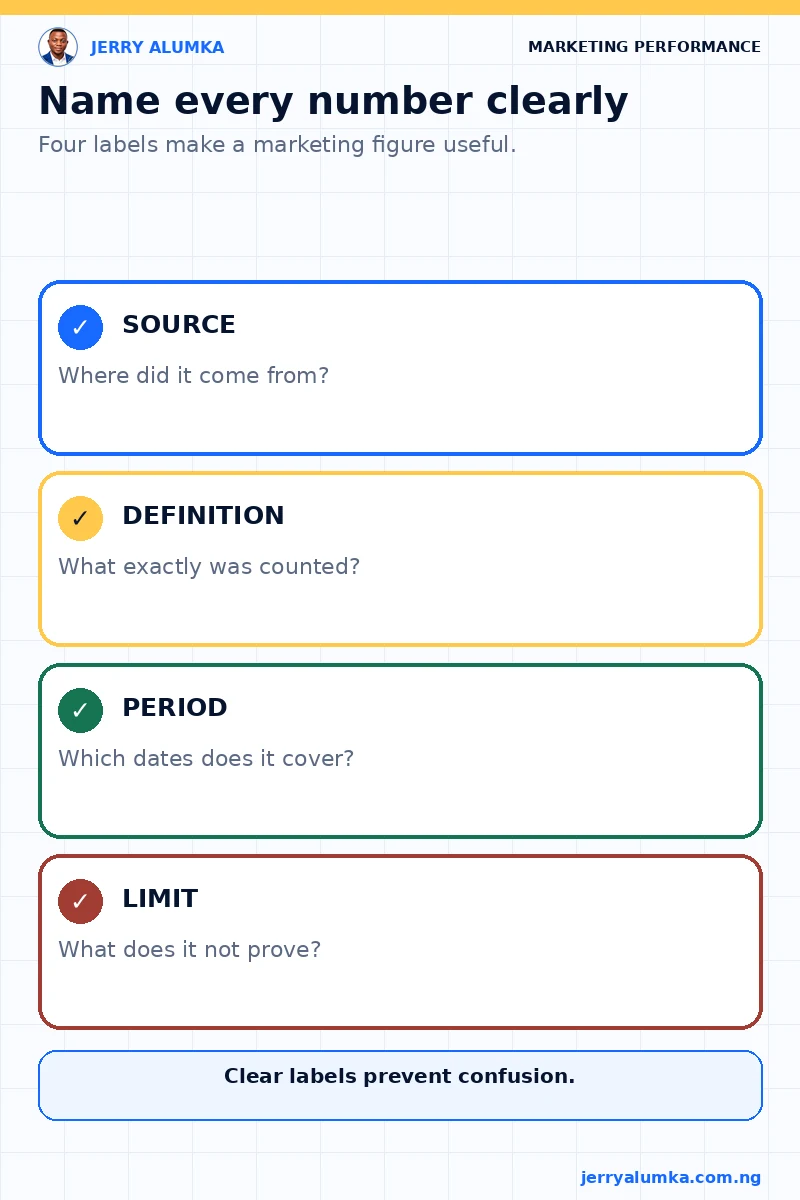
A report says “30 leads.” The figure looks clear until someone asks where they came from, which dates it covers and what the team counted as a lead. A weekly report does not need an impressive format. It needs labels that another person can understand without asking the writer to translate them.
What does “30 leads” actually contain?
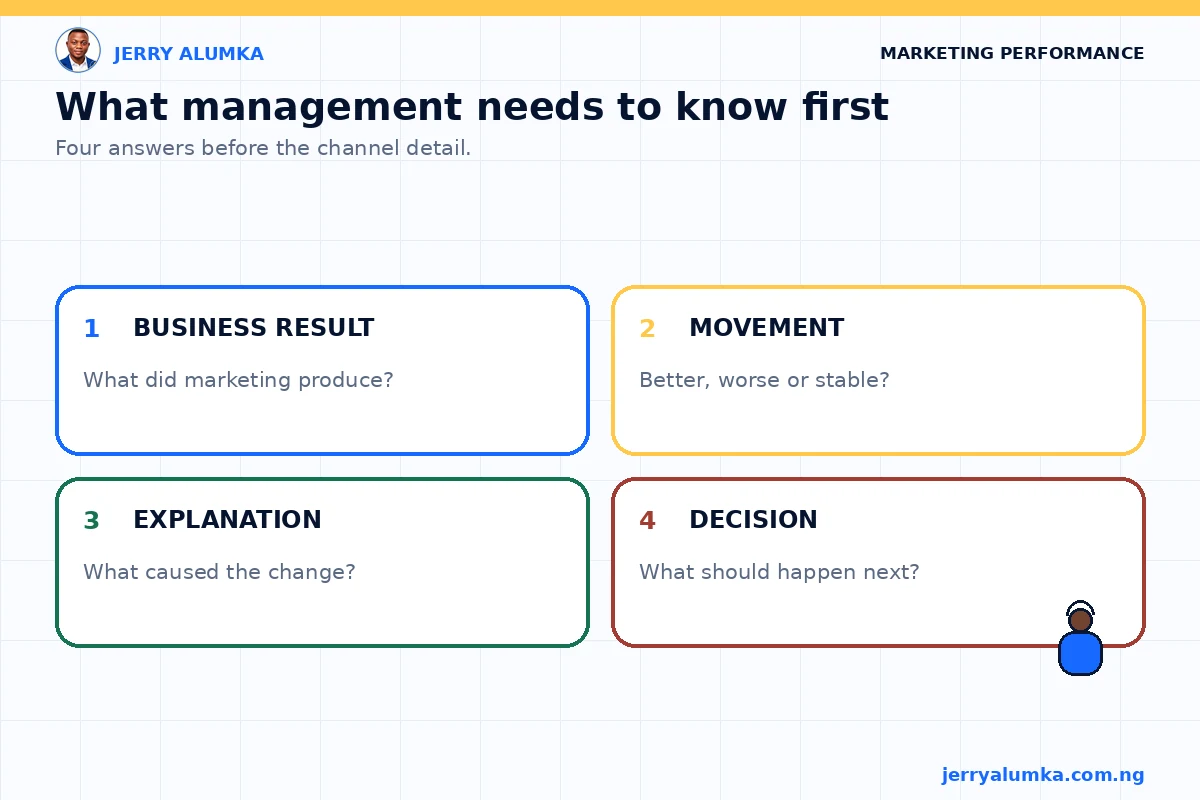
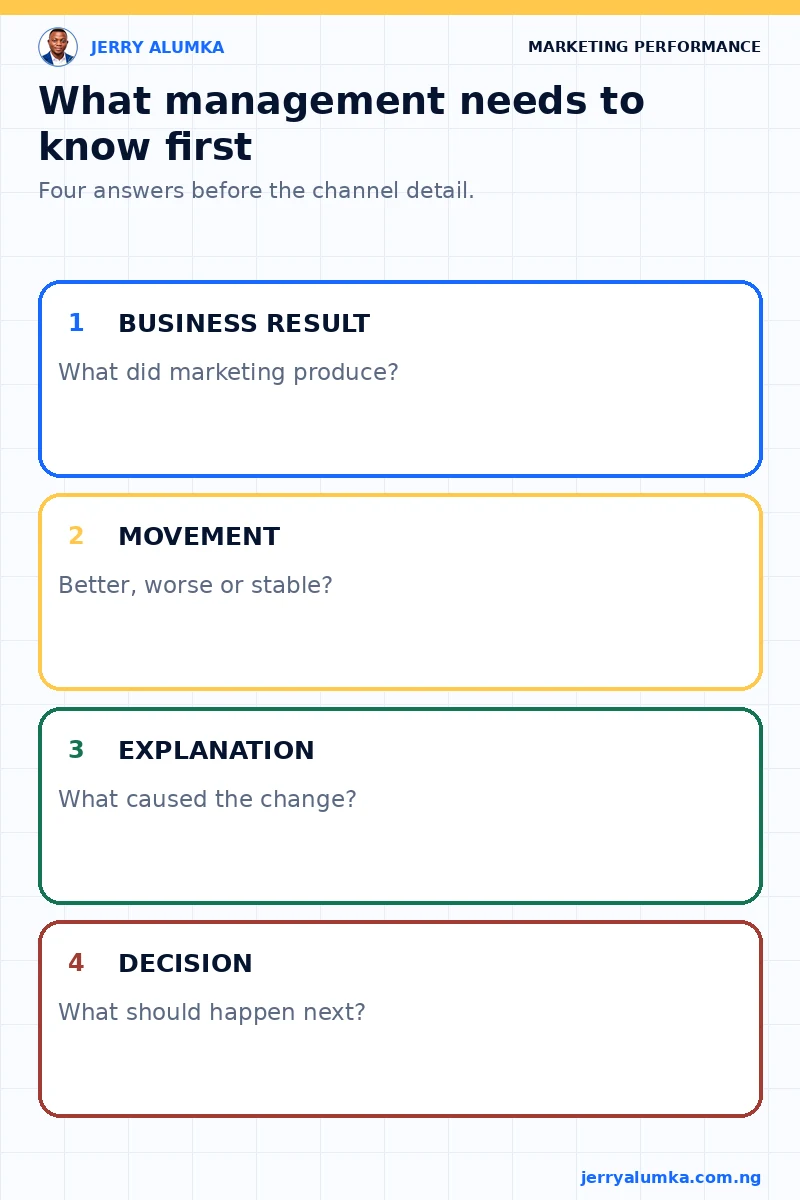
Write: “Facebook instant form recorded 30 submissions from 5 to 11 October. The sales team reached 18 by phone by 13 October. Eight said the offer and location suited them. Two asked for quotations. Sales after quotation have not yet been confirmed.”
This wording names the source and dates. It separates submissions, people reached and suitable enquiries. It also says what remains unknown.
The example does not prove whether the result is good or bad. Management still needs the target, cost and earlier results. If the team has not recorded follow-up, say so rather than making the 30 submissions carry a meaning they do not have.
Labels prevent false comparisons
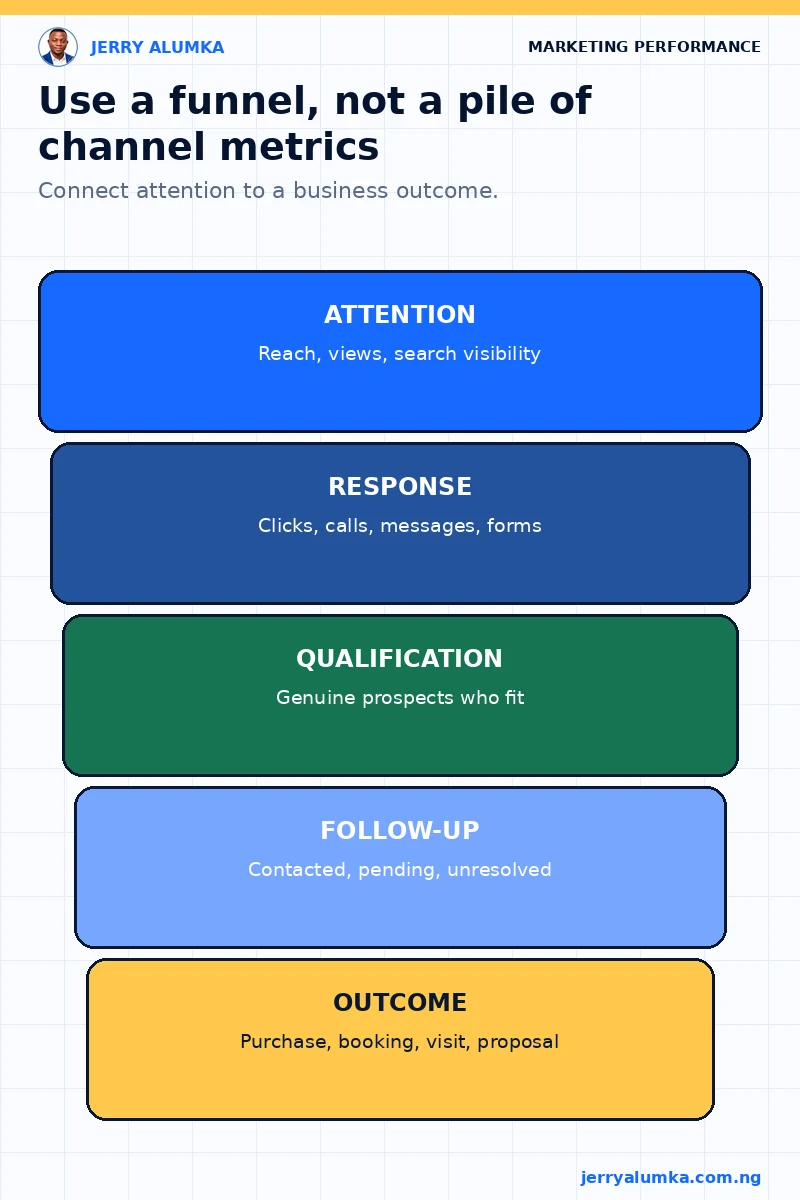
The source may be Ads Manager, a website tool, CRM, call sheet or finance record. Two systems may use the same word differently.
An advertising platform may call a form submission a lead. Sales may use lead only after the person answers and fits the offer. Use plain terms such as form submissions, people reached and suitable enquiries, with an agreed definition for each.
Dates also matter. A campaign may run Monday to Sunday while calls continue on Monday and Tuesday. Show both periods. Otherwise, a new week may look weak simply because the team has not finished calling.
Keep a short note of repeated definitions and use them the same way every week.
The report should continue past the platform
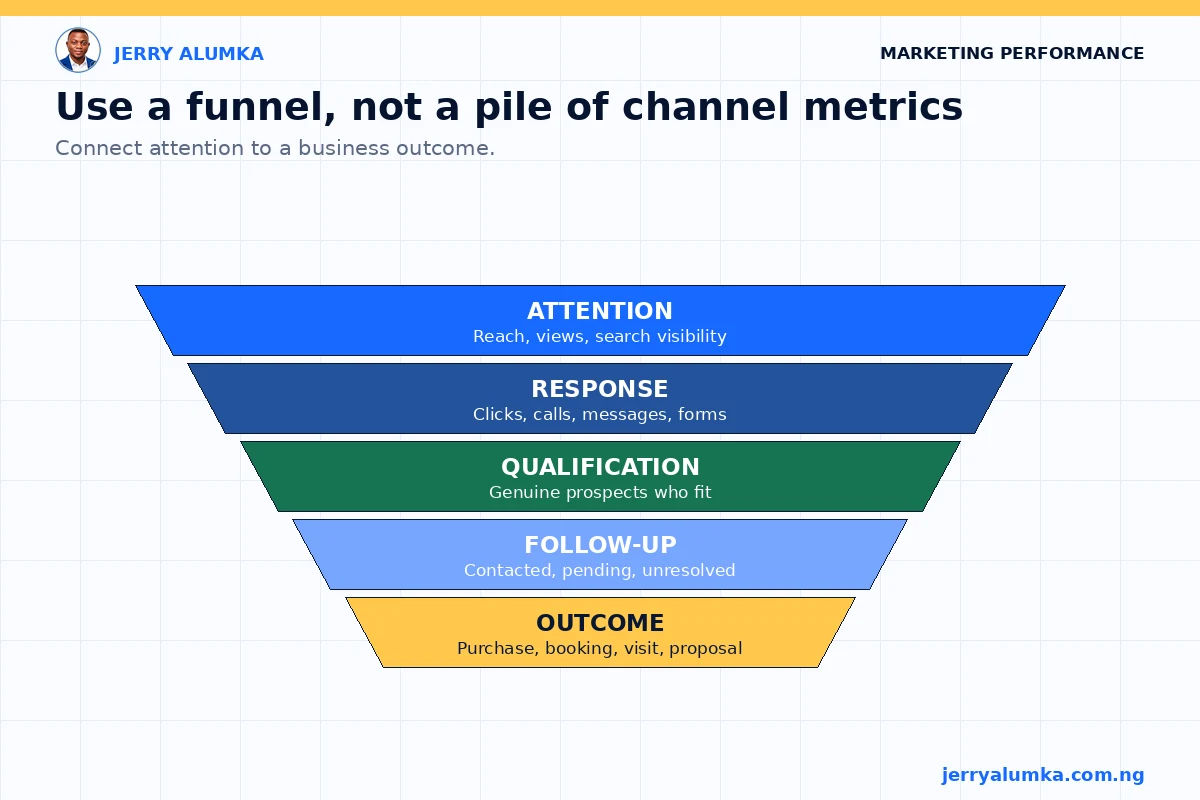
Clicks and messages show that people responded. Continue the line as far as your records allow: working contact details, people reached, suitable enquiries, visits or quotations, and paid orders.
When the record stops, say so. If finance has not matched payments to enquiries, sales are not yet confirmed.
This is the habit described in the reporting habit that changed how I judge marketing campaigns. Check what happened after the platform recorded a response.
Google Analytics Help on key events explains how selected actions can be marked for reporting. Google Analytics Help on attribution explains how credit can be assigned across contacts before an action. Name the measure because these settings affect what the report appears to say.
A comparison needs matching definitions
Do not compare this week’s form submissions with last week’s suitable enquiries, or seven days of spending with five days of follow-up.
A clear line might say: “Facebook form submissions fell from 36 during 28 September to 4 October to 30 during 5 to 11 October. Spend for both periods must be added before cost per submission can be compared.”
This states the movement and missing information without inventing a cause. If you know the reason, say how you checked it. If it is still a possibility, say the team is investigating.
Management needs a decision, not another chart
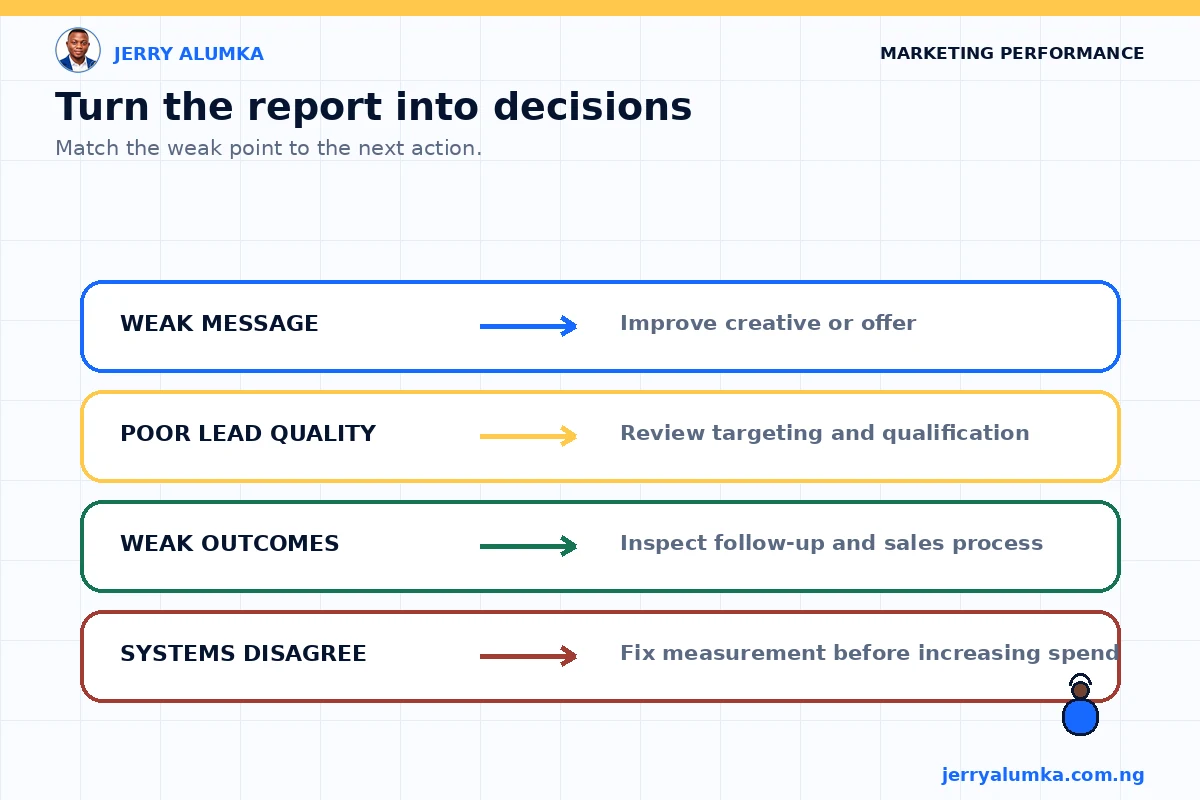
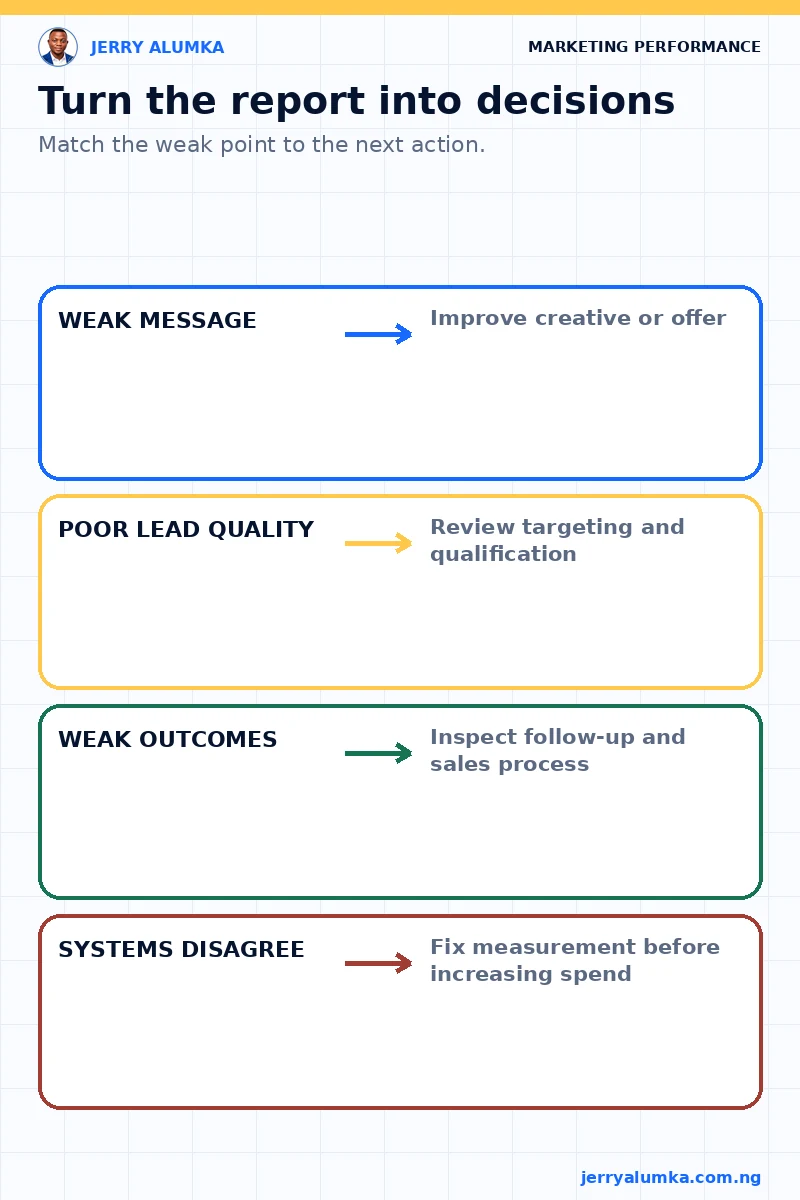
If submissions contain wrong phone numbers, check the form and verification options. If people answer but misunderstand the offer, check the advert. If suitable enquiries wait without a call, assign follow-up.
Name the responsible person and review date. Before sending the report, read every figure as if you did not prepare it. If “30 leads” makes you ask “from where and when?”, rewrite it.
Keep the original platform exports and sales records with the working file. They are what allow somebody to check the labels against their sources. If the definitions still do not line up, send me both sets of records.